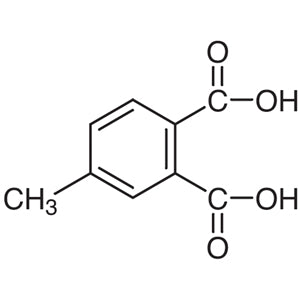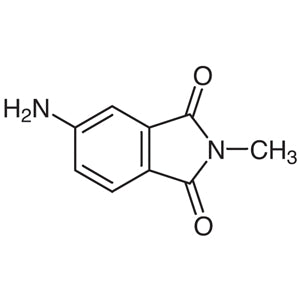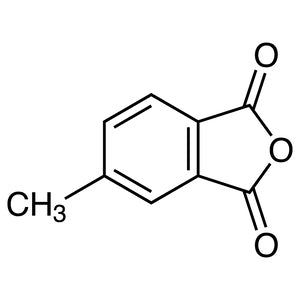
4-Methylphthalic Anhydride is a chemical compound widely used in various chemical reactions, particularly in the synthesis of complex organic compounds. As a member of the phthalic anhydride family, it features a methyl group substituent at a specific position, which enhances its reactivity under different reaction conditions. This compound plays a crucial role in laboratory settings as a building block for the production of other compounds with applications in pharmaceuticals, plastics, and industrial chemicals. Its structural characteristics make it a valuable resource for chemists seeking to develop new materials and functional compounds.
The compound is known for its stability under specific conditions and its ability to participate in esterification and nucleophilic reactions. These properties make it a preferred choice for synthetic chemists aiming to achieve controlled and efficient reactions. Its high melting point facilitates handling during synthesis processes, ensuring consistency and reliability in experimental outcomes. The chemical’s strong reactivity and stability make it ideal for reactions requiring both durability and reactivity.
In Indonesian laboratories, 4-Methylphthalic Anhydride is commonly used in organic chemistry research, especially in the development of new compounds with industrial applications. It is also frequently utilized in polymer and additive research, where its chemical properties contribute to the creation of advanced materials. Its versatility and reliability make it an essential component in various chemical research projects in the region.
- Organic synthesis is a key application where 4-Methylphthalic Anhydride is used to create complex organic molecules due to its reactivity and stability.
- Pharmaceutical research benefits from this compound as it is used in the development of new drugs and active pharmaceutical ingredients.
- Plastic and polymer research utilizes this compound for creating materials with specific chemical properties and structural integrity.
- Industrial chemical production relies on this compound as a building block for manufacturing various chemical products.
- Additive development in materials science uses this compound to enhance the properties of polymers and other composite materials.
| Brand | TCI |
|---|---|
| CAS number | 19438-61-0 |
| Molecular formula | — |
| Purity | — |
| Category | Chemistry > Building Blocks > Non-Heterocyclic Building Blocks |
| Pack sizes | — |
| Physical form | — |
| Storage | Store in a cool, dry place away from moisture and direct sunlight. |
This compound should be stored in a cool, dry environment to maintain its stability and prevent degradation. It is recommended to use airtight containers to protect it from moisture and air exposure. Due to its chemical reactivity, it should be handled in a well-ventilated area, and appropriate personal protective equipment should be worn. Avoid contact with incompatible substances, and ensure that storage conditions are consistent with standard laboratory safety protocols. Regular monitoring of storage conditions is advised to ensure the integrity of the material during long-term use.
—
Produk Terkait
-
3-MethylphthalicAnhydride TCI M1464
Regular price From Rp 1.087.800,00Regular price -
4-MethylphthalicAcid TCI M0560
Regular price From Rp 2.041.200,00Regular price -
4-Bromo-N-methylphthalimide TCI B3443
Regular price From Rp 2.147.250,00Regular price -
4-Amino-N-methylphthalimide TCI A1561
Regular price From Rp 955.500,00Regular price -
N-Methylphthalimide TCI M0299
Regular price Rp 1.803.900,00Regular price -
N-Hydroxymethylphthalimide TCI H0648
Regular price From Rp 1.060.500,00Regular price -
ValericAnhydride TCI V0006
Regular price From Rp 875.700,00Regular price -
3-BromophthalicAnhydride TCI B4061
Regular price From Rp 1.246.350,00Regular price