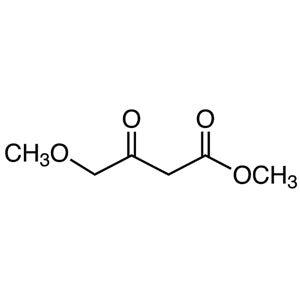
TCI M1031 Methyl 4-Methoxyacetoacetate, bearing CAS number 41051-15-4, is a beta-keto ester carrying a methoxy group on its carbon chain. The beta-ketoester structure is one of the most productive motifs in synthetic organic chemistry because it provides a weakly acidic alpha carbon that is readily deprotonated, allowing the compound to function as a versatile carbon nucleophile. In the laboratory, a material of this kind serves as a non-heterocyclic building block used to construct new carbon skeletons, particularly in the synthesis of heterocyclic rings such as pyrazoles, isoxazoles, pyrimidines, and pyridines through condensation reactions with a range of binucleophilic reagents.
The property that makes this compound attractive is the presence of three reactive centres within a single molecule: the ketone group, the ester group, and the alpha carbon situated between them, supplemented by a methoxy group that contributes an additional oxygen branch point in the final product. This combination allows researchers to design efficient one-pot reactions, for example Knorr condensations or Hantzsch-type syntheses, while simultaneously passing a methoxymethyl substituent on to the product that would be difficult to obtain from ordinary acetoacetate reagents. Its liquid form at room temperature further simplifies handling.
In Indonesian laboratories, a building block of this type belongs to the working stock of synthetic organic chemistry groups in universities, research institutes, and pharmaceutical development units. It is drawn upon whenever a project requires a reliable route into substituted heterocyclic scaffolds, and its liquid state at room temperature makes measuring and transfer straightforward for routine bench-scale reaction setups and repeated small-scale trials.
- Pyrazole ring synthesis: the acidic alpha carbon and adjacent carbonyl groups condense readily with hydrazine-type binucleophiles, delivering substituted pyrazole cores in a single controlled operation.
- Isoxazole construction: the same beta-ketoester arrangement reacts with hydroxylamine-type reagents, letting researchers assemble isoxazole rings that already carry a methoxymethyl substituent from the outset.
- Pyrimidine and pyridine assembly: condensation with suitable binucleophilic partners builds six-membered nitrogen heterocycles, making this reagent useful for scaffold work in medicinal chemistry programmes.
- Knorr condensation work: the compound serves as the carbon nucleophile component, allowing efficient one-pot ring formation without requiring separately prepared or pre-activated intermediates.
- Hantzsch-type synthesis: its three reactive centres support multicomponent reaction design, introducing the methoxymethyl group that plain acetoacetate starting materials simply cannot provide to the product.
| Brand | TCI |
|---|---|
| CAS number | 41051-15-4 |
| Molecular formula | — |
| Purity | — |
| Category | Chemistry > Building Blocks > Non-Heterocyclic Building Blocks |
| Pack sizes | available in standard TCI catalogue pack sizes; please confirm the option required when ordering. |
| Physical form | liquid at room temperature |
| Storage | keep in a tightly closed container, away from heat and direct sunlight |
Store the container tightly closed in a cool, dry, well ventilated area, away from heat sources, ignition sources, and direct sunlight. Keep the material in its original supplier container wherever possible, or in a compatible chemically resistant vessel that seals properly, since the compound is a liquid at room temperature and should be protected from moisture and contamination. Handle inside a fume hood and wear standard laboratory protective equipment, including safety glasses, gloves, and a laboratory coat. Avoid contact with skin and eyes and avoid inhaling vapours. Separate the material from strong oxidising agents and strong bases during storage, label all secondary containers clearly, and follow your institution's chemical waste procedures for any residues or contaminated materials.
—
Produk Terkait
-
IsopropylAcetoacetate TCI I0826
Regular price From Rp 980.700,00Regular price -
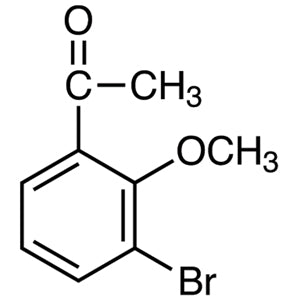
3'-Bromo-2'-methoxyacetophenone TCI B5498
Regular price From Rp 1.087.800,00Regular price -
2'-Amino-3'-methyl-4'-methoxyacetophenone TCI A3027
Regular price From Rp 2.677.500,00Regular price -
LithiumAcetoacetate TCI A1478
Regular price From Rp 3.180.450,00Regular price -
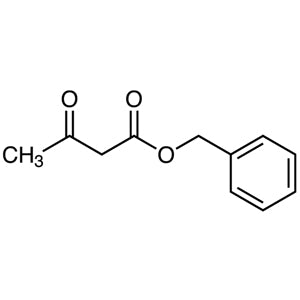
BenzylAcetoacetate TCI A1080
Regular price From Rp 1.167.600,00Regular price -
n-OctylAcetoacetate TCI A0915
Regular price Rp 3.367.350,00Regular price -
HexylAcetoacetate TCI A0913
Regular price Rp 2.041.200,00Regular price -
PropylAcetoacetate TCI A0817
Regular price Rp 2.041.200,00Regular price