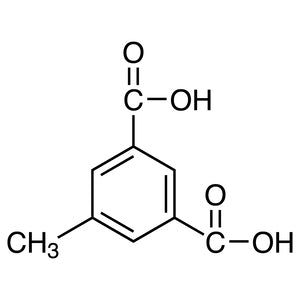
5-Methylisophthalic Acid from TCI, supplied under catalogue code M1903, is an aromatic dicarboxylic acid carrying two carboxyl groups in the meta positions and a single methyl group at the five position of the benzene ring. As a non-heterocyclic building block, this compound serves as an essential starting material for constructing structures that require two connection points held at a defined angle. In the laboratory, substituted isophthalic acids are widely used as linkers in the synthesis of metal-organic frameworks, as monomers for polyesters and aromatic polyamides, and as precursors to ester, amide, and acyl chloride derivatives.
The property that makes this compound a preferred choice lies in the meta geometry of its two carboxyl groups. This angular arrangement produces a direction of chain or network growth that differs from linear terephthalic acid, allowing researchers to design porous structures, branched networks, or amorphous polymers with distinctly different characteristics. The methyl group at the five position functions both as a steric marker and as a site for further functionalisation, for example through oxidation or benzylic halogenation. Its rigid aromatic skeleton contributes to the thermal stability of the resulting materials, while the two carboxyl groups provide reliable, well-understood reactivity for coordination and condensation chemistry.
In Indonesian laboratories, this building block is typically found in university research groups and institutional laboratories working on coordination polymers, porous materials, and polymer synthesis. It is normally purchased in research-scale quantities for method development, reaction screening, and the preparation of intermediates rather than for production use. Because it arrives as a defined TCI catalogue item, groups running multi-step syntheses can reorder the same material across successive experiments and keep their results comparable from batch to batch.
- Metal-organic framework synthesis — the meta-oriented carboxyl pair acts as an angular linker that coordinates metal nodes into porous networks rather than the linear frameworks obtained from terephthalic acid.
- Aromatic polyester and polyamide preparation — the difunctional monomer condenses with diols or diamines, and its bent geometry produces amorphous or branched polymers instead of highly crystalline linear chains.
- Precursor chemistry for ester, amide, and acyl chloride derivatives — both carboxyl groups undergo standard activation and coupling reactions, giving access to a broad family of downstream compounds.
- Benzylic functionalisation studies — the methyl group at the five position provides a defined handle for oxidation or halogenation, allowing a third substituent to be introduced onto the ring.
- Coordination polymer and network design research — the rigid aromatic core combined with two carboxylate donors lets researchers systematically study how linker geometry governs framework topology and thermal stability.
| Brand | TCI, catalogue code M1903 |
|---|---|
| CAS number | 499-49-0 |
| Molecular formula | — |
| Purity | — |
| Category | Chemistry > Building Blocks > Non-Heterocyclic Building Blocks |
| Pack sizes | available in standard TCI research-scale catalogue pack sizes; please confirm the packing option when ordering |
| Physical form | solid organic acid |
| Storage | keep in a tightly closed container in a cool, dry place away from moisture |
Store the container tightly closed in a cool, dry, and well-ventilated area, protected from moisture and away from direct sunlight and heat sources. The original TCI packaging is suitable for long-term storage; if transferring material, use clean glass or chemically compatible plastic containers that are clearly labelled with the substance name and catalogue code. Handle the solid in a fume hood or a well-ventilated workspace to limit dust generation, and wear safety goggles, gloves, and a laboratory coat. Keep the compound separated from strong bases and strong oxidising agents, use dry spatulas to avoid introducing moisture into the bulk material, and consult the manufacturer's safety data sheet before first use and before any disposal of residues.
—
Produk Terkait
-
IsophthalicAcid TCI I0155
Regular price From Rp 477.750,00Regular price -
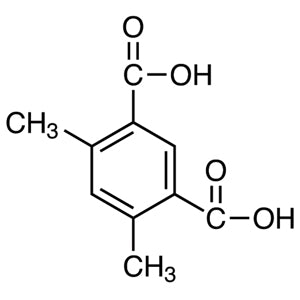
4,6-DimethylisophthalicAcid TCI D4377
Regular price From Rp 2.094.750,00Regular price -
2-Hydroxy-5-methylisophthalaldehyde TCI H0683
Regular price From Rp 2.466.450,00Regular price -
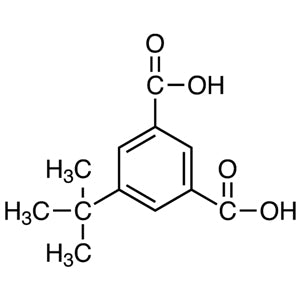
5-tert-ButylisophthalicAcid TCI B1380
Regular price Rp 3.976.350,00Regular price -
5-IodoisophthalicAcid TCI I1308
Regular price Rp 3.843.000,00Regular price -
2-IodoisophthalicAcid TCI I0883
Regular price Rp 5.857.950,00Regular price -
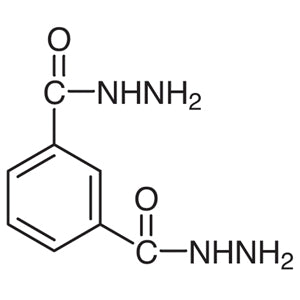
IsophthalicDihydrazide TCI I0257
Regular price From Rp 848.400,00Regular price -
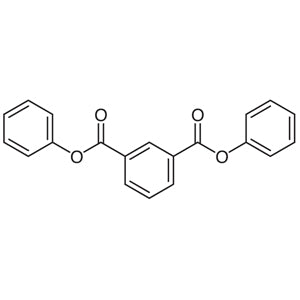
DiphenylIsophthalate TCI I0416
Regular price From Rp 1.298.850,00Regular price