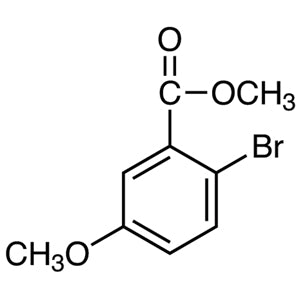
TCI M1934 Methyl 2-Bromo-5-methoxybenzoate is a methyl ester of benzoic acid whose aromatic ring carries a bromine atom at the two position and a methoxy group at the five position. The material belongs to the class of non-heterocyclic building blocks, meaning aromatic starting materials used to construct larger molecules. Its ortho-bromo substitution pattern relative to the ester group makes it a widely sought material in organic synthesis, particularly for forming new rings through cyclisation reactions and for transition-metal-catalysed carbon–carbon and carbon–nitrogen bond formation in research laboratories.
The property that gives this compound its value is the position of the bromine group directly adjacent to the ester group. This proximity enables intramolecular coupling reactions as well as coupling-then-cyclisation sequences that deliver fused ring systems such as benzolactones and benzolactams. The aromatic carbon–bromine bond is a reliable reaction partner for palladium catalysis in Suzuki, Sonogashira, Heck, and Buchwald–Hartwig reactions, and it can be converted into an organometallic reagent through halogen–metal exchange. The methoxy group is electron-donating and adjusts the electron density of the ring.
In Indonesian laboratories, this building block is typically used in university and institutional research settings where multi-step organic synthesis is carried out, including work on new molecular scaffolds and on intermediates intended for further functionalisation. It is normally purchased in research-scale quantities for method development and small-scale preparative work, then handled alongside standard palladium-catalysed coupling reagents and anhydrous solvents on a synthetic chemistry bench.
Related TCI products
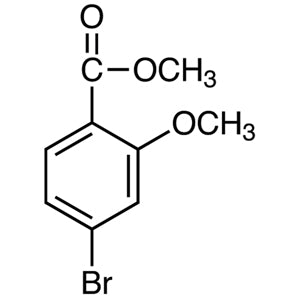
- TCI M2586 139102-34-4 Methyl 4-Bromo-2-methoxybenzoate
- TCI M2264 35450-37-4 Methyl 3-Bromo-4-methoxybenzoate
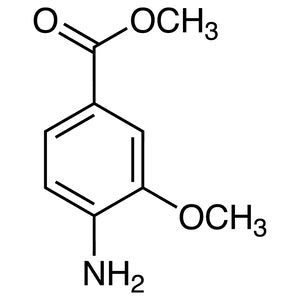
- TCI A3716 41608-64-4 Methyl 4-Amino-3-methoxybenzoate
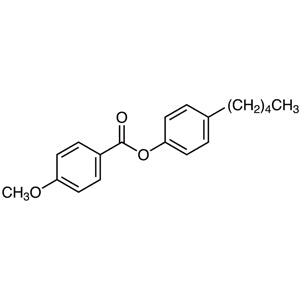
- TCI P2692 38444-13-2 4-Pentylphenyl 4-Methoxybenzoate
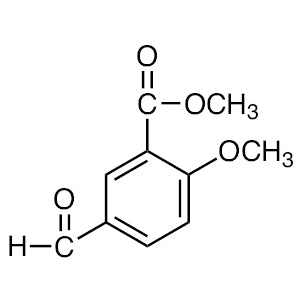
- TCI M3327 78515-16-9 Methyl 5-Formyl-2-methoxybenzoate
- TCI M2822 5121-34-6 Methyl 2-Amino-3-methoxybenzoate
- Suzuki coupling: the aromatic carbon–bromine bond serves as a reliable palladium-catalysed partner for joining the ring to boronic acid coupling partners in carbon–carbon bond formation.
- Buchwald–Hartwig amination: the same aryl bromide site allows transition-metal-catalysed carbon–nitrogen bond formation, giving access to aniline-type products built directly on this benzoate scaffold.
- Sonogashira and Heck reactions: the bromine handle supports palladium-catalysed coupling with alkyne and alkene partners, extending the aromatic core with unsaturated carbon chains.
- Cyclisation to fused ring systems: the ortho relationship between bromine and the ester enables coupling-then-cyclisation sequences that build benzolactone and benzolactam frameworks in a controlled way.
- Organometallic reagent preparation: halogen–metal exchange converts the aryl bromide into an organometallic species, providing a nucleophilic route to further functionalisation of the same ring.
| Brand | TCI (Tokyo Chemical Industry) |
|---|---|
| CAS number | 35450-36-3 |
| Molecular formula | — |
| Purity | — |
| Category | Chemistry > Building Blocks > Non-Heterocyclic Building Blocks |
| Pack sizes | available in standard TCI research-scale pack sizes; please confirm the currently listed pack options when ordering |
| Physical form | — |
| Storage | store in a tightly closed original container in a cool, dry, well-ventilated place |
- Product code: M1934
Keep the material in its tightly closed original container in a cool, dry, and well-ventilated storage area, away from direct sunlight, heat sources, and incompatible reagents. Chemically resistant amber glass containers with secure closures are suitable for any repackaging or aliquoting. Handle the compound in a fume hood using safety glasses, gloves, and a laboratory coat, and avoid contact with skin and eyes as well as inhalation of dust or vapour. Because organic halides and esters can be moisture-sensitive in use, keep the container closed when not in use and return it promptly to storage. Always consult the manufacturer's safety data sheet before handling, and follow institutional procedures for chemical waste disposal.
—
Produk Terkait
-
Methyl4-Bromo-2-methoxybenzoate TCI M2586
Regular price Rp 2.625.000,00Regular price -
Methyl3-Bromo-4-methoxybenzoate TCI M2264
Regular price Rp 2.094.750,00Regular price -
Methyl4-Amino-3-methoxybenzoate TCI A3716
Regular price From Rp 2.094.750,00Regular price -
4-Pentylphenyl4-Methoxybenzoate TCI P2692
Regular price Rp 2.862.300,00Regular price -
Methyl5-Formyl-2-methoxybenzoate TCI M3327
Regular price From Rp 1.140.300,00Regular price -
Methyl2-Amino-3-methoxybenzoate TCI M2822
Regular price From Rp 2.199.750,00Regular price -
Methyl3,5-Dihydroxy-4-methoxybenzoate TCI M2794
Regular price Rp 3.630.900,00Regular price -
Methyl4-Acetamido-2-methoxybenzoate TCI M2776
Regular price From Rp 637.350,00Regular price