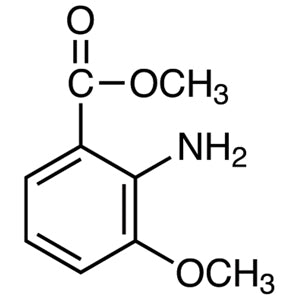
Methyl 2-Amino-3-methoxybenzoate is a chemical compound widely used in synthetic reactions to produce complex molecules with aromatic structures. This compound plays a crucial role in laboratory settings by serving as a building block for the synthesis of various organic compounds and pharmaceuticals. Its presence in chemical reactions allows researchers to create new molecular structures with specific functional groups, making it a versatile tool in both academic and industrial research. As a key component in organic synthesis, it supports the development of new drugs, materials, and chemical products.
The compound’s reactivity is due to its functional groups, including the amino and methoxy groups, which make it suitable for a range of chemical transformations. These groups enable it to participate in substitution, reduction, and coupling reactions, enhancing its utility in synthetic pathways. Its stability and reactivity provide researchers with the flexibility to tailor the final product to meet specific application requirements. This makes it a preferred choice for chemists working on complex molecular designs and functional group modifications.
In Indonesian laboratories, Methyl 2-Amino-3-methoxybenzoate is commonly used in organic chemistry research, drug development, and molecular structure studies. It is an essential material for academic institutions and research organizations, supporting both teaching and experimental work. Its availability ensures that researchers can conduct experiments efficiently and accurately, contributing to advancements in chemical science and pharmaceutical innovation.
Related TCI products
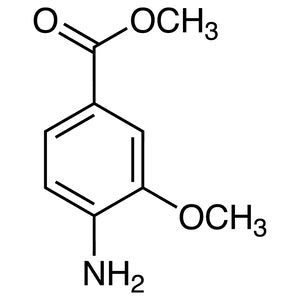
- TCI A3716 41608-64-4 Methyl 4-Amino-3-methoxybenzoate
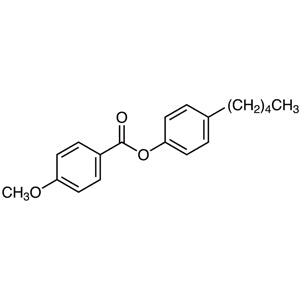
- TCI P2692 38444-13-2 4-Pentylphenyl 4-Methoxybenzoate
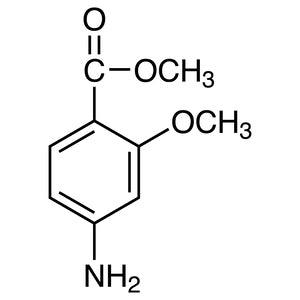
- TCI M1998 27492-84-8 Methyl 4-Amino-2-methoxybenzoate
- TCI M1715 24812-90-6 Methyl 3-Amino-4-methoxybenzoate
- TCI A0315 117-77-1 2-Amino-3-hydroxyanthraquinone
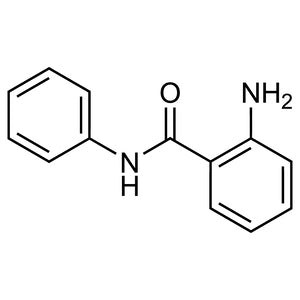
- TCI A3723 4424-17-3 2-Amino-N-phenylbenzamide
- Organic synthesis applications benefit from this compound’s reactivity and functional groups, enabling the creation of complex aromatic structures.
- Drug development processes utilize its role as a building block in the synthesis of pharmaceutical compounds with specific biological activities.
- Molecular structure studies rely on its stability and reactivity to investigate the behavior of aromatic compounds in various chemical environments.
- Educational institutions use it as a teaching tool to demonstrate synthetic reactions and molecular construction techniques.
- Research laboratories incorporate it into experimental designs to explore new chemical pathways and functional group transformations.
| Brand | TCI |
|---|---|
| CAS number | 5121-34-6 |
| Molecular formula | — |
| Purity | — |
| Category | Chemistry > Building Blocks > Non-Heterocyclic Building Blocks |
| Pack sizes | — |
| Physical form | — |
| Storage | Store in a cool, dry place away from direct sunlight |
This compound should be stored in a cool, dry environment, away from direct sunlight and sources of heat. It is recommended to use airtight containers to prevent moisture absorption and contamination. Due to its reactivity, it should be handled with care in a well-ventilated area, ideally under a fume hood. Avoid prolonged exposure to air and ensure that storage conditions are consistent to maintain its chemical integrity. Always follow standard laboratory safety protocols when handling reactive chemicals to ensure a safe working environment.
—
Produk Terkait
-
Methyl4-Amino-3-methoxybenzoate TCI A3716
Regular price From Rp 2.094.750,00Regular price -
4-Pentylphenyl4-Methoxybenzoate TCI P2692
Regular price Rp 2.862.300,00Regular price -
Methyl4-Amino-2-methoxybenzoate TCI M1998
Regular price From Rp 743.400,00Regular price -
Methyl3-Amino-4-methoxybenzoate TCI M1715
Regular price Rp 2.571.450,00Regular price -
2-Amino-3-hydroxyanthraquinone TCI A0315
Regular price From Rp 903.000,00Regular price -
2-Amino-N-phenylbenzamide TCI A3723
Regular price From Rp 2.518.950,00Regular price -
Methyl4-Amino-3-hydroxybenzoate TCI A3639
Regular price From Rp 2.041.200,00Regular price -
3-Amino-4-cyclobutyl-2-hydroxybutanamideHydrochloride(mixtureofdiastereoisomers) TCI A3314
Regular price From Rp 955.500,00Regular price