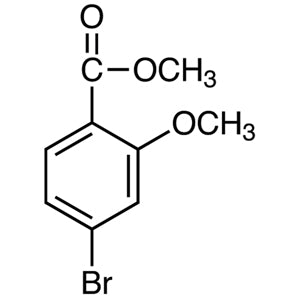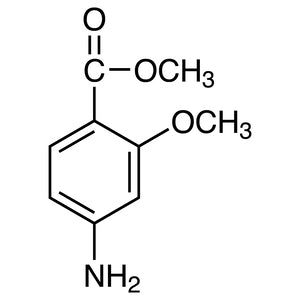
Methyl 4-Amino-2-methoxybenzoate is a chemical compound widely used in organic synthesis reactions within laboratory settings. It serves as a versatile building block in the development of complex molecules, particularly in pharmaceutical and organic chemistry research. This compound is valued for its structural simplicity and reactivity, making it a fundamental tool for chemists seeking to modify molecular frameworks. Its aromatic structure, combined with substituents such as amino and methoxy groups, allows for a range of chemical transformations, including substitution and condensation reactions.
The compound's chemical stability under controlled conditions, along with its reactivity in various synthetic pathways, makes it a preferred choice for researchers. Its solubility in organic solvents like ethyl acetate and ethanol facilitates its use in purification and reaction processes. Additionally, its molecular structure is easily modifiable, enabling the synthesis of a wide array of derivatives. These characteristics contribute to its widespread use in both academic and industrial research environments.
In Indonesian laboratories, Methyl 4-Amino-2-methoxybenzoate is commonly utilized in the synthesis of bioactive compounds. It plays a crucial role in scientific research related to drug development and organic chemistry. Researchers in educational institutions and research organizations rely on this compound as a foundational material for exploring new chemical structures and biological activities. Its availability and reliability make it an essential component in the chemical toolkit of Indonesian laboratories.
Related TCI products
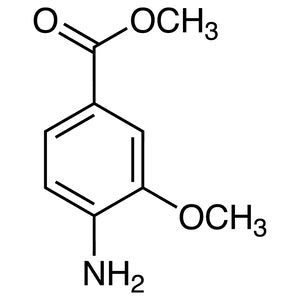
- TCI A3716 41608-64-4 Methyl 4-Amino-3-methoxybenzoate
- TCI M2822 5121-34-6 Methyl 2-Amino-3-methoxybenzoate
- TCI M1715 24812-90-6 Methyl 3-Amino-4-methoxybenzoate
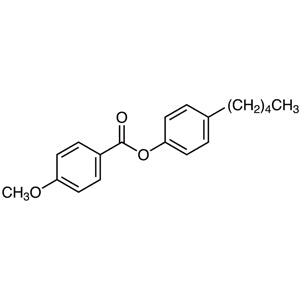
- TCI P2692 38444-13-2 4-Pentylphenyl 4-Methoxybenzoate
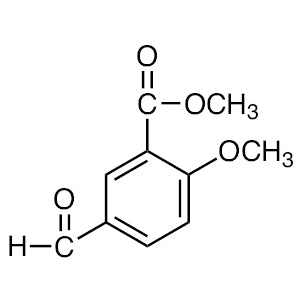
- TCI M3327 78515-16-9 Methyl 5-Formyl-2-methoxybenzoate
- TCI M2794 24093-81-0 Methyl 3,5-Dihydroxy-4-methoxybenzoate
- Organic synthesis applications benefit from this compound's reactivity and structural versatility, enabling the creation of complex molecules with tailored properties.
- Pharmaceutical research utilizes it as a building block for developing new drugs, particularly in the synthesis of bioactive compounds with therapeutic potential.
- Academic research in chemistry relies on its stability and solubility, allowing for efficient synthesis and purification processes in laboratory settings.
- Drug discovery projects incorporate it into the design of novel compounds, leveraging its ability to undergo various chemical transformations.
- Bioorganic chemistry studies use it to explore molecular interactions and biological activities, supporting advancements in medicinal chemistry.
| Brand | TCI |
|---|---|
| CAS number | 27492-84-8 |
| Molecular formula | — |
| Purity | — |
| Category | Chemistry > Building Blocks > Non-Heterocyclic Building Blocks |
| Pack sizes | Available in various quantities as per supplier specifications |
| Physical form | Solid, crystalline appearance |
| Storage | Store in a cool, dry place away from light and moisture |
Methyl 4-Amino-2-methoxybenzoate should be stored in a cool, dry environment, away from direct light and moisture to maintain its chemical stability. It is recommended to use airtight containers made of glass or high-density polyethylene to prevent contamination and degradation. In laboratory settings, it should be handled with care, using appropriate personal protective equipment such as gloves and safety goggles. Due to its reactivity, it should be stored separately from strong oxidizing agents and incompatible substances. Proper labeling and storage conditions are essential to ensure safety and maintain the integrity of the compound during experimentation.
—
Produk Terkait
-
Methyl4-Amino-3-methoxybenzoate TCI A3716
Regular price From Rp 2.094.750,00Regular price -
Methyl2-Amino-3-methoxybenzoate TCI M2822
Regular price From Rp 2.199.750,00Regular price -
Methyl3-Amino-4-methoxybenzoate TCI M1715
Regular price Rp 2.571.450,00Regular price -
4-Pentylphenyl4-Methoxybenzoate TCI P2692
Regular price Rp 2.862.300,00Regular price -
Methyl5-Formyl-2-methoxybenzoate TCI M3327
Regular price From Rp 1.140.300,00Regular price -
Methyl3,5-Dihydroxy-4-methoxybenzoate TCI M2794
Regular price Rp 3.630.900,00Regular price -
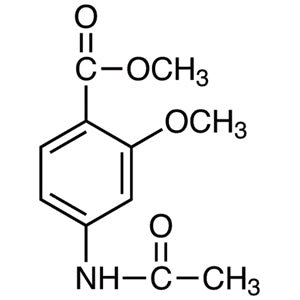
Methyl4-Acetamido-2-methoxybenzoate TCI M2776
Regular price From Rp 637.350,00Regular price -
Methyl4-Bromo-2-methoxybenzoate TCI M2586
Regular price Rp 2.625.000,00Regular price