TCI M2327 Monomethyl Isophthalate is a derivative of isophthalic acid in which only one of the two carboxyl groups has been esterified to a methyl ester, while the other carboxyl group is left free. A mono-ester of this kind is highly valuable in synthetic laboratories because it supplies a molecule carrying two different functional groups on a meta-substituted benzene framework. Preparing such a mono-ester in-house from a diprotic acid is usually troublesome, since the reaction tends to produce a mixture of free acid, mono-ester, and di-ester that must then be separated. Availability as a ready-to-use product saves time and avoids material losses during purification.
The property that makes this compound a preferred choice is the orthogonality of its two functional groups. The free carboxylic acid group can be activated and coupled to form amides, esters, or anhydrides, or converted into an acid chloride, while the methyl ester group remains intact as a protected group that is only unmasked later through base hydrolysis at a subsequent stage. This stepwise strategy is precisely what opens the route toward asymmetric molecules that are difficult to reach from isophthalic acid itself. The meta arrangement on the benzene ring additionally imparts a defined geometry to the resulting structures.
In Indonesian laboratories, this building block is typically encountered in university and institutional research groups working on organic synthesis, medicinal chemistry scaffolds, and materials precursors, where selective mono-functionalisation of an aromatic diacid is required. It is ordered as a prepared starting material so that synthesis schedules are not delayed by an additional selective esterification step, and so that limited laboratory time can be directed toward the target transformation rather than toward separating ester mixtures.
- Amide bond formation: the free carboxylic acid can be activated and coupled with an amine while the methyl ester stays untouched, giving clean mono-functionalisation on one side of the ring.
- Acid chloride preparation: converting the free carboxyl group into a reactive acyl chloride provides a handle for onward reactions without disturbing the protected methyl ester on the opposite position.
- Stepwise asymmetric synthesis: the orthogonal pairing of free acid and protected ester allows chemists to build unsymmetrical isophthalate derivatives that cannot be obtained directly from isophthalic acid.
- Protecting-group strategy studies: the methyl ester serves as a masked carboxyl group that is released later by base hydrolysis, making this a practical substrate for teaching and developing sequential deprotection routes.
- Meta-substituted scaffold construction: the fixed geometry of the meta-disubstituted benzene ring makes this building block useful for assembling molecules where a defined angular relationship between two arms is required.
| Brand | TCI |
|---|---|
| CAS number | 1877-71-0 |
| Molecular formula | — |
| Purity | — |
| Category | Chemistry > Building Blocks > Non-Heterocyclic Building Blocks |
| Pack sizes | available in standard TCI catalogue pack sizes; please confirm the packaging option when ordering |
| Physical form | — |
| Storage | store according to the conditions stated on the manufacturer's label and safety data sheet |
- Product code: M2327
Store the container tightly closed in a cool, dry, and well-ventilated area, away from moisture, direct sunlight, and incompatible materials, following the conditions stated on the manufacturer's label and safety data sheet. Keep the material in its original supplier container or in a chemically compatible, clearly labelled vessel, and reseal it promptly after each withdrawal to limit exposure to atmospheric humidity. Handle the compound in a fume hood using standard laboratory personal protective equipment, including a laboratory coat, chemical-resistant gloves, and safety glasses. Avoid generating or inhaling dust, avoid contact with skin and eyes, and wash hands thoroughly after handling. Dispose of residues and contaminated packaging in accordance with applicable institutional and local chemical waste regulations, and consult the safety data sheet before first use.
—
Produk Terkait
-
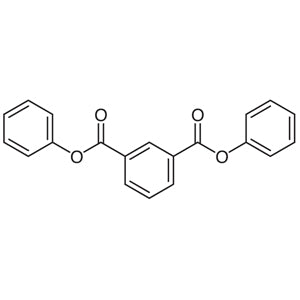
DiphenylIsophthalate TCI I0416
Regular price From Rp 1.298.850,00Regular price -
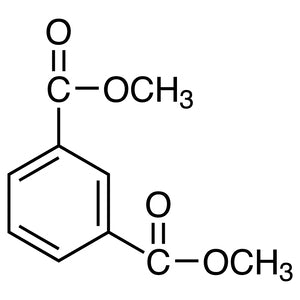
DimethylIsophthalate TCI I0157
Regular price From Rp 452.550,00Regular price -
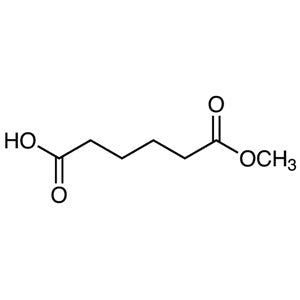
MonomethylAdipate TCI A1738
Regular price From Rp 1.485.750,00Regular price -
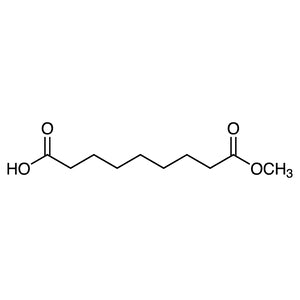
MonomethylAzelate TCI A1312
Regular price From Rp 1.115.100,00Regular price -
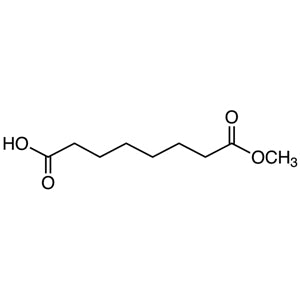
MonomethylSuberate TCI S0440
Regular price From Rp 2.068.500,00Regular price -
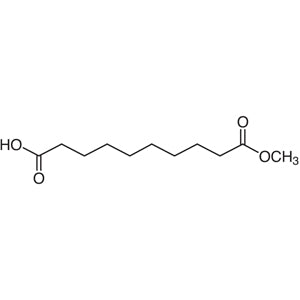
MonomethylSebacate TCI S0395
Regular price From Rp 3.551.100,00Regular price -
PropyleneGlycol1-MonomethylEther2-Acetate TCI P1171
Regular price Rp 610.050,00Regular price -
Monomethyl5-Nitroisophthalate TCI N0641
Regular price From Rp 1.008.000,00Regular price