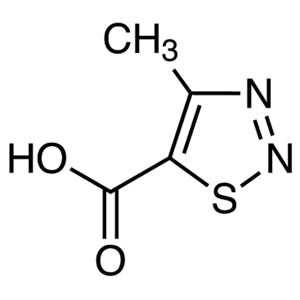
TCI M3081 is 4-Methyl-1,2,3-thiadiazole-5-carboxylic Acid, CAS number 18212-21-0, a heterocyclic building block that supplies a complete 1,2,3-thiadiazole core together with a ready-to-use carboxylic acid group at the 5-position. The 1,2,3-thiadiazole ring is not straightforward to construct from scratch, because its formation demands specific precursors and carefully controlled conditions. Having the compound available in finished form therefore saves a considerable amount of laboratory working time, allowing researchers to move directly to the molecule-assembly stage — whether through amidation, esterification, or activation into a more reactive acyl derivative — without first carrying out a long preliminary synthetic sequence.
The characteristics that make this compound a preferred choice are rooted in the combination of its ring system and its functional groups. The thiadiazole core contains one sulfur atom and two adjacent nitrogen atoms, which gives it a distinctive electronic profile as well as the ability to interact through the lone electron pairs of those heteroatoms. The methyl group at the 4-position contributes a modest degree of steric hindrance along with an electron-donating influence, while the carboxylic acid group at the 5-position serves as the principal attachment point and is compatible with virtually all standard coupling methods used in synthetic work.
In Indonesian laboratories, this type of heterocyclic building block is typically kept on hand by university research groups, agrochemical and pharmaceutical discovery teams, and contract synthesis facilities that assemble candidate molecules around a defined scaffold. Because the 4-methyl-1,2,3-thiadiazole framework arrives ready for derivatisation, small research teams with limited instrumentation can still pursue multi-step programmes, using the material as a fixed starting point rather than committing weeks of bench effort to building the ring itself.
Related TCI products
- TCI A0425 2349-67-9 2-Amino-5-mercapto-1,3,4-thiadiazole
- TCI T3544 2937-81-7 1,3,4-Thiadiazole-2,5-diamine
- TCI T2884 18686-82-3 1,3,4-Thiadiazole-2-thiol
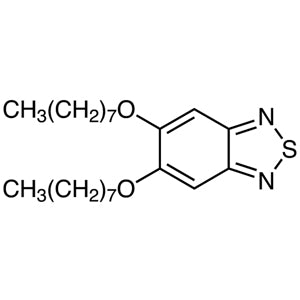
- TCI B4440 1254353-37-1 5,6-Bis(n-octyloxy)-2,1,3-benzothiadiazole
- TCI B0921 273-13-2 2,1,3-Benzothiadiazole
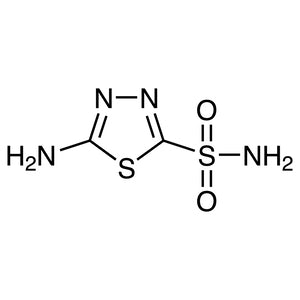
- TCI A3569 14949-00-9 5-Amino-1,3,4-thiadiazole-2-sulfonamide
- Amide library synthesis — the free carboxylic acid at the 5-position couples readily with a wide range of amines, letting a team generate a structurally related series around one consistent thiadiazole core.
- Ester derivative preparation — esterification of the 5-carboxyl group is a direct, well-established transformation that allows researchers to modify solubility and handling properties without disturbing the heterocyclic ring.
- Acyl intermediate generation — the acid can be activated into more reactive acyl derivatives, providing a versatile intermediate for subsequent bond-forming steps in a longer synthetic route.
- Heterocyclic scaffold exploration — the sulfur and two adjacent nitrogen atoms give a distinctive electronic profile, making the core valuable when studying how ring heteroatoms influence molecular behaviour.
- Structure-activity relationship work — the fixed 4-methyl substitution and single reactive handle let researchers vary one region of a molecule while holding the heterocyclic portion constant throughout the series.
| Brand | TCI (Tokyo Chemical Industry) |
|---|---|
| CAS number | 18212-21-0 |
| Molecular formula | — |
| Purity | — |
| Category | Chemistry > Building Blocks > Heterocyclic Building Blocks |
| Pack sizes | available in standard TCI research-scale packaging; please confirm the current pack options when ordering |
| Physical form | — |
| Storage | store according to the conditions stated on the manufacturer's label and Safety Data Sheet |
- Chemical Name: 4-Methyl-1,2,3-thiadiazole-5-carboxylic Acid
Store the container tightly closed in a cool, dry, well-ventilated area, away from direct sunlight, heat sources, and incompatible materials, following the conditions specified on the manufacturer's label and Safety Data Sheet. Keep the material in its original supplier container wherever possible; if transfer is necessary, use a clean, chemically compatible, tightly sealed container that is clearly labelled with the compound name, CAS number, and date of receipt. Handle the solid in a fume hood while wearing safety glasses, gloves, and a laboratory coat, and avoid generating dust during weighing. Consult the Safety Data Sheet before first use and dispose of residues and contaminated materials through your institution's chemical waste procedures.
—
Produk Terkait
-
2-Amino-5-mercapto-1,3,4-thiadiazole TCI A0425
Regular price From Rp 769.650,00Regular price -
1,3,4-Thiadiazole-2,5-diamine TCI T3544
Regular price Rp 2.995.650,00Regular price -
1,3,4-Thiadiazole-2-thiol TCI T2884
Regular price Rp 3.180.450,00Regular price -
5,6-Bis(n-octyloxy)-2,1,3-benzothiadiazole TCI B4440
Regular price Rp 3.817.800,00Regular price -
2,1,3-Benzothiadiazole TCI B0921
Regular price From Rp 1.140.300,00Regular price -
5-Amino-1,3,4-thiadiazole-2-sulfonamide TCI A3569
Regular price Rp 6.042.750,00Regular price -
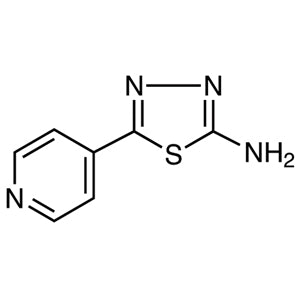
2-Amino-5-(4-pyridyl)-1,3,4-thiadiazole TCI A3038
Regular price From Rp 1.167.600,00Regular price -
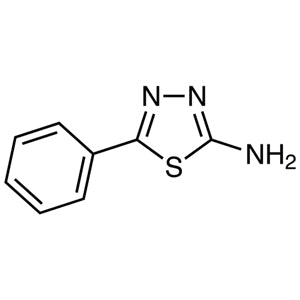
2-Amino-5-phenyl-1,3,4-thiadiazol TCI A3002
Regular price Rp 2.121.000,00Regular price