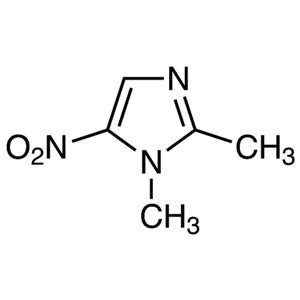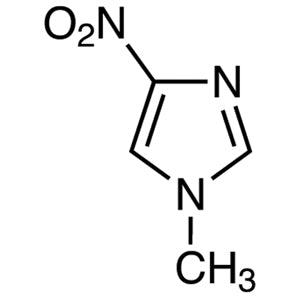
1-Methyl-4-nitroimidazole with CAS number 3034-41-1 is a five-membered heterocyclic compound of the imidazole class, carrying a methyl group on a ring nitrogen and a nitro group at the 4-position. The material functions as an important heterocyclic building block in organic chemistry and medicinal chemistry research, largely because the nitroimidazole core is a scaffold long recognised in the development of antimicrobial compounds. Having this material available in the laboratory allows researchers to begin work directly at the functionalisation stage, without first having to perform the nitration and methylation steps themselves, which demand harsh reaction conditions.
The property that makes this compound a preferred choice is its strongly electron-withdrawing nitro group, which fundamentally alters the character of the imidazole ring. That condition renders certain ring positions susceptible to nucleophilic aromatic substitution, a pathway that does not occur readily on ordinary imidazole. The nitro group can also be reduced to an amine, opening a route toward amino-imidazole derivatives, and it plays an essential role in compounds whose mechanism of action involves reductive activation. Methylation at the ring nitrogen simultaneously locks the tautomeric position, so the substitution pattern of the product remains defined and predictable rather than yielding a mixture of regioisomers.
In Indonesian laboratories, this building block is typically used by synthetic organic chemistry and medicinal chemistry groups at universities, research institutes, and pharmaceutical development units. It is normally handled at bench scale for multi-step syntheses, method development, and the preparation of derivative libraries, where a defined starting scaffold shortens the route considerably. Researchers working on antimicrobial candidates in particular rely on ready-made nitroimidazole intermediates so that limited laboratory time is spent on the informative steps rather than on preparing the core.
Related TCI products
- Nucleophilic aromatic substitution studies: the strongly electron-withdrawing nitro group activates the imidazole ring toward attack by nucleophiles, enabling substitutions that plain imidazole does not readily undergo.
- Synthesis of amino-imidazole derivatives: the nitro group is amenable to reduction into an amine, giving researchers a direct and well-defined route to amino-substituted imidazole scaffolds.
- Medicinal chemistry scaffold development: the nitroimidazole core is a long-established framework in antimicrobial compound research, making this material a logical starting point for candidate design.
- Study of reductively activated compounds: the nitro group is central to molecules whose mechanism depends on reductive activation, so this compound supports investigations into that class of chemistry.
- Regiochemically defined building block work: methylation on the ring nitrogen locks the tautomer, letting chemists construct derivatives without contending with mixtures of regioisomeric products.
| Brand | TCI |
|---|---|
| CAS number | 3034-41-1 |
| Molecular formula | — |
| Purity | — |
| Category | Chemistry > Building Blocks > Heterocyclic Building Blocks |
| Pack sizes | available in standard laboratory research pack sizes; please confirm the currently listed options when ordering |
| Physical form | — |
| Storage | store in a tightly closed container in a cool, dry, well-ventilated place away from light and incompatible materials |
- Catalogue number: M3171
Store the container tightly closed in a cool, dry, and well-ventilated area, protected from direct sunlight and kept away from heat sources, ignition sources, and strong reducing agents. The original manufacturer container is the most suitable option; if transfer is necessary, use a chemically compatible, clearly labelled container with a secure closure. Handle the material inside a fume hood while wearing a laboratory coat, chemical-resistant gloves, and safety goggles, and avoid the formation and inhalation of dust. Keep the container closed when not in use, and consult the manufacturer's Safety Data Sheet before handling for full precaution and disposal guidance.
—
Produk Terkait
-
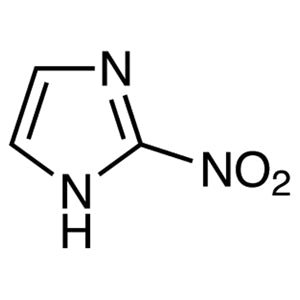
2-Nitroimidazole TCI N0891
Regular price From Rp 3.578.400,00Regular price -
4-Nitroimidazole TCI N0506
Regular price From Rp 717.150,00Regular price -
2-Hydroxymethyl-1-methyl-5-nitroimidazole TCI H1439
Regular price From Rp 1.538.250,00Regular price -
2-Bromo-4-nitroimidazole TCI B3503
Regular price From Rp 1.749.300,00Regular price -
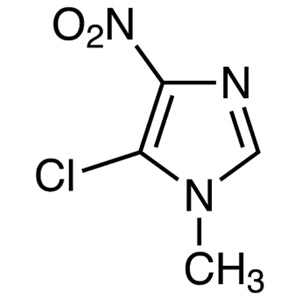
5-Chloro-1-methyl-4-nitroimidazole TCI C1646
Regular price Rp 2.041.200,00Regular price -
2-Methyl-5-nitroimidazole-1-ethanol TCI M0924
Regular price From Rp 2.199.750,00Regular price -
1,2-Dimethyl-5-nitroimidazole[forBiochemicalResearch] TCI D4081
Regular price From Rp 610.050,00Regular price -
1,2-Dimethyl-5-nitroimidazole TCI D1564
Regular price Rp 928.200,00Regular price



![1,2-Dimethyl-5-nitroimidazole [for Biochemical Research] (CAS 551-92-8) - TCI D4081 - AMI Scientific](http://amiscientific.com/cdn/shop/files/TCI2510D4081.jpg?v=1767107037&width=533)