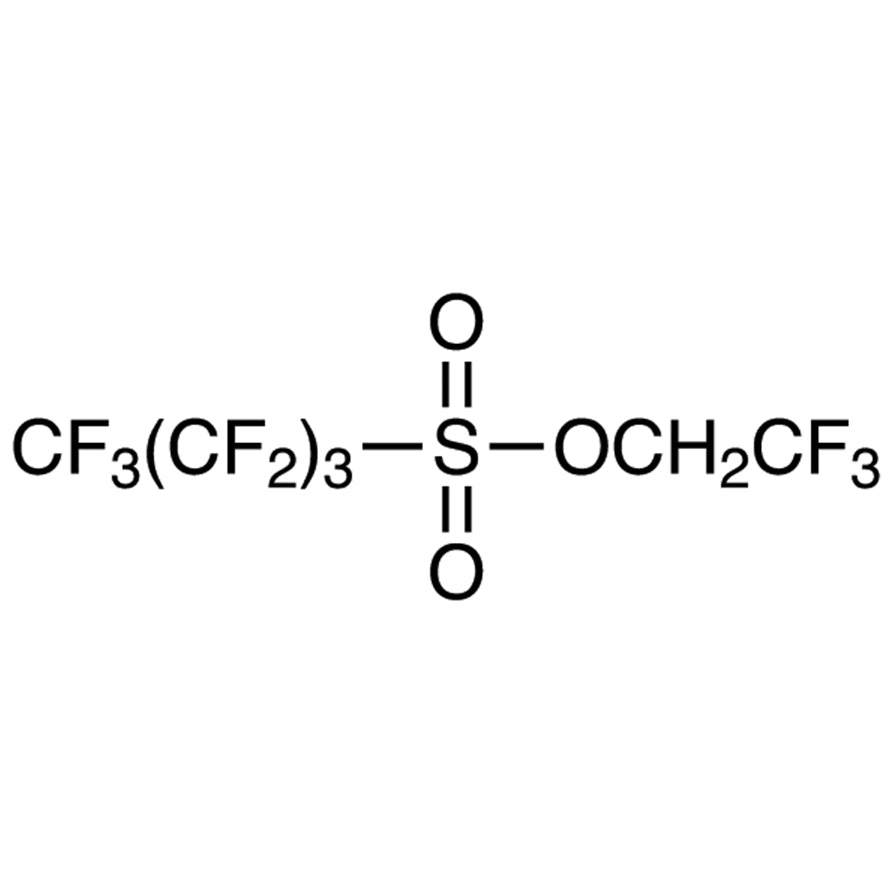
2,2,2-Trifluoroethyl Nonafluorobutanesulfonate from TCI (product code N0677, CAS 79963-95-4) is a fluorinated sulfonate ester. It combines a 2,2,2-trifluoroethyl group with a nonafluorobutanesulfonate leaving group, commonly called a nonaflate. In synthetic laboratories it works as a fluorinated building block and as a trifluoroethylating reagent, which means it attaches the CF3CH2- group to nucleophilic atoms such as oxygen, nitrogen or sulfur. The trifluoroethyl group is in demand in medicinal and agrochemical chemistry because it can change a molecule's lipophilicity and metabolic stability.
Chemists choose this compound because the nonaflate is an excellent leaving group, comparable to a triflate. This matters because the carbon next to a CF3 group is usually hard for nucleophiles to attack. With a leaving group as strong as nonaflate, alkylation at that carbon is much easier than with ordinary trifluoroethyl halides. Nonaflate esters also tend to be easier to handle than some of the more volatile triflate reagents. This gives researchers a practical option for trifluoroethylating phenols, amines, thiols and other nucleophiles when they need reliable reactivity without the drawbacks of less reactive alkylating agents.
In Indonesia, this reagent suits research groups in university chemistry departments, pharmaceutical and agrochemical R&D laboratories, and institutes working on synthetic methodology. It is typically used at research scale to prepare fluorinated analogues of lead compounds, to study how a trifluoroethyl group affects a molecule's properties, or to build fluorinated intermediates for further synthesis. Because it is a TCI reagent, laboratories can rely on consistent documentation from the manufacturer when they plan experiments, keep reaction records and meet the safety paperwork requirements of their institution.
TCI brochures (PDF)
- Fluorous Chemistry 2025-01-21 · p. 9
Related TCI products
- TCI T3991 370-69-4 Tris(2,2,2-trifluoroethyl) Phosphite
- TCI T3422 406-95-1 2,2,2-Trifluoroethyl Acetate
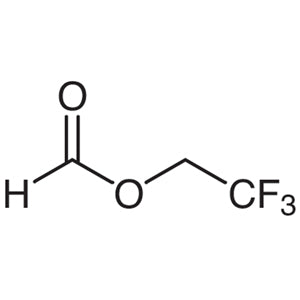
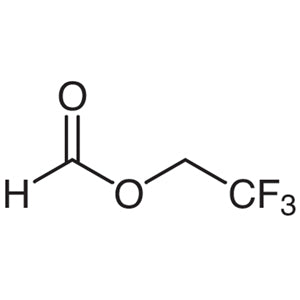
- TCI T2586 32042-38-9 2,2,2-Trifluoroethyl Formate
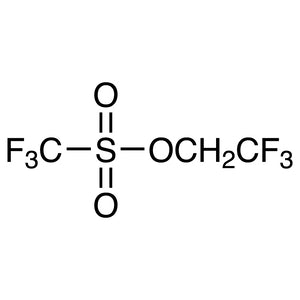
- TCI T1604 6226-25-1 2,2,2-Trifluoroethyl Trifluoromethanesulfonate
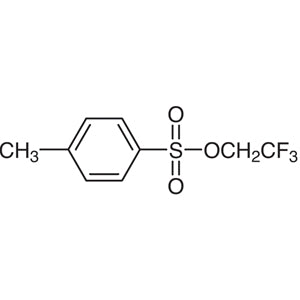
- TCI T1516 433-06-7 2,2,2-Trifluoroethyl p-Toluenesulfonate
- TCI B2627 92466-70-1 Bis(2,2,2-trifluoroethyl) Phosphite
- O-trifluoroethylation of phenols and alcohols: the strong nonaflate leaving group lets the CF3CH2- group attach to oxygen nucleophiles, even though the carbon next to CF3 normally resists attack.
- N-trifluoroethylation of amines: it gives a practical route to trifluoroethylated amines, which are useful in medicinal chemistry for tuning basicity, lipophilicity and metabolic stability.
- S-trifluoroethylation of thiols: sulfur nucleophiles react well with this activated ester, so the reagent suits the preparation of trifluoroethyl thioethers for further synthetic work.
- Fluorinated building block synthesis: as a fluorinated building block, it helps introduce trifluoroethyl units into intermediates for pharmaceutical and agrochemical research programmes.
- Alternative to triflate and halide reagents: it offers reactivity comparable to triflates and much better than trifluoroethyl halides, and it tends to be easier to handle than more volatile triflate reagents.
| Brand | TCI (product code N0677) |
|---|---|
| CAS number | 79963-95-4 |
| Molecular formula | — |
| Purity | — |
| Category | Chemistry > Building Blocks > Fluorinated Building Blocks |
| Pack sizes | as listed on the product page; please ask AMI Scientific about availability |
| Physical form | — |
| Storage | follow the conditions on the TCI label and Safety Data Sheet |
- Chemical type: fluorinated sulfonate ester (2,2,2-trifluoroethyl nonaflate)
Store this reagent in its original tightly closed container, in a cool, dry and well-ventilated area, away from moisture, strong bases, strong nucleophiles and incompatible materials. Always follow the storage conditions on the TCI label and Safety Data Sheet. Because it is a reactive alkylating agent, handle it only in a fume hood while wearing chemical-resistant gloves, safety goggles and a lab coat. Avoid skin contact, eye contact and breathing in vapours. Reseal the container right after use to limit moisture exposure, label secondary containers clearly, and dispose of residues and contaminated materials as halogenated chemical waste in line with your institution's rules.
—
Produk Terkait
-
Tris(2,2,2-trifluoroethyl)Phosphite TCI T3991
Regular price From Rp 1.538.250,00Regular price -
2,2,2-TrifluoroethylAcetate TCI T3422
Regular price From Rp 795.900,00Regular price -
2,2,2-TrifluoroethylFormate TCI T2586
Regular price From Rp 769.650,00Regular price -
2,2,2-TrifluoroethylTrifluoromethanesulfonate TCI T1604
Regular price From Rp 3.232.950,00Regular price -
2,2,2-Trifluoroethylp-Toluenesulfonate TCI T1516
Regular price Rp 2.041.200,00Regular price -
Bis(2,2,2-trifluoroethyl)Phosphite TCI B2627
Regular price From Rp 2.068.500,00Regular price -
2,2,2-TrifluoroethylButyrate TCI B2144
Regular price From Rp 1.193.850,00Regular price -
2,2,2-TrifluoroethylAcrylate(stabilizedwithMEHQ) TCI A1152
Regular price From Rp 689.850,00Regular price