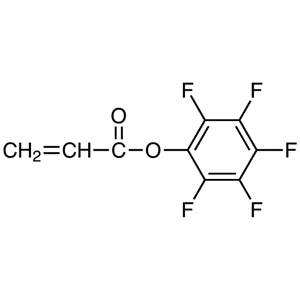
2,2,2-Trifluoroethyl Acrylate (stabilized with MEHQ) is a chemical compound widely used as a building block in the synthesis of fluorinated compounds. This material plays a crucial role in laboratory settings where precision and stability are essential. Its unique molecular structure, featuring an acrylate group and three fluorine atoms on the ethyl chain, makes it highly reactive and suitable for a variety of chemical reactions. The stabilization with MEHQ enhances its shelf life and reduces the risk of unwanted oxidation or degradation, ensuring consistent performance in experimental processes.
The compound's chemical and physical properties make it a preferred choice for researchers working in organic chemistry and material science. The fluorinated structure provides excellent dielectric properties and allows for strong bonding with various functional groups. Its high reactivity and stability under controlled conditions make it ideal for applications requiring precise chemical transformations. Additionally, the presence of fluorine atoms contributes to its thermal stability and resistance to environmental factors, which is vital in long-term research projects.
In Indonesian laboratories, 2,2,2-Trifluoroethyl Acrylate is commonly used in research and development of new materials, including fluorinated polymers and composites. It is a key component in experiments that require high chemical stability and reactivity. Its role in pharmaceutical and industrial applications is growing, as it supports the development of advanced materials with specialized properties. The compound’s reliability and performance make it a valuable resource for academic and industrial research in Indonesia.
TCI brochures (PDF)
- Fluorinated Monomers 2025-10-03 · p. 1
- Monomers 2025-05-28 · p. 3
Related TCI products
- TCI M0738 352-87-4 2,2,2-Trifluoroethyl Methacrylate (stabilized with MEHQ)
- TCI T2240 7383-71-3 2,2,3,3-Tetrafluoropropyl Acrylate (stabilized with MEHQ)
- TCI P2179 71195-85-2 Pentafluorophenyl Acrylate (stabilized with MEHQ)
- TCI O0318 376-84-1 1H,1H,5H-Octafluoropentyl Acrylate (stabilized with MEHQ)
- TCI N1107 52591-27-2 1H,1H,2H,2H-Nonafluorohexyl Acrylate (stabilized with TBC)
- TCI H1582 2160-89-6 1,1,1,3,3,3-Hexafluoroisopropyl Acrylate (stabilized with TBC)
- Fluorinated Polymer Synthesis: This compound is ideal for creating fluorinated polymers due to its reactive acrylate group and fluorine content, enabling the formation of durable and chemically stable materials.
- Organic Chemistry Reactions: Its high reactivity and stability make it a preferred reagent in organic synthesis, particularly in reactions requiring precise control over functional group introduction.
- Material Science Research: The compound is used in the development of advanced composites and coatings, leveraging its dielectric properties and chemical resistance.
- Pharmaceutical Compound Development: Its fluorinated structure can enhance the bioavailability and stability of drug molecules, supporting pharmaceutical research.
- Environmental Testing: The compound’s chemical inertness and stability make it suitable for use in environmental testing protocols requiring long-term sample integrity.
| Brand | TCI |
|---|---|
| CAS number | 407-47-6 |
| Molecular formula | — |
| Purity | — |
| Category | Chemistry > Building Blocks > Fluorinated Building Blocks |
| Pack sizes | Available in various quantities as per standard laboratory supply |
| Physical form | Liquid |
| Storage | Store in a cool, dark place away from heat and direct sunlight |
This compound should be stored in a cool, dark environment to maintain its stability and prevent degradation. It is recommended to use airtight containers made of materials compatible with organic solvents to minimize exposure to air and moisture. Due to its reactivity, it should be handled in a well-ventilated area, preferably under a fume hood, to ensure safety. Avoid contact with strong oxidizing agents or incompatible substances to prevent unwanted reactions. Proper labeling and storage conditions are essential to maintain the integrity of the compound and ensure safe handling in laboratory environments.
—
Produk Terkait
-
2,2,2-TrifluoroethylMethacrylate(stabilizedwithMEHQ) TCI M0738
Regular price From Rp 1.458.450,00Regular priceRp 1.019.550,00Sale price From Rp 1.458.450,00 -
2,2,3,3-TetrafluoropropylAcrylate(stabilizedwithMEHQ) TCI T2240
Regular price From Rp 1.220.100,00Regular priceRp 852.600,00Sale price From Rp 1.220.100,00 -
PentafluorophenylAcrylate(stabilizedwithMEHQ) TCI P2179
Regular price Rp 2.862.300,00Regular priceRp 2.001.300,00Sale price Rp 2.862.300,00 -
1H,1H,5H-OctafluoropentylAcrylate(stabilizedwithMEHQ) TCI O0318
Regular price From Rp 1.035.300,00Regular priceRp 723.450,00Sale price From Rp 1.035.300,00 -
1H,1H,2H,2H-NonafluorohexylAcrylate(stabilizedwithTBC) TCI N1107
Regular price From Rp 1.670.550,00Regular priceRp 1.167.600,00Sale price From Rp 1.670.550,00 -
1,1,1,3,3,3-HexafluoroisopropylAcrylate(stabilizedwithTBC) TCI H1582
Regular price Rp 3.446.100,00Regular priceRp 2.409.750,00Sale price Rp 3.446.100,00 -
2,2,3,3,4,4,5,5,6,6,7,7-DodecafluoroheptylAcrylate(stabilizedwithTBC) TCI D4989
Regular price Rp 1.829.100,00Regular priceRp 1.278.900,00Sale price Rp 1.829.100,00 -
2,2,3,3-TetrafluoropropylMethacrylate(stabilizedwithMEHQ) TCI T3728
Regular price From Rp 557.550,00Regular priceRp 389.550,00Sale price From Rp 557.550,00