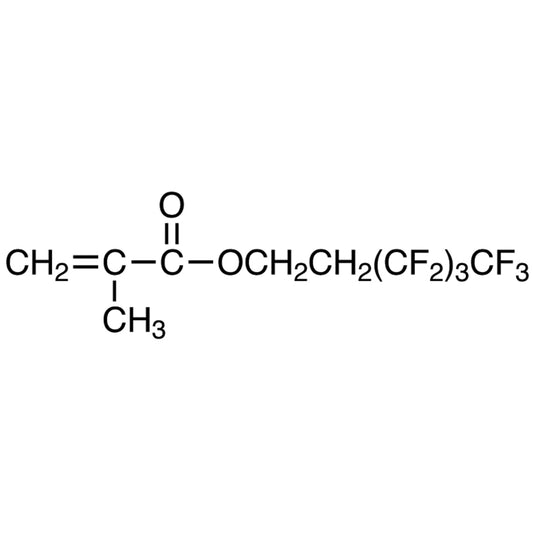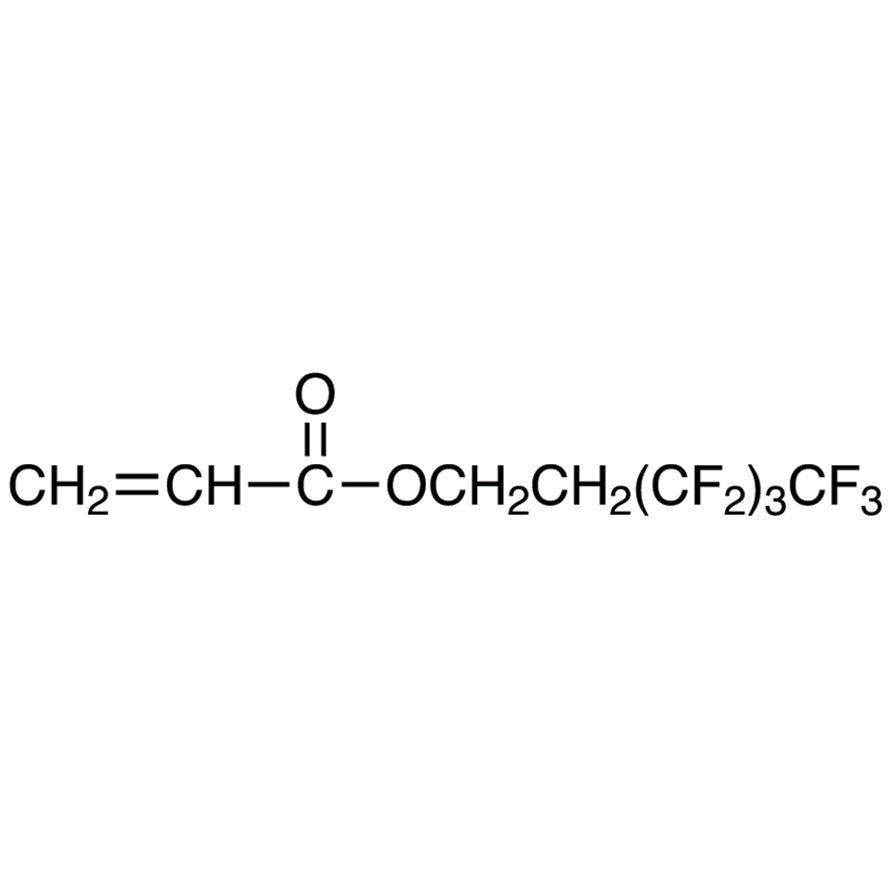
TCI N1107 52591-27-2 1H,1H,2H,2H-Nonafluorohexyl Acrylate (stabilized with TBC) is a specialized chemical compound used in laboratory settings for advanced materials science research. This monomer is designed for polymer synthesis and is particularly valued for its unique fluorinated structure. Its hydrophobic nature and surface adhesion capabilities make it a versatile reagent in various chemical and material experiments. It plays a key role in developing polymers with enhanced performance properties, such as water and oil resistance. This compound is essential for researchers aiming to create high-performance materials with tailored chemical properties.
The compound's high fluorination level contributes to its chemical stability and reactivity. Its ability to resist oxidative degradation, thanks to stabilization with tert-butylcatechol (TBC), ensures consistent performance across multiple experimental cycles. This stability makes it a preferred choice for applications requiring long-term reliability and reproducibility. The controlled reactivity of the compound allows for precise manipulation in polymer synthesis, enabling the creation of materials with specific functional properties. These characteristics are crucial for both academic and industrial research in material science.
In Indonesian laboratories, this compound is widely used in research focused on polymer development, surface coatings, and advanced material applications. It is a key component in studies related to hydrophobic materials, adhesion science, and functional polymer synthesis. Many research institutions and universities in Indonesia rely on this compound for its reliability and performance in creating materials with specialized properties. Its availability through AMI Scientific ensures that researchers have access to this essential reagent for their experiments.
- Polymer synthesis for creating hydrophobic and oleophobic materials due to its fluorinated structure and surface adhesion properties.
- Surface coating development for applications requiring water and oil resistance in industrial and academic research settings.
- Functional material research where controlled reactivity and chemical stability are critical for achieving desired performance characteristics.
- Adhesion science experiments to study the interaction between polymers and various substrates in material engineering.
- Advanced material development for applications in coatings, membranes, and specialty polymers requiring high chemical resistance.
| Brand | TCI |
|---|---|
| CAS number | 52591-27-2 |
| Molecular formula | — |
| Purity | — |
| Category | Materials Science > Polymer/Macromolecule Reagents > Monomers |
| Pack sizes | Available in various quantities as per supplier specifications |
| Physical form | Liquid |
| Storage | Store in a cool, dry place away from direct sunlight and incompatible materials |
This compound should be stored in a cool, dry environment to maintain its stability and prevent degradation. It is recommended to use sealed, airtight containers to minimize exposure to moisture and air. Due to its chemical reactivity, it should be kept away from strong oxidizing agents and incompatible substances. Proper labeling and storage in a designated chemical storage area are essential for safety. Laboratory personnel should handle the compound with appropriate personal protective equipment, including gloves and safety goggles, to ensure safe handling and reduce potential risks. Regular monitoring of storage conditions is advised to maintain the integrity of the material throughout its shelf life.
—
Produk Terkait
-
1H,1H,2H,2H-NonafluorohexylMethacrylate(stabilizedwithTBC) TCI N1143
Regular price From Rp 1.485.750,00Regular price -
1H,1H,2H,2H-NonafluorohexylMethacrylate(stabilizedwithMEHQ) TCI N1014
Regular price From Rp 1.590.750,00Regular price -
2,2,3,3-TetrafluoropropylAcrylate(stabilizedwithMEHQ) TCI T2240
Regular price From Rp 1.220.100,00Regular price -
2,2,2-TrifluoroethylAcrylate(stabilizedwithMEHQ) TCI A1152
Regular price From Rp 689.850,00Regular price -
PentafluorophenylAcrylate(stabilizedwithMEHQ) TCI P2179
Regular price Rp 2.862.300,00Regular price -
1H,1H,5H-OctafluoropentylAcrylate(stabilizedwithMEHQ) TCI O0318
Regular price From Rp 1.035.300,00Regular price -
1,1,1,3,3,3-HexafluoroisopropylAcrylate(stabilizedwithTBC) TCI H1582
Regular price Rp 3.446.100,00Regular price -
2,2,3,3,4,4,5,5,6,6,7,7-DodecafluoroheptylAcrylate(stabilizedwithTBC) TCI D4989
Regular price Rp 1.829.100,00Regular price