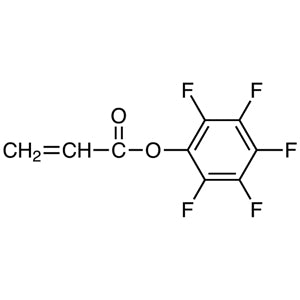
TCI O0318 376-84-1 1H,1H,5H-Octafluoropentyl Acrylate (stabilized with MEHQ) is a specialized monomer used in scientific and industrial applications related to polymer chemistry. This compound is a key component in the development of advanced materials due to its unique molecular structure and functional properties. Its fluorinated chain provides exceptional chemical stability and reactivity, making it a versatile reagent for various synthesis processes. In the laboratory, it serves as a fundamental building block for creating polymers with tailored properties, such as improved thermal resistance and chemical inertness.
The material is preferred for its combination of stability and reactivity. The inclusion of MEHQ (methyl ethyl ketone peroxide) as a stabilizer enhances its resistance to oxidation and degradation, ensuring long-term usability and consistent performance. This makes it ideal for applications requiring high chemical stability and controlled reactivity. The fluorinated structure also contributes to its low surface energy, which is beneficial in coating and surface modification applications. These properties collectively make it a reliable and efficient reagent for polymer synthesis and material development.
In Indonesian laboratories, this compound is widely used in research related to materials science, chemistry, and environmental technology. It is particularly relevant for studies involving composite materials, coatings, and insulation. Its availability through AMI Scientific ensures that local researchers and industries have access to high-quality reagents for their experimental needs. The compound’s performance in controlled polymerization reactions supports innovation in both academic and industrial settings.
TCI brochures (PDF)
- Fluorous Chemistry 2025-01-21 · p. 8
- Fluorination Reagents, Fluorinated Building Blocks 2026-03-18 · p. 54
Related TCI products
- TCI O0481 355-93-1 1H,1H,5H-Octafluoropentyl Methacrylate (stabilized with MEHQ)
- TCI T2240 7383-71-3 2,2,3,3-Tetrafluoropropyl Acrylate (stabilized with MEHQ)
- TCI A1152 407-47-6 2,2,2-Trifluoroethyl Acrylate (stabilized with MEHQ)
- TCI P2179 71195-85-2 Pentafluorophenyl Acrylate (stabilized with MEHQ)
- TCI N1107 52591-27-2 1H,1H,2H,2H-Nonafluorohexyl Acrylate (stabilized with TBC)
- TCI H1582 2160-89-6 1,1,1,3,3,3-Hexafluoroisopropyl Acrylate (stabilized with TBC)
- Polymer synthesis for creating fluorinated polymers with enhanced thermal and chemical resistance due to its fluorinated chain and controlled reactivity.
- Development of composite materials where the compound's low surface energy and chemical stability contribute to improved adhesion and durability.
- Formulation of coatings and surface treatments where the material’s inertness and reactivity enable the creation of protective and functional layers.
- Research in environmental technology for the development of materials with reduced environmental impact and improved degradation resistance.
- Controlled radical polymerization experiments where the compound’s stability and reactivity support precise and reproducible polymerization processes.
| Brand | TCI |
|---|---|
| CAS number | 376-84-1 |
| Molecular formula | — |
| Purity | — |
| Category | Materials Science > Polymer/Macromolecule Reagents > Monomers |
| Pack sizes | Available in various quantities as per standard supplier offerings |
| Physical form | Liquid |
| Storage | Store in a cool, dry, and well-ventilated area away from heat and direct sunlight |
This material should be stored in a cool, dry, and well-ventilated area, away from heat and direct sunlight. It is recommended to use sealed, airtight containers to prevent exposure to moisture and air, which may affect its stability. Due to its chemical nature, it should be handled in a fume hood or well-ventilated workspace to minimize inhalation risks. Avoid contact with skin and eyes, and ensure proper personal protective equipment is worn when handling. The material is stable under normal storage conditions but should be kept away from incompatible substances such as strong oxidizers. Regular inspection of storage containers is advised to ensure integrity and safety.
—
Produk Terkait
-
1H,1H,5H-OctafluoropentylMethacrylate(stabilizedwithMEHQ) TCI O0481
Regular price From Rp 903.000,00Regular price -
2,2,3,3-TetrafluoropropylAcrylate(stabilizedwithMEHQ) TCI T2240
Regular price From Rp 1.220.100,00Regular price -
2,2,2-TrifluoroethylAcrylate(stabilizedwithMEHQ) TCI A1152
Regular price From Rp 689.850,00Regular price -
PentafluorophenylAcrylate(stabilizedwithMEHQ) TCI P2179
Regular price Rp 2.862.300,00Regular price -
1H,1H,2H,2H-NonafluorohexylAcrylate(stabilizedwithTBC) TCI N1107
Regular price From Rp 1.670.550,00Regular price -
1,1,1,3,3,3-HexafluoroisopropylAcrylate(stabilizedwithTBC) TCI H1582
Regular price Rp 3.446.100,00Regular price -
2,2,3,3,4,4,5,5,6,6,7,7-DodecafluoroheptylAcrylate(stabilizedwithTBC) TCI D4989
Regular price Rp 1.829.100,00Regular price -
Octafluoro-4,4'-biphenol TCI D1519
Regular price Rp 5.539.800,00Regular price