8-Nitro-7-quinolinecarboxaldehyde, supplied by TCI under product code N0852 (CAS 101327-87-1), is a quinoline derivative with two functional groups next to each other: a nitro group at the 8-position and an aldehyde group at the 7-position. It is a heterocyclic building block used in organic synthesis. Both functional groups can be transformed step by step into more complex structures. In the laboratory, it serves as an intermediate for building fused heteroaromatic ring systems, metal-chelating ligands, and target molecules in medicinal chemistry research.
The main reason chemists choose this compound is that its nitro and aldehyde groups sit next to each other on the ring. When the nitro group is reduced to an amine, the product is 8-amino-7-quinolinecarboxaldehyde. This is a known precursor for Friedländer-type condensation reactions that build substituted 1,10-phenanthroline frameworks, which are well known as chelating ligands. The aldehyde group also reacts readily with amines, hydrazines, and other nucleophilic reagents. This allows it to form Schiff bases and hydrazones, or to have its chain extended through olefination reactions.
For researchers in Indonesia working in synthetic organic chemistry, coordination chemistry, or medicinal chemistry, this compound is a practical starting point for building nitrogen-containing heterocyclic frameworks. University research groups, pharmaceutical development laboratories, and materials science teams can use it to prepare ligand libraries, develop new synthetic methods, or produce intermediates for multistep synthesis. Buying it from a recognised brand such as TCI helps keep results consistent and reproducible across research projects, theses, and collaborative work.
- Synthesis of substituted 1,10-phenanthrolines: after the nitro group is reduced to an amine, the neighbouring amino and aldehyde groups make it a suitable precursor for Friedländer-type condensation.
- Preparation of metal-chelating ligands: the phenanthroline and quinoline frameworks made from this compound are widely used to coordinate metal ions in coordination chemistry and catalysis research.
- Construction of fused heteroaromatic ring systems: its two neighbouring functional groups allow step-by-step ring-forming reactions that produce more complex nitrogen-containing polycyclic structures.
- Formation of Schiff bases and hydrazones: the reactive aldehyde group condenses easily with amines and hydrazines, giving imine and hydrazone derivatives for further study or screening.
- Medicinal chemistry intermediate synthesis: as a heterocyclic building block, it supports the preparation of quinoline-based target molecules and compound series explored in drug discovery research.
| Brand | TCI (product code N0852) |
|---|---|
| CAS number | 101327-87-1 |
| Molecular formula | — |
| Purity | — |
| Category | Chemistry > Building Blocks > Heterocyclic Building Blocks |
| Pack sizes | as listed on the product page |
| Physical form | refer to the TCI product documentation |
| Storage | follow the conditions stated on the TCI label and Safety Data Sheet |
Keep this compound in its original, tightly closed container in a cool, dry, well-ventilated place, away from direct light, heat sources, and incompatible materials such as strong oxidising or reducing agents. Always follow the storage conditions given on the TCI label and Safety Data Sheet. Handle the material in a fume hood while wearing suitable protective gloves, safety glasses, and a lab coat. Do not inhale dust or let it touch your skin or eyes. Close the container promptly after each use to protect the reactive aldehyde group from air and moisture. Dispose of waste according to local regulations for chemical waste.
—
Produk Terkait
-
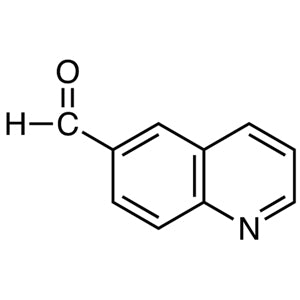
6-Quinolinecarboxaldehyde TCI Q0097
Regular price From Rp 1.724.100,00Regular price -
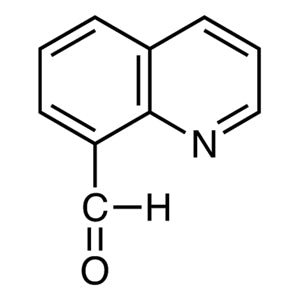
8-Quinolinecarboxaldehyde TCI Q0096
Regular price From Rp 1.670.550,00Regular price -
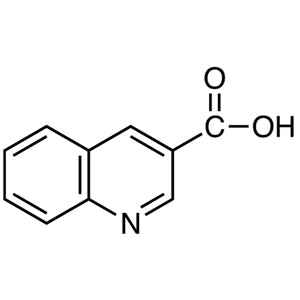
3-QuinolinecarboxylicAcid TCI Q0090
Regular price From Rp 928.200,00Regular price -
5-QuinolinecarboxylicAcid TCI Q0089
Regular price Rp 3.763.200,00Regular price -
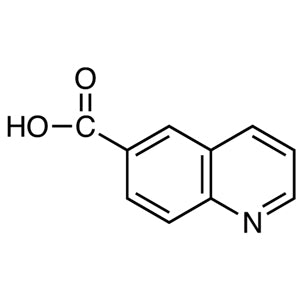
6-QuinolinecarboxylicAcid TCI Q0077
Regular price From Rp 2.571.450,00Regular price -
3-Quinolinecarboxaldehyde TCI Q0075
Regular price From Rp 2.625.000,00Regular price -
7-Quinolinecarboxaldehyde TCI Q0067
Regular price From Rp 7.023.450,00Regular price -
8-QuinolinecarboxylicAcid TCI Q0066
Regular price Rp 2.782.500,00Regular price