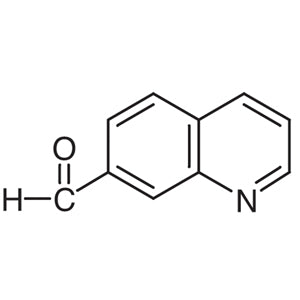
7-Quinolinecarboxaldehyde is a chemical compound widely used as a building block in the synthesis of heterocyclic compounds. It plays a crucial role in laboratory settings where the creation of complex organic molecules is required. This compound is particularly valued for its ability to participate in various chemical reactions, making it an essential tool for researchers working in medicinal chemistry and organic synthesis. Its versatility allows it to be incorporated into a wide range of experimental protocols, supporting the development of new compounds with potential applications in pharmaceutical and industrial fields.
One of the key properties that make 7-Quinolinecarboxaldehyde a preferred choice is its chemical stability under specific conditions. It exhibits good reactivity towards different functional groups, enabling it to undergo a variety of chemical transformations. Additionally, its ability to maintain structural integrity during reactions ensures consistent results in laboratory experiments. These characteristics make it a reliable and efficient reagent for chemists aiming to achieve precise and reproducible outcomes in their research.
In Indonesian laboratories, 7-Quinolinecarboxaldehyde is commonly used in scientific research and the development of chemical products. Researchers and scientists frequently utilize this compound to create new substances with applications in medicine, pharmacy, and industry. Its availability supports the advancement of various research projects, facilitating innovation and discovery in the field of chemistry.
- Medicinal Chemistry Research: This compound is ideal for synthesizing bioactive molecules due to its structural versatility and reactivity.
- Organic Synthesis Projects: It serves as a key building block for creating complex heterocyclic structures in synthetic pathways.
- Pharmaceutical Development: Its ability to form stable intermediates makes it suitable for drug discovery and compound modification.
- Industrial Chemical Innovation: It supports the creation of new chemical products with tailored properties for specific applications.
- Academic Research: It is widely used in educational and research settings to explore chemical reactivity and molecular design.
| Brand | TCI |
|---|---|
| CAS number | 49573-30-0 |
| Molecular formula | — |
| Purity | — |
| Category | Chemistry > Building Blocks > Heterocyclic Building Blocks |
| Pack sizes | Available in various quantities as per standard laboratory supply |
| Physical form | Solid |
| Storage | Store in a cool, dry place away from light and moisture |
7-Quinolinecarboxaldehyde should be stored in a cool, dry environment, away from direct light and moisture to maintain its chemical stability. It is recommended to use airtight containers to prevent exposure to air and humidity, which could affect its reactivity. In laboratory settings, it should be handled with appropriate personal protective equipment, such as gloves and safety goggles, to ensure safety during use. Proper ventilation is also essential when working with this compound to minimize inhalation risks. Regular monitoring of storage conditions is advised to ensure the compound remains in optimal condition for experimental use.
—
Produk Terkait
-
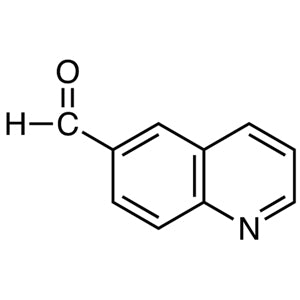
6-Quinolinecarboxaldehyde TCI Q0097
Regular price From Rp 1.724.100,00Regular price -
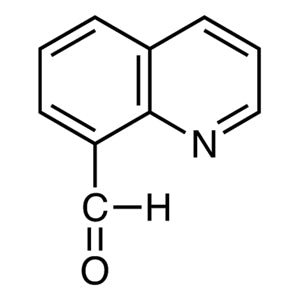
8-Quinolinecarboxaldehyde TCI Q0096
Regular price From Rp 1.670.550,00Regular price -
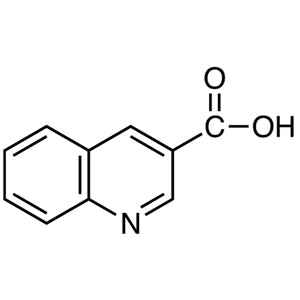
3-QuinolinecarboxylicAcid TCI Q0090
Regular price From Rp 928.200,00Regular price -
5-QuinolinecarboxylicAcid TCI Q0089
Regular price Rp 3.763.200,00Regular price -
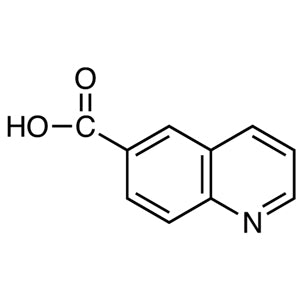
6-QuinolinecarboxylicAcid TCI Q0077
Regular price From Rp 2.571.450,00Regular price -
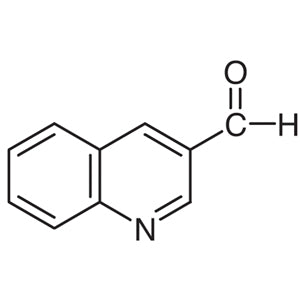
3-Quinolinecarboxaldehyde TCI Q0075
Regular price From Rp 2.625.000,00Regular price -
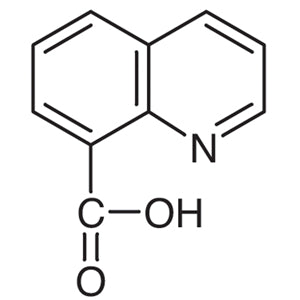
8-QuinolinecarboxylicAcid TCI Q0066
Regular price Rp 2.782.500,00Regular price -
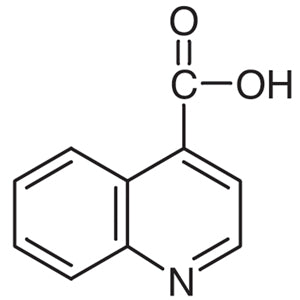
4-QuinolinecarboxylicAcid TCI Q0065
Regular price From Rp 1.829.100,00Regular price