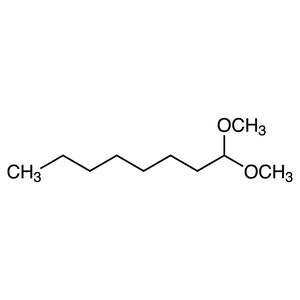
n-Octanal Dimethyl Acetal, also known as 1,1-dimethoxyoctane (CAS 10022-28-3), is the acetal form of the aldehyde octanal. In this compound, the carbonyl group has been converted into a carbon bearing two methoxy groups. TCI lists it in its catalog as a non-heterocyclic building block. In the laboratory, this acetal serves as a protected and more stable form of octanal. It is also used in fragrance research and as an intermediate for synthesizing eight-carbon compounds that need a latent aldehyde group.
Chemists choose this material because the acetal group resists bases, nucleophiles, hydride reducing agents and organometallic reagents. This lets them modify other parts of a molecule without disturbing the protected aldehyde. Once those steps are finished, the aldehyde can be released again by hydrolysis with dilute acid. Compared with free octanal, the acetal form is also more resistant to air oxidation to the corresponding carboxylic acid. Its lipophilic character and soft odour make it of interest in studies of fragrance composition.
In Indonesia, n-octanal dimethyl acetal is relevant to organic chemistry laboratories that teach and research protecting-group strategies. It gives students and researchers a clear, practical example of protecting an aldehyde and removing that protection under acidic conditions. Research groups working on multistep synthesis can use it as a dependable C8 intermediate. Laboratories studying aroma and fragrance composition may also find it useful as a reference material for exploring how acetals contribute to scent profiles.
Related TCI products
- TCI B1901 36255-44-4 3-Bromopropionaldehyde Dimethyl Acetal
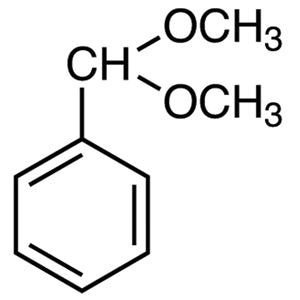
- TCI B1197 1125-88-8 Benzaldehyde Dimethyl Acetal
- TCI B1097 7252-83-7 Bromoacetaldehyde Dimethyl Acetal (stabilized with K2CO3)
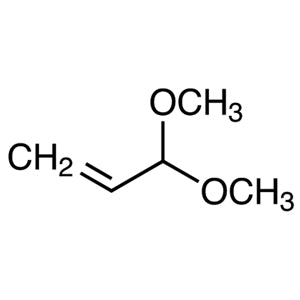
- TCI A2455 6044-68-4 Acrolein Dimethyl Acetal
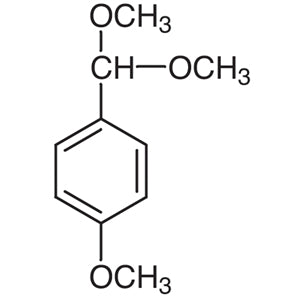
- TCI A1247 2186-92-7 p-Anisaldehyde Dimethyl Acetal
- TCI A0801 22483-09-6 Aminoacetaldehyde Dimethyl Acetal
- Aldehyde protecting-group studies: the dimethyl acetal masks the octanal carbonyl, so it is a clear model for demonstrating how aldehydes are protected and later deprotected in organic synthesis.
- Multistep synthesis of C8 compounds: as a latent aldehyde it lets chemists build eight-carbon target molecules while keeping the reactive carbonyl hidden until it is needed.
- Reactions with organometallic and hydride reagents: the acetal withstands bases, nucleophiles, hydride reducers and organometallic reagents, so other functional groups can be transformed selectively.
- Acid-catalysed hydrolysis experiments: treating the compound with dilute acid regenerates octanal, which makes it suitable for teaching and studying the conditions that release protected carbonyls.
- Fragrance and aroma research: its lipophilic nature and soft odour make it a useful subject for laboratories studying fragrance composition and how acetals behave in scent formulations.
| Brand | TCI (product code O0175) |
|---|---|
| CAS number | 10022-28-3 |
| Molecular formula | — |
| Purity | — |
| Category | Chemistry > Building Blocks > Non-Heterocyclic Building Blocks |
| Pack sizes | as listed on the product page; please confirm available sizes when ordering |
| Physical form | — |
| Storage | keep the container tightly closed in a cool, dry, well-ventilated place; follow the manufacturer's label and SDS |
- Synonym: 1,1-Dimethoxyoctane
Store n-Octanal Dimethyl Acetal in its original, tightly sealed container in a cool, dry, well-ventilated area, away from heat, open flames and direct sunlight. Keep it away from acids and moisture, because acidic conditions can hydrolyse the acetal back to octanal. Also keep it apart from strong oxidising agents. Use chemically compatible glass or manufacturer-supplied containers, and reseal them promptly after use. Handle the material in a fume hood or well-ventilated area while wearing suitable gloves, safety glasses and a laboratory coat. Avoid breathing vapours and avoid contact with skin and eyes. Always consult the manufacturer's Safety Data Sheet before use, and dispose of waste according to local regulations.
—
Produk Terkait
-
3-BromopropionaldehydeDimethylAcetal TCI B1901
Regular price From Rp 2.359.350,00Regular price -
BenzaldehydeDimethylAcetal TCI B1197
Regular price From Rp 477.750,00Regular price -
BromoacetaldehydeDimethylAcetal(stabilizedwithK2CO3) TCI B1097
Regular price From Rp 1.298.850,00Regular price -
AcroleinDimethylAcetal TCI A2455
Regular price From Rp 2.757.300,00Regular price -
p-AnisaldehydeDimethylAcetal TCI A1247
Regular price From Rp 1.803.900,00Regular price -
AminoacetaldehydeDimethylAcetal TCI A0801
Regular price Rp 1.538.250,00Regular price -
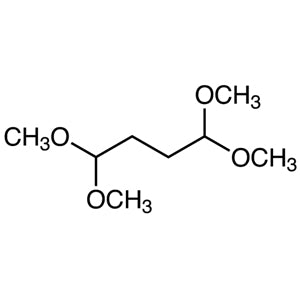
SuccinaldehydeBis(dimethylAcetal) TCI S0371
Regular price From Rp 2.439.150,00Regular price -
PyruvicAldehydeDimethylAcetal TCI P1264
Regular price From Rp 1.565.550,00Regular price