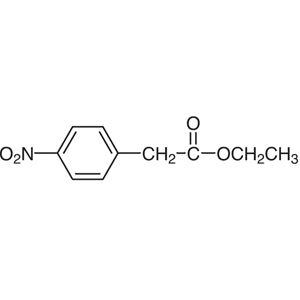
Isobutyl Phenylacetate is an ester formed from phenylacetic acid and isobutyl alcohol. It is a liquid with a sweet, honey-like aroma. The compound is best known as an aroma ingredient in the fragrance and flavor industries, but in the chemistry laboratory it also serves as a non-heterocyclic building block. Researchers can use it to prepare phenylacetate derivatives, as a model compound in studies of ester reactions, and as a reference standard when analyzing aroma components in research and quality control laboratories.
Its value comes from combining a phenylacetyl framework with a branched isobutyl group. The branched group gives it physical properties and an aroma profile that differ from those of the methyl, ethyl and isoamyl esters. This makes it an important member of the phenylacetate ester series for comparative studies. Chemically, the ester group can be hydrolyzed or transesterified, and the alpha hydrogens can be used to form enolates for further synthetic transformations. Because it is a liquid, it is easy to measure, dispense and mix with common organic solvents during routine laboratory work.
In Indonesian laboratories, Isobutyl Phenylacetate is useful for research and development teams in the fragrance and flavor industries. These teams need well-characterized ester references to build and evaluate aroma formulations. University organic chemistry laboratories can use it to teach and study ester reactivity, hydrolysis and transesterification. Quality control laboratories can use it as a comparison standard when identifying aroma components in raw materials and finished products, which supports consistent analytical results across batches.
- Synthesis of phenylacetate derivatives: The phenylacetyl framework and reactive ester group make this compound a practical starting point for preparing related phenylacetic acid derivatives in organic synthesis work.
- Model compound for ester reaction studies: Its ester group can be hydrolyzed or transesterified, so it suits experiments that examine reaction conditions, kinetics and selectivity in ester chemistry.
- Enolate chemistry investigations: The alpha hydrogens next to the carbonyl group can be used to form enolates, which suits studies of alkylation and condensation reactions on a non-heterocyclic substrate.
- Reference standard in aroma analysis: Its well-defined sweet, honey-like aroma makes it a suitable comparison standard when identifying aroma components in research and quality control laboratories.
- Comparative studies of phenylacetate esters: Its branched isobutyl group sets it apart from the methyl, ethyl and isoamyl esters, so it is a key member of any series used to compare physical properties and aroma profiles.
| Brand | TCI (product code P0124) |
|---|---|
| CAS number | 102-13-6 |
| Molecular formula | — |
| Purity | — |
| Category | Chemistry > Building Blocks > Non-Heterocyclic Building Blocks |
| Pack sizes | Available in the pack sizes listed for TCI product P0124 |
| Physical form | Liquid |
| Storage | Keep tightly closed in a cool, dry, well-ventilated place; see the TCI Safety Data Sheet for specific conditions |
Store Isobutyl Phenylacetate in its original, tightly sealed container in a cool, dry and well-ventilated area, away from heat sources, open flames and direct sunlight. Keep it apart from strong oxidizing agents, strong acids and strong bases, because these can react with the ester group. Use clean glass or chemically compatible containers when transferring or dispensing the liquid. Handle it in a well-ventilated area or fume hood. Wear suitable personal protective equipment, including safety glasses, chemical-resistant gloves and a laboratory coat. Avoid breathing vapors and avoid contact with skin and eyes. Always read the supplier's Safety Data Sheet before use, and dispose of waste according to local regulations.
—
Produk Terkait
-
Phenacyl4-(Bromomethyl)phenylacetate TCI B1315
Regular price From Rp 1.140.300,00Regular price -
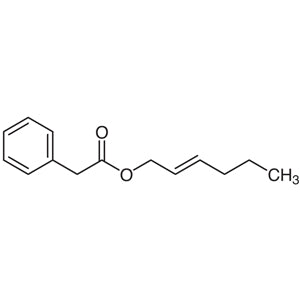
trans-2-Hexen-1-ylPhenylacetate TCI P1045
Regular price Rp 1.298.850,00Regular price -
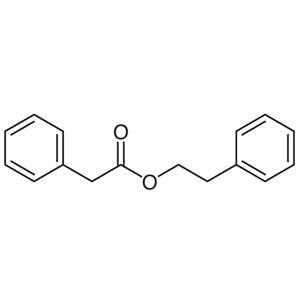
2-PhenylethylPhenylacetate TCI P0126
Regular price Rp 477.750,00Regular price -
MethylPhenylacetate TCI P0125
Regular price From Rp 505.050,00Regular price -
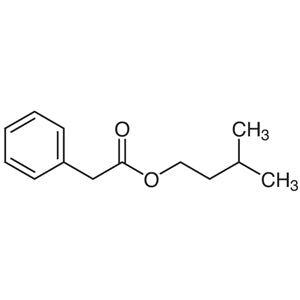
IsoamylPhenylacetate TCI P0123
Regular price Rp 2.809.800,00Regular price -
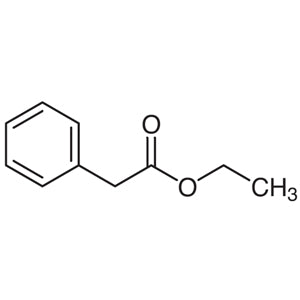
EthylPhenylacetate TCI P0122
Regular price From Rp 505.050,00Regular price -
BenzylPhenylacetate TCI P0121
Regular price Rp 769.650,00Regular price -
Ethyl4-Nitrophenylacetate TCI N0228
Regular price From Rp 769.650,00Regular price