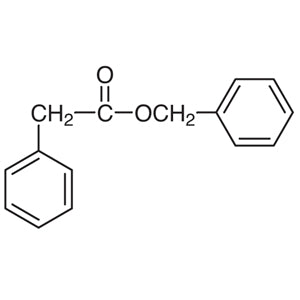
Benzyl Phenylacetate is an ester formed from phenylacetic acid and benzyl alcohol, so each molecule carries two aromatic rings. It is well known in the fragrance and flavour field for its sweet odour, which resembles honey and flowers. In the chemistry laboratory, Benzyl Phenylacetate serves as a non-heterocyclic building block, a model compound for studying ester reactions, and a reference material for developing and analysing aroma formulations in both research and quality control laboratories.
Benzyl Phenylacetate is a practical choice partly because it is a liquid, so it can be measured volumetrically with ease, and because it is stable as an ester under normal storage conditions. Its ester group can be hydrolysed, transesterified, or reduced. The alpha carbon between the phenyl ring and the carbonyl group is reactive enough for alkylation or condensation reactions. The two benzyl groups in its structure also give distinctive signals in the NMR spectrum, which makes the compound well suited to exercises in interpreting spectroscopic data.
In Indonesia, Benzyl Phenylacetate is relevant to laboratories serving the growing perfume, cosmetics, and flavour industries. Research and development teams can use it as a reference compound when building and checking aroma formulations, and quality control laboratories can include it in their analytical comparisons. University chemistry departments and research institutes can also use it as a building block in organic synthesis projects and as a teaching compound for ester chemistry and spectroscopy practicals.
- Organic synthesis building block: as a non-heterocyclic ester with two aromatic rings, it gives chemists a versatile starting point for hydrolysis, transesterification, reduction, and further structural modification.
- Model compound for ester reaction studies: its ester group reacts in well-understood ways, so researchers can use it to study hydrolysis, transesterification, and reduction under controlled laboratory conditions.
- Alpha-carbon chemistry: the alpha carbon between the phenyl ring and the carbonyl group is reactive enough for alkylation and condensation, which makes the compound useful for exploring carbon–carbon bond formation.
- Fragrance and flavour formulation reference: its sweet, honey-like and floral odour makes it a relevant reference material for developing and analysing aroma formulations in research and quality control laboratories.
- Spectroscopy teaching and training: the two benzyl groups produce distinctive NMR signals, so students and analysts can use it to practise interpreting spectroscopic data and assigning structures.
| Brand | TCI (product code P0121) |
|---|---|
| CAS number | 102-16-9 |
| Molecular formula | — |
| Purity | — |
| Category | Chemistry > Building Blocks > Non-Heterocyclic Building Blocks |
| Pack sizes | as listed on the product page or available on request |
| Physical form | liquid |
| Storage | stable under normal storage conditions; follow the manufacturer's label and Safety Data Sheet |
Store Benzyl Phenylacetate under normal laboratory storage conditions, in its original tightly closed container, in a cool, dry, well-ventilated area away from direct sunlight, heat sources, and incompatible materials such as strong oxidising agents. Use clean glass or chemically compatible containers when transferring or measuring the liquid. Follow standard laboratory precautions: wear safety glasses, gloves, and a lab coat, avoid contact with skin and eyes, and do not inhale vapours. Handle the material in a well-ventilated area or a fume hood. Always read the manufacturer's Safety Data Sheet before use and dispose of waste according to local regulations.
—
Produk Terkait
-
Phenacyl4-(Bromomethyl)phenylacetate TCI B1315
Regular price From Rp 1.140.300,00Regular price -
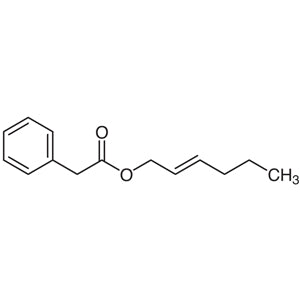
trans-2-Hexen-1-ylPhenylacetate TCI P1045
Regular price Rp 1.298.850,00Regular price -
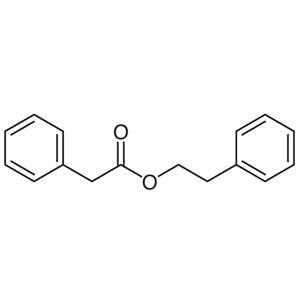
2-PhenylethylPhenylacetate TCI P0126
Regular price Rp 477.750,00Regular price -
MethylPhenylacetate TCI P0125
Regular price From Rp 505.050,00Regular price -
IsobutylPhenylacetate TCI P0124
Regular price Rp 477.750,00Regular price -
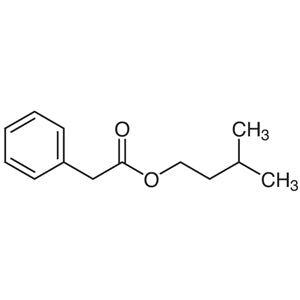
IsoamylPhenylacetate TCI P0123
Regular price Rp 2.809.800,00Regular price -
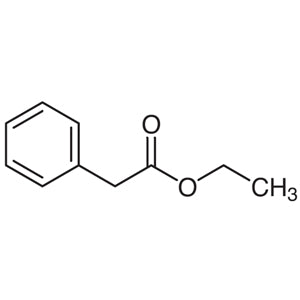
EthylPhenylacetate TCI P0122
Regular price From Rp 505.050,00Regular price -
Ethyl4-Nitrophenylacetate TCI N0228
Regular price From Rp 769.650,00Regular price