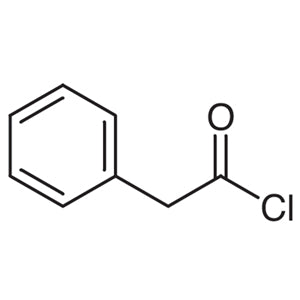
Phenylacetyl Chloride is an acyl chloride derived from phenylacetic acid. It is a highly reactive acylating reagent. In the chemistry laboratory it is classed as a non-heterocyclic building block and is used to add the phenylacetyl group to many kinds of molecules, including amines, alcohols and aromatic compounds. Because it is so reactive, Phenylacetyl Chloride is a first choice when researchers need to form amide, ester or ketone bonds quickly and efficiently in organic synthesis. This TCI product is listed under catalogue number P0129 with CAS number 103-80-0.
Researchers choose Phenylacetyl Chloride mainly for its acyl chloride group. This group is much more electrophilic than a carboxylic acid or an ester, so acylation can run under mild conditions without extra coupling reagents. This saves steps, cuts down on reagents and makes work-up simpler in many synthetic routes. The compound can also be used in Friedel-Crafts acylation to make aromatic ketones, which widens its use as a building block. However, the same reactivity makes the material very sensitive to moisture. It reacts with water to release hydrogen chloride and is corrosive, so it must be handled carefully under suitable laboratory controls.
In Indonesia, Phenylacetyl Chloride is used by synthesis laboratories at universities, research centres and other institutions that work in organic chemistry. Academic research groups use it to prepare amide and ester derivatives for student projects, theses and published studies. Research laboratories that develop new organic compounds value it as a dependable source of the phenylacetyl group. Because it comes from the well-known TCI brand, laboratories can use it with confidence in work that needs reproducible results and consistent reagent quality between batches.
Related TCI products
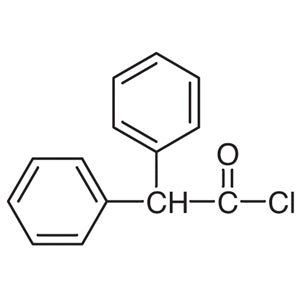
- TCI D2763 1871-76-7 Diphenylacetyl Chloride
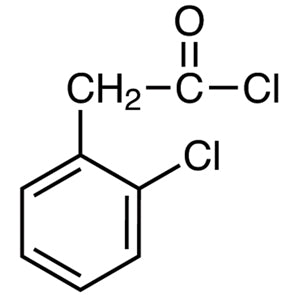
- TCI C2504 51512-09-5 2-Chlorophenylacetyl Chloride
- TCI C2313 25026-34-0 4-Chlorophenylacetyl Chloride
- TCI M1104 39637-99-5 (R)-(-)-alpha-Methoxy-alpha-(trifluoromethyl)phenylacetyl Chloride [for Determination of the optical purity of Alcohols and Amines]
- TCI M1103 20445-33-4 (S)-(+)-alpha-Methoxy-alpha-(trifluoromethyl)phenylacetyl Chloride [for Determination of the optical purity of Alcohols and Amines]
- TCI D0871 501-65-5 Diphenylacetylene
- Amide bond formation: Phenylacetyl Chloride reacts readily with primary and secondary amines to give phenylacetamides under mild conditions, so no separate coupling reagents are needed.
- Ester synthesis: The highly electrophilic acyl chloride group lets alcohols be acylated quickly to phenylacetate esters, which makes it efficient for preparing ester derivatives in organic synthesis.
- Friedel-Crafts acylation: The compound can acylate aromatic substrates to form aromatic ketones, giving chemists a direct route to aryl ketones that carry the phenylacetyl framework.
- Introducing the phenylacetyl group into target molecules: As a non-heterocyclic building block, it is a simple and reliable way to add a phenylacetyl unit when building more complex organic structures.
- Teaching and research in organic synthesis: University laboratories use its fast, predictable acylation chemistry to show and study how amides, esters and ketones form under controlled conditions.
| Brand | TCI (catalogue number P0129) |
|---|---|
| CAS number | 103-80-0 |
| Molecular formula | — |
| Purity | — |
| Category | Chemistry > Building Blocks > Non-Heterocyclic Building Blocks |
| Pack sizes | See the available pack size options on the product page |
| Physical form | — |
| Storage | Keep tightly sealed and protected from moisture; follow the storage conditions on the TCI label and Safety Data Sheet |
- Chemical class: Acyl chloride derived from phenylacetic acid; moisture-sensitive and corrosive
Phenylacetyl Chloride reacts with water and releases hydrogen chloride, so it must be kept away from moisture. Store it in its original, tightly closed container in a cool, dry, well-ventilated area. Keep it away from water, alcohols, amines, bases and other incompatible materials. Containers should be made of chemically resistant materials and opened only under dry conditions. If possible, handle the reagent under an inert atmosphere to keep its quality. Because it is corrosive, work in a fume hood and wear chemical-resistant gloves, safety goggles or a face shield, and a laboratory coat. Do not breathe the vapours and avoid contact with skin and eyes. Read the TCI Safety Data Sheet before use for full hazard, first-aid and disposal information, and dispose of waste according to local regulations.
—
Produk Terkait
-
DiphenylacetylChloride TCI D2763
Regular price From Rp 1.140.300,00Regular price -
2-ChlorophenylacetylChloride TCI C2504
Regular price Rp 1.829.100,00Regular price -
4-ChlorophenylacetylChloride TCI C2313
Regular price Rp 2.386.650,00Regular price -
(R)-(-)-alpha-Methoxy-alpha-(trifluoromethyl)phenylacetylChloride[forDeterminationoftheopticalpurityofAlcoholsandAmines] TCI M1104
Regular price From Rp 1.961.400,00Regular price -
(S)-(+)-alpha-Methoxy-alpha-(trifluoromethyl)phenylacetylChloride[forDeterminationoftheopticalpurityofAlcoholsandAmines] TCI M1103
Regular price From Rp 2.147.250,00Regular price -
Diphenylacetylene TCI D0871
Regular price Rp 3.578.400,00Regular price -
Anthraquinone-2-carbonylChloride TCI A0503
Regular price From Rp 3.180.450,00Regular price -
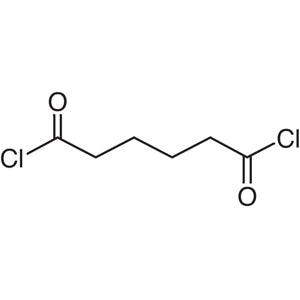
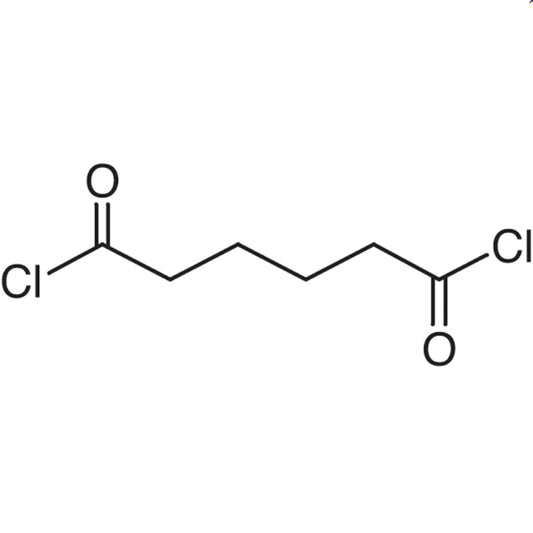
AdipoylChloride TCI A0169
Regular price From Rp 1.220.100,00Regular price

![39637-99-5 (R)-(-)-alpha-Methoxy-alpha-(trifluoromethyl)phenylacetyl Chloride [for Determination of the optical purity of Alcohols and Amines] - AMI Scientific](http://amiscientific.com/cdn/shop/files/TCI2510M1104.jpg?v=1767124321&width=533)
![39637-99-5 (R)-(-)-alpha-Methoxy-alpha-(trifluoromethyl)phenylacetyl Chloride [for Determination of the optical purity of Alcohols and Amines] - AMI Scientific](http://amiscientific.com/cdn/shop/files/TCI2510M1104_236ece49-4f9f-41af-b05d-1c245793e6af.jpg?v=1772416878&width=533)
![20445-33-4 (S)-(+)-alpha-Methoxy-alpha-(trifluoromethyl)phenylacetyl Chloride [for Determination of the optical purity of Alcohols and Amines] - AMI Scientific](http://amiscientific.com/cdn/shop/files/TCI2510M1103.jpg?v=1767124317&width=533)
![20445-33-4 (S)-(+)-alpha-Methoxy-alpha-(trifluoromethyl)phenylacetyl Chloride [for Determination of the optical purity of Alcohols and Amines] - AMI Scientific](http://amiscientific.com/cdn/shop/files/TCI2510M1103_48fd9d46-fd63-46b5-a725-d1dc2b9fad47.jpg?v=1768819168&width=533)