
![39637-99-5 (R)-(-)-alpha-Methoxy-alpha-(trifluoromethyl)phenylacetyl Chloride [for Determination of the optical purity of Alcohols and Amines] - AMI Scientific](http://amiscientific.com/cdn/shop/files/TCI2510M1104.jpg?v=1767124321&width=1946)
![39637-99-5 (R)-(-)-alpha-Methoxy-alpha-(trifluoromethyl)phenylacetyl Chloride [for Determination of the optical purity of Alcohols and Amines] - AMI Scientific](http://amiscientific.com/cdn/shop/files/TCI2510M1104_236ece49-4f9f-41af-b05d-1c245793e6af.jpg?v=1772416878&width=1946)
![39637-99-5 (R)-(-)-alpha-Methoxy-alpha-(trifluoromethyl)phenylacetyl Chloride [for Determination of the optical purity of Alcohols and Amines] - AMI Scientific](http://amiscientific.com/cdn/shop/files/TCI2510M1104.jpg?v=1767124321&width=1445)
![39637-99-5 (R)-(-)-alpha-Methoxy-alpha-(trifluoromethyl)phenylacetyl Chloride [for Determination of the optical purity of Alcohols and Amines] - AMI Scientific](http://amiscientific.com/cdn/shop/files/TCI2510M1104_236ece49-4f9f-41af-b05d-1c245793e6af.jpg?v=1772416878&width=1445)
(R)-(-)-alpha-Methoxy-alpha-(trifluoromethyl)phenylacetyl Chloride is a chiral reagent used in asymmetric synthesis and optical purity analysis. This compound plays a crucial role in laboratories where the determination of enantiomeric excess is required, particularly for alcohols and amines. Its chiral structure enables specific interactions with the enantiomers of target compounds, making it an essential tool in chiral resolution processes. It is widely used in analytical and synthetic applications where optical purity is a key factor.
The compound's chiral nature and chemical stability make it a preferred choice for precise optical analysis. It exhibits good solubility in organic solvents such as ethyl acetate and chloroform, which facilitates its use in various reaction conditions. Its selectivity in reacting with asymmetric compounds ensures accurate results in chiral resolution. These properties make it a reliable reagent for both research and industrial applications.
In Indonesian laboratories, this compound is commonly used in organic chemistry research, especially in asymmetric synthesis and optical purity analysis. It is a key reagent in academic and industrial settings where high precision and reliability are required. Its role in esterification and carboxylic acid formation further expands its utility in chemical processes. Researchers rely on its consistent performance for accurate and reproducible results.
- Asymmetric Synthesis: This compound is ideal for chiral resolution due to its ability to selectively interact with enantiomers, enabling the separation of optical isomers with high efficiency.
- Optical Purity Analysis: It is used to determine the optical purity of alcohols and amines, providing accurate data for quality control and research purposes.
- Esterification Reactions: Its chemical stability and solubility make it suitable for esterification processes in organic synthesis, ensuring consistent reaction outcomes.
- Chiral Resolution Reagents: It is a preferred choice for chiral resolution applications, offering high selectivity and reliability in separating enantiomers.
- Analytical Chemistry: It is widely used in analytical laboratories for optical activity measurements, supporting both academic and industrial research.
| Brand | TCI |
|---|---|
| CAS number | 39637-99-5 |
| Molecular formula | — |
| Purity | — |
| Category | Chemistry > Asymmetric Synthesis > Chiral Resolution Reagents |
| Pack sizes | Available in standard laboratory quantities |
| Physical form | Solid or liquid, depending on formulation |
| Storage | Store in a cool, dry place away from light |
This compound should be stored in a cool, dry environment, away from direct light and moisture. It is recommended to use airtight containers to prevent exposure to humidity and air. Due to its chemical stability, it does not require refrigeration under normal laboratory conditions. When handling, ensure proper ventilation and use appropriate personal protective equipment. Avoid contact with skin and eyes, and keep away from heat sources. The compound is generally safe when handled according to standard laboratory protocols. Always follow safety guidelines to ensure safe usage and storage.
—
Produk Terkait
-
(S)-(-)-alpha-Methoxy-alpha-(trifluoromethyl)phenylaceticAcid[OpticalResolving] TCI M0832
Regular price From Rp 5.034.750,00Regular price -
(R)-(+)-alpha-Methoxy-alpha-(trifluoromethyl)phenylaceticAcid[OpticalResolving] TCI M0831
Regular price From Rp 4.849.950,00Regular price -
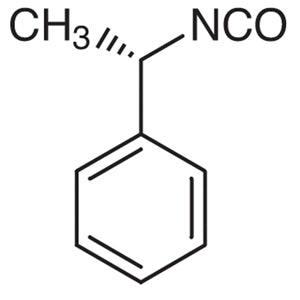
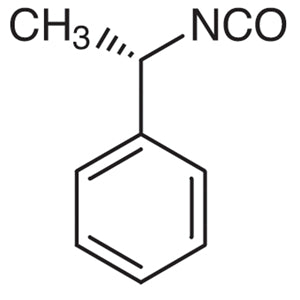
(S)-(-)-alpha-MethylbenzylIsocyanate TCI I0335
Regular price From Rp 1.590.750,00Regular price -
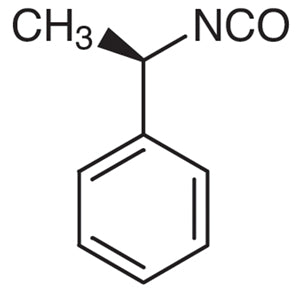
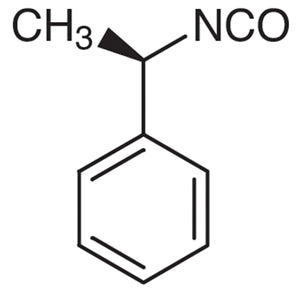
(R)-(+)-alpha-MethylbenzylIsocyanate TCI I0334
Regular price From Rp 2.147.250,00Regular price -
(S)-(+)-alpha-Methoxy-alpha-(trifluoromethyl)phenylacetylChloride[forDeterminationoftheopticalpurityofAlcoholsandAmines] TCI M1103
Regular price From Rp 2.147.250,00Regular price -
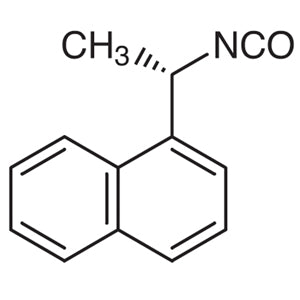
(S)-(+)-1-(1-Naphthyl)ethylIsocyanate TCI I0398
Regular price From Rp 4.188.450,00Regular price -
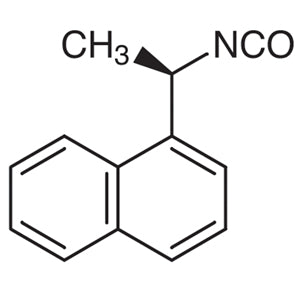
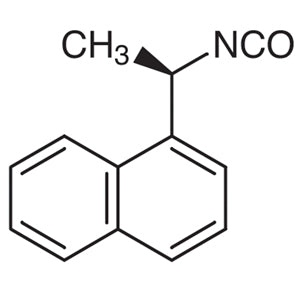
(R)-(-)-1-(1-Naphthyl)ethylIsocyanate TCI I0336
Regular price From Rp 3.630.900,00Regular price -
(S)-(+)-2,2,2-Trifluoro-1-(9-anthryl)ethanol[eeDeterminationReagentbyNMR] TCI T1521
Regular price From Rp 1.644.300,00Regular price
![17257-71-5 (S)-(-)-alpha-Methoxy-alpha-(trifluoromethyl)phenylacetic Acid [Optical Resolving] - AMI Scientific](http://amiscientific.com/cdn/shop/files/TCI2510M0832.jpg?v=1769142869&width=533)
![20445-31-2 (R)-(+)-alpha-Methoxy-alpha-(trifluoromethyl)phenylacetic Acid [Optical Resolving] - AMI Scientific](http://amiscientific.com/cdn/shop/files/TCI2510M0831.jpg?v=1767123812&width=533)
![20445-33-4 (S)-(+)-alpha-Methoxy-alpha-(trifluoromethyl)phenylacetyl Chloride [for Determination of the optical purity of Alcohols and Amines] - AMI Scientific](http://amiscientific.com/cdn/shop/files/TCI2510M1103.jpg?v=1767124317&width=533)
![20445-33-4 (S)-(+)-alpha-Methoxy-alpha-(trifluoromethyl)phenylacetyl Chloride [for Determination of the optical purity of Alcohols and Amines] - AMI Scientific](http://amiscientific.com/cdn/shop/files/TCI2510M1103_48fd9d46-fd63-46b5-a725-d1dc2b9fad47.jpg?v=1768819168&width=533)
![60646-30-2 (S)-(+)-2,2,2-Trifluoro-1-(9-anthryl)ethanol [e.e. Determination Reagent by NMR] - AMI Scientific](http://amiscientific.com/cdn/shop/files/TCI2510T1521.jpg?v=1767141776&width=533)
![60646-30-2 (S)-(+)-2,2,2-Trifluoro-1-(9-anthryl)ethanol [e.e. Determination Reagent by NMR] - AMI Scientific](http://amiscientific.com/cdn/shop/files/TCI2510T1521_7c166274-ef1b-4925-8be6-53863c4594b4.jpg?v=1772424133&width=533)