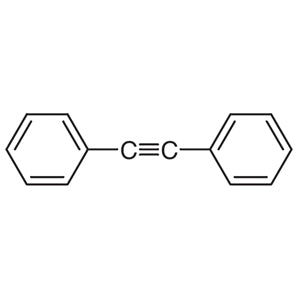
Diphenylacetylene (501-65-5) is a chemical compound widely used as a foundational building block in the synthesis of complex organic compounds. Its role in the laboratory is critical, particularly in reactions that form stable carbon-carbon triple bonds. This compound is essential for chemists and researchers aiming to develop new substances with applications in various scientific fields. Its unique structure and reactivity make it a versatile tool in synthetic chemistry, enabling the creation of a wide range of functional molecules.
One of the key properties that make Diphenylacetylene a preferred choice is its molecular structure, which consists of two phenyl groups connected by a triple carbon bond. This structure provides high reactivity, allowing it to participate in substitution reactions and other synthetic transformations. Additionally, its chemical stability ensures that it can be used under a variety of laboratory conditions without degrading. These characteristics make it an ideal component for both academic and industrial research settings.
In Indonesian laboratories, Diphenylacetylene is commonly used by chemists and scientists to develop new compounds with potential applications in pharmaceuticals, materials science, and chemical industries. Its availability and reliability make it a popular choice for researchers working on complex molecular synthesis projects. Its role in advancing scientific innovation is significant, especially in the context of local research and development efforts.
- Organic synthesis applications benefit from Diphenylacetylene due to its ability to form stable triple bonds, enabling the creation of complex molecular structures.
- Pharmaceutical research utilizes this compound for the development of new drug molecules, leveraging its reactivity in synthetic pathways.
- Material science studies incorporate Diphenylacetylene to design advanced polymers and functional materials with unique properties.
- Analytical chemistry experiments use it as a reference standard for identifying and quantifying compounds in various samples.
- Industrial chemical processes rely on Diphenylacetylene for the production of specialty chemicals and intermediates in manufacturing.
| Brand | TCI |
|---|---|
| CAS number | 501-65-5 |
| Molecular formula | — |
| Purity | — |
| Category | Chemistry > Building Blocks > Non-Heterocyclic Building Blocks |
| Pack sizes | Available in standard laboratory quantities |
| Physical form | Solid |
| Storage | Store in a cool, dry place away from light and moisture |
Diphenylacetylene should be stored in a cool, dry environment, away from direct sunlight and moisture to maintain its chemical stability. It is recommended to use airtight containers made of glass or inert plastic to prevent contamination and degradation. Due to its reactivity, it should be handled with care, using appropriate personal protective equipment such as gloves and safety goggles. In laboratory settings, it is important to ensure proper ventilation to avoid inhalation of any vapors. Regular monitoring of storage conditions is advised to ensure the compound remains in optimal condition for use in research applications.
—
Produk Terkait
-
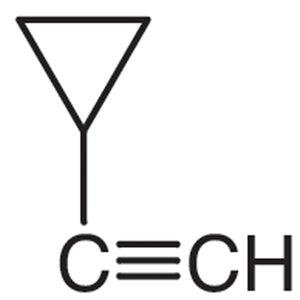
Cyclopropylacetylene TCI C1984
Regular price From Rp 1.035.300,00Regular price -
1,3,5-Triethynylbenzene TCI T2760
Regular price From Rp 3.578.400,00Regular price -
TriphenylaceticAcid TCI T1585
Regular price From Rp 3.630.900,00Regular price -
1-Butyl-4-ethynylbenzene TCI B2301
Regular price From Rp 980.700,00Regular price -
4-BiphenylaceticAcid TCI B1278
Regular price From Rp 1.644.300,00Regular price -
3-Phenyl-1-propyne(stabilizedwithBHT) TCI P1956
Regular price From Rp 1.273.650,00Regular price -
1-Phenyl-1-nonyne TCI P0363
Regular price Rp 2.942.100,00Regular price -
1-Phenyl-1-hexyne TCI P0360
Regular price Rp 2.439.150,00Regular price