1-Pentynyl Iodide from TCI, also known as 1-iodo-1-pentyne, is a haloalkyne compound. Its iodine atom is bonded directly to the terminal alkyne carbon of a five-carbon chain. In the laboratory, it serves as a reactive non-heterocyclic building block for forming carbon-carbon bonds. Chemists mainly use it to build unsymmetrical diynes and to attach a pentynyl unit to target molecules. Haloalkynes like this one are important in modern organic synthesis because they can act as alkyne electrophiles.
Chemists choose this compound because the carbon-iodine bond on the alkyne is both reactive and selective in metal-catalysed coupling reactions. A typical example is the Cadiot-Chodkiewicz coupling with terminal alkynes to produce 1,3-diynes. It is also used in other copper- or palladium-based transformations. The iodine atom can take part in halogen bonding interactions, which makes the compound useful for studies in supramolecular chemistry. Its simple propyl chain also keeps reaction products easy to analyse by NMR spectroscopy and chromatography, so researchers can confirm structures and monitor reaction progress without complicated signal overlap.
In Indonesia, 1-Pentynyl Iodide is relevant to organic synthesis and organometallic chemistry research groups at universities and research institutions. It suits graduate and postgraduate projects that study alkyne coupling methods, build conjugated diyne frameworks, or explore halogen bonding in the solid state and in solution. Laboratories that develop new catalytic methods can also use it as a model substrate, because its straightforward structure lets them compare reaction conditions and catalyst performance clearly and reproducibly.
- Cadiot-Chodkiewicz coupling: the reactive alkynyl carbon-iodine bond couples selectively with terminal alkynes under copper catalysis to give unsymmetrical 1,3-diynes in a controlled way.
- Installing pentynyl units: the compound transfers a five-carbon alkyne fragment onto target molecules, so chemists can extend carbon frameworks and add alkyne handles for later functionalisation.
- Copper- and palladium-catalysed cross-coupling: as an alkyne electrophile, it is a convenient partner for developing and testing new metal-catalysed carbon-carbon bond-forming methods.
- Halogen bonding and supramolecular chemistry: the iodine atom attached to the alkyne can act as a halogen bond donor, which supports research on non-covalent interactions and crystal engineering.
- Model substrate for method development: its simple propyl chain gives clean NMR and chromatographic signals, so reaction outcomes and selectivity are easy to track and compare across experiments.
| Brand | TCI (product code P1055) |
|---|---|
| CAS number | 14752-61-5 |
| Molecular formula | — |
| Purity | — |
| Category | Chemistry > Building Blocks > Non-Heterocyclic Building Blocks |
| Pack sizes | available in TCI standard pack sizes; please contact AMI Scientific to confirm availability |
| Physical form | — |
| Storage | follow the conditions on the TCI label and Safety Data Sheet |
- Synonym: 1-iodo-1-pentyne
Store 1-Pentynyl Iodide in its original, tightly closed TCI container in a cool, dry, well-ventilated place. Protect it from light and keep it away from heat sources, because organoiodine compounds can degrade over time. Always check the product label and Safety Data Sheet for the recommended storage temperature and any requirement to store it under inert gas. Handle the compound in a fume hood and wear chemical-resistant gloves, safety goggles, and a laboratory coat. Avoid contact with skin and eyes, and do not breathe its vapour. Keep it apart from strong oxidising agents and incompatible materials. Dispose of residues and contaminated materials according to institutional chemical waste procedures and local regulations.
—
Produk Terkait
-
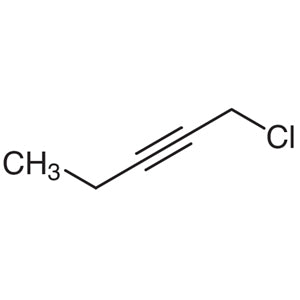
2-PentynylChloride TCI P1141
Regular price From Rp 5.274.150,00Regular price -
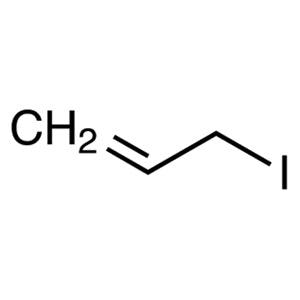
AllylIodide(stabilizedwithCopperchip) TCI I0070
Regular price From Rp 1.856.400,00Regular price -
1-Iodo-1-propyne TCI P1065
Regular price Rp 10.997.700,00Regular price -
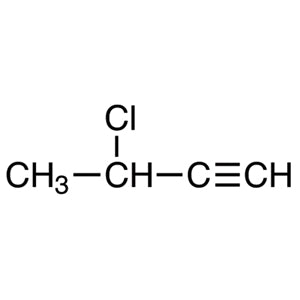
3-Chloro-1-butyne TCI C1195
Regular price From Rp 7.234.500,00Regular price -
AcetylIodide TCI A0095
Regular price From Rp 6.386.100,00Regular price -
beta-MethylcholineIodide TCI M0598
Regular price Rp 6.599.250,00Regular price -
(2-Hydroxyethyl)triethylammoniumIodide TCI H0407
Regular price Rp 3.870.300,00Regular price -
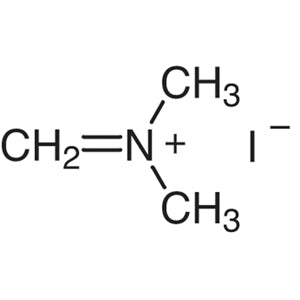
N,N-DimethylmethyleneammoniumIodide TCI D1646
Regular price From Rp 1.538.250,00Regular price