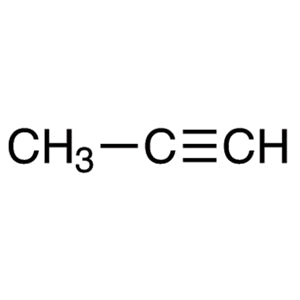


1-Iodo-1-propyne from TCI is a small halogenated alkyne with an iodine atom bonded directly to a carbon of the triple bond and a methyl group at the other end. In synthetic organic chemistry laboratories, it serves as a reactive source of the propynyl unit (CH3–C≡C–). Alkynyl iodides of this type are widely used in transition-metal-catalysed coupling reactions, such as Cadiot–Chodkiewicz-type couplings that produce unsymmetrical diynes. With this compound, researchers can attach a short alkyne chain to other molecules in a controlled way.
Chemists choose this material because the carbon–iodine bond on the sp carbon is reactive enough for coupling chemistry, yet the compound can still be handled under appropriate laboratory conditions. The iodine atom can also act as a halogen-bond donor, which makes alkynyl iodides of interest in supramolecular and crystal chemistry research. Because the molecule is small, the propynyl group can be introduced without adding much molecular weight to the target structure. Given its reactivity, the material is supplied in small quantities suited to research-scale work rather than bulk use.
In Indonesia, 1-Iodo-1-propyne is relevant to synthetic organic chemistry laboratories at universities and research institutions, where researchers build new carbon frameworks and study coupling methods. Graduate students and research groups working on alkyne chemistry, natural product synthesis or new materials can use it as a compact building block for introducing propynyl units. Its research-scale packaging suits academic projects in which small amounts of material are used across multiple exploratory reactions and method-development experiments.
Related TCI products
- Cadiot–Chodkiewicz-type coupling: the reactive carbon–iodine bond on the sp carbon lets this alkynyl iodide couple with terminal alkynes to build unsymmetrical diynes in a controlled way.
- Introduction of propynyl groups: it acts as a direct source of the CH3–C≡C– unit, so chemists can attach a short alkyne chain without adding much molecular weight.
- Transition-metal-catalysed coupling studies: alkynyl iodides like this one are common substrates in catalysed coupling reactions, which makes the compound useful for exploring and optimising synthetic methods.
- Halogen bonding and crystal engineering research: the iodine atom can act as a halogen-bond donor, which supports supramolecular studies of non-covalent interactions and crystal packing.
- Building-block synthesis for academic research: its small size and defined reactivity suit multistep research routes in university and institutional laboratories that work on new organic frameworks.
| Brand | TCI (product code P1065) |
|---|---|
| CAS number | 624-66-8 |
| Molecular formula | — |
| Purity | — |
| Category | Chemistry > Building Blocks > Non-Heterocyclic Building Blocks |
| Pack sizes | small quantities suited to research-scale work; check the product page for the available options |
| Physical form | refer to the TCI product label and Certificate of Analysis |
| Storage | follow the storage conditions on the TCI label and Safety Data Sheet |
Because 1-Iodo-1-propyne is a reactive alkynyl iodide, store it exactly as stated on the TCI label and Safety Data Sheet. Keep it in its original tightly closed container, in a cool, dry and well-ventilated area, away from heat sources, incompatible materials and direct sunlight. Only trained staff should handle it, inside a fume hood and while wearing suitable personal protective equipment: chemical-resistant gloves, safety glasses and a laboratory coat. Avoid inhalation and contact with skin or eyes. Reseal the container promptly after use, label it clearly, and dispose of residues and contaminated materials according to institutional and local chemical waste regulations.
—
Produk Terkait
-
1-PentynylIodide TCI P1055
Regular price Rp 4.644.000,00Regular priceRp 3.159.000,00Sale price Rp 4.644.000,00 -
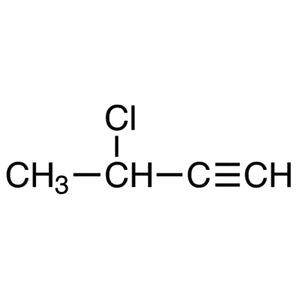
3-Chloro-1-butyne TCI C1195
Regular price From Rp 7.082.000,00Regular priceRp 4.818.000,00Sale price From Rp 7.082.000,00 -
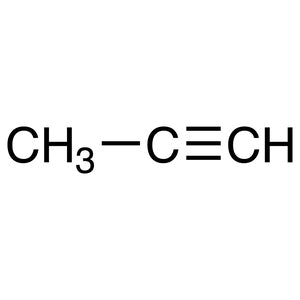
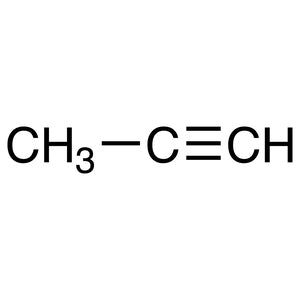
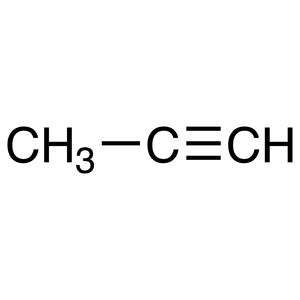
Propyne(ca2%inHexane,ca03mol/L) TCI P3067
Regular price From Rp 1.064.000,00Regular priceRp 724.000,00Sale price From Rp 1.064.000,00 -
Propyne(ca2%inDichloromethane,ca07mol/L) TCI P3065
Regular price From Rp 1.064.000,00Regular priceRp 724.000,00Sale price From Rp 1.064.000,00 -
3-Phenyl-1-propyne(stabilizedwithBHT) TCI P1956
Regular price From Rp 1.246.000,00Regular priceRp 848.000,00Sale price From Rp 1.246.000,00 -
1-Phenyl-1-propyne TCI P0219
Regular price From Rp 1.661.000,00Regular priceRp 1.130.000,00Sale price From Rp 1.661.000,00 -
Propyne(ca2%inToluene,ca04mol/L) TCI P3066
Regular price From Rp 1.064.000,00Regular priceRp 724.000,00Sale price From Rp 1.064.000,00 -
Propyne(ca5%inTetrahydrofuran,ca1mol/L) TCI P2295
Regular price From Rp 1.195.000,00Regular priceRp 812.000,00Sale price From Rp 1.195.000,00