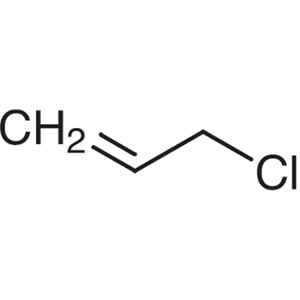
Allyl Iodide (stabilized with Copper chip), with the CAS number 556-56-9, is a chemical compound widely used as a building block in organic synthesis. It is a versatile reagent that plays a crucial role in various laboratory processes, particularly in organic chemistry. Its molecular structure, although simple, is highly reactive, making it an essential component in nucleophilic reactions, substitution reactions, and addition reactions. This reactivity is due to the presence of the iodide group, which is a powerful nucleophile and a good leaving group.
The unique properties of Allyl Iodide, including its high reactivity and the stabilizing effect of the copper chip, make it a preferred choice for researchers. The copper chip significantly enhances the stability of the compound, reducing the risk of degradation during storage and handling. This stabilization ensures that the product maintains its chemical integrity over time, providing consistent results in experimental settings. Its volatility and high boiling point also contribute to its effectiveness in controlled laboratory environments.
In Indonesian laboratories, Allyl Iodide is commonly used in organic chemistry research, especially in academic and industrial settings. It is a key reagent in the synthesis of complex organic molecules, supporting both teaching and research activities. Its availability and stability make it an essential tool for chemists working on various synthetic pathways, contributing to the advancement of chemical sciences in the region.
Related TCI products
- TCI B0643 106-95-6 Allyl Bromide
- TCI C0274 107-05-1 Allyl Chloride
- TCI P1055 14752-61-5 1-Pentynyl Iodide
- TCI B1905 3814-34-4 1-Bromo-2-ethylbutane (stabilized with Copper chip)
- TCI B1412 13294-71-8 2-Bromo-2-butene (stabilized with Copper chip)
- TCI B1289 3377-87-5 3-Bromohexane (contains 2-Bromohexane) (stabilized with Copper chip)
- Organic synthesis is a primary application where Allyl Iodide is used to introduce iodide groups into organic molecules, facilitating the formation of complex structures through nucleophilic substitution.
- Nucleophilic reactions benefit from Allyl Iodide due to its high reactivity, allowing it to act as a good electrophilic substrate in various synthetic pathways.
- Substitution reactions often utilize Allyl Iodide as a reactive intermediate, enabling the replacement of functional groups in organic compounds with greater efficiency.
- Addition reactions in laboratory settings rely on Allyl Iodide’s ability to participate in electrophilic addition processes, making it valuable in the synthesis of diverse organic compounds.
- Research in synthetic chemistry frequently employs Allyl Iodide to explore new reaction mechanisms and develop novel compounds with specific structural features.
| Brand | TCI |
|---|---|
| CAS number | 556-56-9 |
| Molecular formula | — |
| Purity | — |
| Category | Chemistry > Building Blocks > Non-Heterocyclic Building Blocks |
| Pack sizes | — |
| Physical form | Liquid |
| Storage | Store in a cool, dark place away from moisture and direct sunlight |
Allyl Iodide should be stored in a cool, dark location, away from moisture and direct sunlight to maintain its stability and prevent degradation. It is recommended to use airtight containers made of glass or inert materials to minimize exposure to air and contaminants. Due to its volatility, it is important to handle the compound in a well-ventilated area or fume hood to ensure safety. Proper personal protective equipment, such as gloves and goggles, should be worn during handling. The presence of the copper chip enhances its stability, but it is still essential to follow standard laboratory safety protocols to avoid any potential hazards. Careful handling and appropriate storage conditions are crucial to preserving the chemical's effectiveness and ensuring safe usage in laboratory environments.
—
Produk Terkait
-
AllylBromide TCI B0643
Regular price From Rp 557.550,00Regular price -
AllylChloride TCI C0274
Regular price From Rp 477.750,00Regular price -
1-PentynylIodide TCI P1055
Regular price Rp 4.743.900,00Regular price -
1-Bromo-2-ethylbutane(stabilizedwithCopperchip) TCI B1905
Regular price From Rp 1.035.300,00Regular price -
2-Bromo-2-butene(stabilizedwithCopperchip) TCI B1412
Regular price From Rp 1.724.100,00Regular price -
3-Bromohexane(contains2-Bromohexane)(stabilizedwithCopperchip) TCI B1289
Regular price Rp 7.023.450,00Regular price -
2-Bromohexane(contains3-Bromohexane)(stabilizedwithCopperchip) TCI B1235
Regular price Rp 3.763.200,00Regular price -
2-Iodobutane(stabilizedwithCopperchip) TCI B1093
Regular price Rp 980.700,00Regular price