2-Bromo-2-butene (stabilized with Copper chip) is a chemical compound widely used in organic reactions for the synthesis of complex molecules. It serves as a versatile building block in chemical laboratories, offering a reliable foundation for various synthetic pathways. This compound is particularly valuable in reactions requiring controlled reactivity and stability, making it a key component in both academic and industrial research settings. Its unique molecular structure enables it to participate in substitution, addition, and other reaction mechanisms, contributing to the development of new chemical compounds.
The stabilization with a copper chip significantly enhances its chemical stability, reducing the likelihood of unwanted side reactions and extending its shelf life. This feature makes it a preferred choice for laboratories that require consistent performance and minimal degradation over time. The compound's ability to be manipulated under different reaction conditions, such as varying temperatures and concentrations, further adds to its versatility. These properties ensure that it remains a reliable and efficient reagent in a wide range of chemical applications.
In Indonesian laboratories, 2-Bromo-2-butene is commonly used in organic chemistry research, especially in higher education institutions and research organizations. Its availability and cost-effectiveness make it a popular choice for experiments that require a stable and reactive building block. It plays a crucial role in the development of new compounds and the advancement of chemical knowledge in the region.
Related TCI products
- TCI B0920 5162-44-7 4-Bromo-1-butene
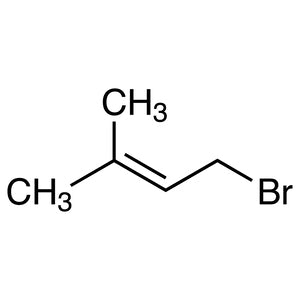
- TCI B0844 870-63-3 1-Bromo-3-methyl-2-butene (stabilized with Silver chip)
- TCI B1905 3814-34-4 1-Bromo-2-ethylbutane (stabilized with Copper chip)
- TCI B0806 75-25-2 Bromoform (stabilized with 2-Methyl-2-butene) [for Spectrophotometry]
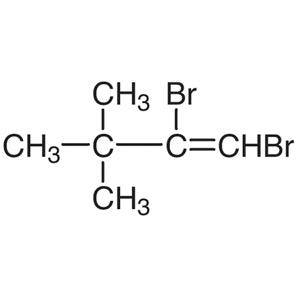
- TCI D2914 99584-95-9 1,2-Dibromo-3,3-dimethyl-1-butene
- TCI D1072 760-23-6 3,4-Dichloro-1-butene
- Organic synthesis reactions benefit from this compound's stability and reactivity, making it ideal for creating complex molecules.
- It is well-suited for substitution and addition reactions due to its controlled chemical behavior and predictable outcomes.
- In academic research, it supports the development of new chemical compounds and educational experiments in organic chemistry.
- Its use in industrial applications ensures consistent results in the production of chemical intermediates and specialty products.
- Laboratories requiring reliable building blocks for synthetic pathways will find this compound to be a valuable and efficient resource.
| Brand | TCI |
|---|---|
| CAS number | 13294-71-8 |
| Molecular formula | — |
| Purity | — |
| Category | Chemistry > Building Blocks > Non-Heterocyclic Building Blocks |
| Pack sizes | Available in standard laboratory quantities |
| Physical form | Liquid |
| Storage | Store in a cool, dry place away from direct sunlight |
This compound should be stored in a cool, dry environment to maintain its stability and prevent degradation. It is recommended to use airtight containers to minimize exposure to moisture and air, which can affect its chemical integrity. Due to its reactivity, it should be handled with appropriate safety measures, including the use of personal protective equipment. It is important to keep it away from incompatible substances to avoid unwanted reactions. Regular monitoring of storage conditions ensures optimal performance and safety in the laboratory setting.
—
Produk Terkait
-
4-Bromo-1-butene TCI B0920
Regular price From Rp 2.050.000,00Regular priceRp 1.395.000,00Sale price From Rp 2.050.000,00 -
1-Bromo-3-methyl-2-butene(stabilizedwithSilverchip) TCI B0844
Regular price From Rp 753.000,00Regular priceRp 512.000,00Sale price From Rp 753.000,00 -
1-Bromo-2-ethylbutane(stabilizedwithCopperchip) TCI B1905
Regular price From Rp 1.013.000,00Regular priceRp 689.000,00Sale price From Rp 1.013.000,00 -
Bromoform(stabilizedwith2-Methyl-2-butene)[forSpectrophotometry] TCI B0806
Regular price Rp 6.200.000,00Regular priceRp 4.218.000,00Sale price Rp 6.200.000,00 -
1,2-Dibromo-3,3-dimethyl-1-butene TCI D2914
Regular price Rp 1.428.000,00Regular priceRp 971.000,00Sale price Rp 1.428.000,00 -
3,4-Dichloro-1-butene TCI D1072
Regular price Rp 2.595.000,00Regular priceRp 1.765.000,00Sale price Rp 2.595.000,00 -
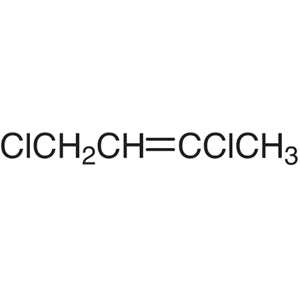
1,3-Dichloro-2-butene(cis-andtrans-mixture) TCI D0351
Regular price Rp 8.353.000,00Regular priceRp 5.683.000,00Sale price Rp 8.353.000,00 -
4-Chloro-1-butene TCI C3611
Regular price From Rp 1.116.000,00Regular priceRp 759.000,00Sale price From Rp 1.116.000,00