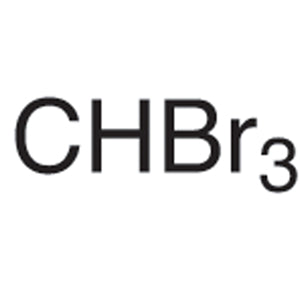
Bromoform, with CAS number 75-25-2, is a chemical compound widely used in various analytical applications, particularly in spectrophotometry. It is a key reagent in laboratory settings due to its stable optical properties and predictable response in analytical instruments. This compound is commonly used as a standard for quantitative analysis and as a building block for the synthesis of other organic compounds. Its chemical structure, CBr₃H, makes it suitable for use in spectroscopic methods where accurate and consistent results are essential.
The stability of bromoform, combined with its well-defined absorption characteristics, makes it a preferred choice for calibrating and testing spectrophotometric equipment. The inclusion of 2-methyl-2-butene as a stabilizer enhances its shelf life and reduces reactivity, ensuring consistent performance over time. This makes it a reliable material for both routine and specialized laboratory tasks. Its chemical inertness under controlled conditions also contributes to its widespread use in analytical chemistry.
In Indonesian laboratories, bromoform is frequently utilized in chemical research, environmental analysis, and water quality testing. Its role in validating the accuracy of spectrophotometers is critical for ensuring reliable data in scientific studies. The compound is also valuable in academic and industrial research settings where precise analytical methods are required. Its presence in laboratory workflows supports the advancement of scientific knowledge and regulatory compliance in various fields.
Related TCI products
- Spectrophotometry: Bromoform is used to calibrate and validate spectrophotometric instruments due to its stable optical properties and predictable absorption spectrum.
- Environmental Analysis: It is employed in the detection and quantification of organic compounds in environmental samples, such as water and soil.
- Chemical Synthesis: As a building block, bromoform is used in the preparation of various organic compounds, contributing to synthetic chemistry research.
- Quality Control Testing: Bromoform serves as a standard for ensuring the accuracy and reliability of analytical methods in quality assurance processes.
- Research and Development: It is a valuable tool in academic and industrial R&D for studying chemical reactions and material properties.
| Brand | TCI |
|---|---|
| CAS number | 75-25-2 |
| Molecular formula | — |
| Purity | — |
| Category | Chemistry > Building Blocks > Non-Heterocyclic Building Blocks |
| Pack sizes | As per supplier specifications |
| Physical form | Liquid |
| Storage | Store in a sealed container in a cool, dry place away from light |
Bromoform should be stored in a sealed container in a cool, dry place, away from light and sources of heat. Due to its volatility and potential toxicity, it is essential to handle this compound with care, using appropriate personal protective equipment such as gloves and a fume hood. It should be kept in a well-ventilated area to minimize exposure. Regular monitoring of storage conditions is recommended to ensure the stability and safety of the compound. Proper labeling of containers is necessary to prevent accidental use or contamination. Laboratory personnel should be trained in safe handling procedures to mitigate risks associated with its use.
—
Produk Terkait
-
Bromoform(stabilizedwithEthanol) TCI T0348
Regular price From Rp 584.850,00Regular priceRp 408.450,00Sale price From Rp 584.850,00 -
ButylAcetate[forSpectrophotometry] TCI A0228
Regular price Rp 1.538.250,00Regular priceRp 1.075.200,00Sale price Rp 1.538.250,00 -
2,2'-Dihydroxyazobenzene[SpectrophotometricandfluorimetricreagentforAl,Mgandothermetals] TCI A5005
Regular price From Rp 2.625.000,00Regular priceRp 1.835.400,00Sale price From Rp 2.625.000,00 -
EthylAcetate[forSpectrophotometry] TCI A0030
Regular price Rp 1.167.600,00Regular priceRp 815.850,00Sale price Rp 1.167.600,00