
![2050-14-8 2,2'-Dihydroxyazobenzene [Spectrophotometric and fluorimetric reagent for Al, Mg and other metals] - AMI Scientific](http://amiscientific.com/cdn/shop/files/TCI2510A5005.jpg?v=1767084831&width=1946)
![2050-14-8 2,2'-Dihydroxyazobenzene [Spectrophotometric and fluorimetric reagent for Al, Mg and other metals] - AMI Scientific](http://amiscientific.com/cdn/shop/files/TCI2510A5005.jpg?v=1767084831&width=1445)
2,2'-Dihydroxyazobenzene is a chemical compound widely used as a reagent in analytical chemistry for the detection of metals such as aluminium, magnesium, and other metallic elements. It plays a crucial role in laboratory settings where precise and accurate analysis of metal ions is required. This compound is essential for both qualitative and quantitative analysis, enabling scientists to determine the presence and concentration of metals in various samples. Its application extends to environmental and industrial analysis, making it a versatile tool in modern analytical laboratories.
The compound's unique chemical properties make it a preferred choice for spectroscopic and fluorimetric methods. Its aromatic structure provides stability, ensuring reliable results in analytical procedures. The presence of two hydroxyl groups on the azobenzene core allows for specific complexation with metal ions, enhancing its selectivity and sensitivity. This makes it ideal for use in methods that require high precision and reproducibility. Additionally, its chemical stability under normal laboratory conditions simplifies storage and handling, contributing to its widespread use in analytical chemistry.
In Indonesian laboratories, 2,2'-Dihydroxyazobenzene is commonly used for metal detection in environmental samples such as water and soil, as well as in industrial materials. Its ability to provide clear responses in various detection methods ensures its relevance in both academic and industrial research. The compound is an essential component of the analytical toolkit for researchers and technicians working in metal detection and environmental monitoring.
Related TCI products
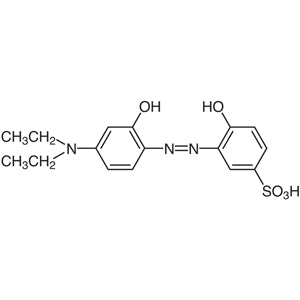
- TCI S0128 1563-01-5 5-Sulfo-4'-diethylamino-2,2'-dihydroxyazobenzene
- TCI A5060 4386-25-8 Lumogallion [Fluorimetric reagent for Al, Ga and other metals]
- TCI A5015 14609-54-2 TCPP [=Tetrakis(4-carboxyphenyl)porphyrin] [Ultra-high sensitive spectrophotometric reagent for Cu, Cd] [For the simultaneous determination of metals by HPLC]
- TCI A5014 36951-72-1 TMPyP [=alpha,beta,gamma,delta-Tetrakis(1-methylpyridinium-4-yl)porphyrin p-Toluenesulfonate] [Ultra-high sensitive spectrophotometric reagent for Cu, Mg] [For the simultaneous determination of metals by HPLC]
- TCI A5013 35218-75-8 TPPS (=Tetraphenylporphyrin Tetrasulfonic Acid) [Ultra-high sensitive spectrophotometric reagent for transition metals]
- TCI A5011 1571-36-4 Stilbazo [Spectrophotometric reagent for Al and other metals]
- Metal ion detection in environmental samples such as water and soil due to its ability to form stable complexes with metal ions.
- Qualitative and quantitative analysis of aluminium, magnesium, and other metals in industrial and research settings.
- Spectrophotometric and fluorimetric assays for accurate and sensitive metal concentration measurements.
- Use in analytical chemistry for the development of new detection methods and reagent formulations.
- Support for environmental monitoring programs that require reliable and reproducible metal analysis techniques.
| Brand | TCI |
|---|---|
| CAS number | 2050-14-8 |
| Molecular formula | — |
| Purity | — |
| Category | Chemistry > Building Blocks > Non-Heterocyclic Building Blocks |
| Pack sizes | Available in standard laboratory quantities as per supplier specifications |
| Physical form | Solid or liquid, depending on the specific product formulation |
| Storage | Store in a cool, dry place away from direct sunlight and moisture |
This compound should be stored in a cool, dry environment, away from direct sunlight and moisture to maintain its chemical stability. It is recommended to use airtight containers to prevent exposure to air and humidity, which could affect its performance. Proper labeling of containers is essential for safe handling and identification. In laboratory settings, it should be handled with appropriate personal protective equipment, such as gloves and safety goggles, to ensure user safety. Regular inspection of storage conditions is advised to maintain the integrity of the compound. Due to its chemical nature, it should be kept away from incompatible materials to prevent any potential reaction. Following these guidelines ensures safe and effective use in analytical applications.
—
Produk Terkait
-
5-Sulfo-4'-diethylamino-2,2'-dihydroxyazobenzene TCI S0128
Regular price Rp 2.094.750,00Regular priceRp 1.464.750,00Sale price Rp 2.094.750,00 -
Lumogallion[FluorimetricreagentforAl,Gaandothermetals] TCI A5060
Regular price Rp 2.068.500,00Regular priceRp 1.445.850,00Sale price Rp 2.068.500,00 -
TCPP[=Tetrakis(4-carboxyphenyl)porphyrin][Ultra-highsensitivespectrophotometricreagentforCu,Cd][ForthesimultaneousdeterminationofmetalsbyHPLC] TCI A5015
Regular price Rp 955.500,00Regular priceRp 683.550,00Sale price Rp 955.500,00 -
TMPyP[=alpha,beta,gamma,delta-Tetrakis(1-methylpyridinium-4-yl)porphyrinp-Toluenesulfonate][Ultra-highsensitivespectrophotometricreagentforCu,Mg][ForthesimultaneousdeterminationofmetalsbyHPLC] TCI A5014
Regular price From Rp 1.351.350,00Regular priceRp 960.750,00Sale price From Rp 1.351.350,00 -
TPPS(=TetraphenylporphyrinTetrasulfonicAcid)[Ultra-highsensitivespectrophotometricreagentfortransitionmetals] TCI A5013
Regular price Rp 1.246.350,00Regular priceRp 887.250,00Sale price Rp 1.246.350,00 -
Stilbazo[SpectrophotometricreagentforAlandothermetals] TCI A5011
Regular price Rp 1.936.200,00Regular priceRp 1.353.450,00Sale price Rp 1.936.200,00 -
SulfonazoIII[SpectrophotometricreagentforalkalineearthmetalsandindicatorfortheprecipitationtitrationofSO4withBa] TCI A5010
Regular price Rp 1.193.850,00Regular priceRp 834.750,00Sale price Rp 1.193.850,00 -
DimethylsulfonazoIII[SpectrophotometricreagentforalkalineearthmetalsandindicatorfortheprecipitationtitrationofSO4withBa] TCI A5008
Regular price Rp 2.094.750,00Regular priceRp 1.464.750,00Sale price Rp 2.094.750,00
![4386-25-8 Lumogallion [Fluorimetric reagent for Al, Ga and other metals] - AMI Scientific](http://amiscientific.com/cdn/shop/files/TCI2510A5060.jpg?v=1768815047&width=533)
![4386-25-8 Lumogallion [Fluorimetric reagent for Al, Ga and other metals] - AMI Scientific](http://amiscientific.com/cdn/shop/files/TCI2510A5060_00708de5-7d93-4c05-85e8-48044f2ced6a.jpg?v=1772176762&width=533)
![14609-54-2 TCPP [=Tetrakis(4-carboxyphenyl)porphyrin] [Ultra-high sensitive spectrophotometric reagent for Cu, Cd] [For the simultaneous determination of metals by HPLC] - AMI Scientific](http://amiscientific.com/cdn/shop/files/TCI2510A5015.jpg?v=1767084835&width=533)
![36951-72-1 TMPyP [=alpha,beta,gamma,delta-Tetrakis(1-methylpyridinium-4-yl)porphyrin p-Toluenesulfonate] [Ultra-high sensitive spectrophotometric reagent for Cu, Mg] [For the simultaneous determination of metals by HPLC] - AMI Scientific](http://amiscientific.com/cdn/shop/files/TCI2510A5014.jpg?v=1768203998&width=533)
![36951-72-1 TMPyP [=alpha,beta,gamma,delta-Tetrakis(1-methylpyridinium-4-yl)porphyrin p-Toluenesulfonate] [Ultra-high sensitive spectrophotometric reagent for Cu, Mg] [For the simultaneous determination of metals by HPLC] - AMI Scientific](http://amiscientific.com/cdn/shop/files/TCI2510A5014_63fd8d60-181a-4b04-a4ef-aab4621faaf1.jpg?v=1769055177&width=533)
![35218-75-8 TPPS (=Tetraphenylporphyrin Tetrasulfonic Acid) [Ultra-high sensitive spectrophotometric reagent for transition metals] - AMI Scientific](http://amiscientific.com/cdn/shop/files/TCI2510A5013.jpg?v=1768358968&width=533)
![1571-36-4 Stilbazo [Spectrophotometric reagent for Al and other metals] - AMI Scientific](http://amiscientific.com/cdn/shop/files/TCI2510A5011.jpg?v=1769144855&width=533)
![68504-35-8 Sulfonazo III [Spectrophotometric reagent for alkaline earth metals and indicator for the precipitation titration of SO4 with Ba] - AMI Scientific](http://amiscientific.com/cdn/shop/files/TCI2510A5010.jpg?v=1769179452&width=533)
![14979-11-4 Dimethylsulfonazo III [Spectrophotometric reagent for alkaline earth metals and indicator for the precipitation titration of SO4 with Ba] - AMI Scientific](http://amiscientific.com/cdn/shop/files/TCI2510A5008.jpg?v=1768358964&width=533)