5-Sulfo-4'-diethylamino-2,2'-dihydroxyazobenzene from TCI is an aromatic azo compound. Its structure joins two benzene rings through an azo linkage (–N=N–), with a hydroxyl group on each ring in the ortho position relative to the azo bridge. One ring carries a diethylamino group, and the other carries a sulfonate group. The o,o'-dihydroxyazobenzene pattern is known to chelate metal ions. This makes the compound of interest in the laboratory for research on chromogenic or fluorogenic reagents, studies of metal complexes, and the development of functional dyes.
The compound's behaviour comes from the combination of these functional groups. The diethylamino group is a strong electron donor and shifts the compound's light absorption into the visible region, which is why the compound is coloured. The two hydroxyl groups next to the azo bridge form a tridentate binding site together with the azo nitrogen atom, and this kind of site is widely used to detect metal ions. The sulfonate group increases water solubility, so the compound can be used in aqueous solution-based analytical systems. The 1 g pack size reflects its use as a specialty reagent in small quantities.
In Indonesia, this reagent is relevant to analytical chemistry laboratories, university research groups, and institutions that study metal ion detection or develop dye-based analytical methods. Researchers working on colourimetric assays, coordination chemistry, or new sensing reagents may find it useful as a reference structure or starting material. Because it is a specialty compound used in small amounts, it suits exploratory, method-development, and academic research work more than routine bulk use.
Related TCI products
- TCI A5005 2050-14-8 2,2'-Dihydroxyazobenzene [Spectrophotometric and fluorimetric reagent for Al, Mg and other metals]
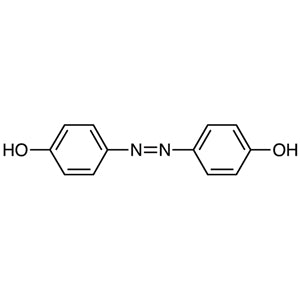
- TCI D3431 2050-16-0 4,4'-Dihydroxyazobenzene
- TCI H0327 2623-36-1 Sodium 4-Hydroxyazobenzene-4'-sulfonate
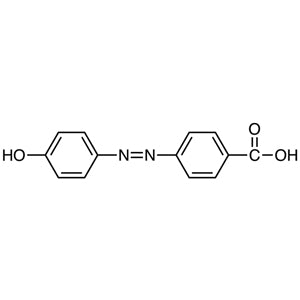
- TCI H1400 2497-38-3 4'-Hydroxyazobenzene-4-carboxylic Acid
- TCI A0565 103-33-3 Azobenzene
- TCI B1275 90-93-7 4,4'-Bis(diethylamino)benzophenone
- Chromogenic reagent research: The diethylamino donor gives the compound visible-region absorption, so it suits studies of colour-forming reagents whose optical response can be measured directly.
- Metal ion detection studies: The tridentate site formed by the two ortho hydroxyl groups and the azo nitrogen makes it a suitable candidate for exploring how metal ions are recognised and detected.
- Metal complex and coordination chemistry: The o,o'-dihydroxyazobenzene chelating pattern lets researchers prepare and study metal complexes and compare how binding behaves with different metal ions.
- Fluorogenic reagent development: As a functionalised azo compound with donor and chelating groups, it can be studied as a model structure when developing reagents that respond to their environment.
- Functional dye development in aqueous systems: The sulfonate group improves water solubility, so the compound suits dye and assay research carried out in aqueous solution rather than organic solvents.
| Brand | TCI (product code S0128) |
|---|---|
| CAS number | 1563-01-5 |
| Molecular formula | — |
| Purity | — |
| Category | Chemistry > Building Blocks > Non-Heterocyclic Building Blocks |
| Pack sizes | 1 g |
| Physical form | Refer to the supplier's certificate of analysis or safety data sheet |
| Storage | Follow the conditions stated on the product label and safety data sheet |
Store this reagent in its original, tightly closed container in a cool, dry, well-ventilated place. Because it is a coloured, light-absorbing compound, protecting it from direct light is a sensible precaution. Keep it away from strong oxidising agents and incompatible materials. When handling it, wear standard laboratory protective equipment, including gloves, safety glasses, and a lab coat. Avoid creating or breathing in dust, and avoid contact with skin and eyes. Weigh and prepare solutions in a well-ventilated area or fume hood. Always check the supplier's safety data sheet for specific hazard, storage, and disposal instructions before use.
—
Product Categories
Produk Terkait
-
2,2'-Dihydroxyazobenzene[SpectrophotometricandfluorimetricreagentforAl,Mgandothermetals] TCI A5005
Regular price From Rp 2.625.000,00Regular price -
4,4'-Dihydroxyazobenzene TCI D3431
Regular price Rp 4.849.950,00Regular priceRp 3.391.500,00Sale price Rp 4.849.950,00 -
Sodium4-Hydroxyazobenzene-4'-sulfonate TCI H0327
Regular price Rp 1.140.300,00Regular priceRp 796.950,00Sale price Rp 1.140.300,00 -
4'-Hydroxyazobenzene-4-carboxylicAcid TCI H1400
Regular price Rp 2.782.500,00Regular priceRp 1.945.650,00Sale price Rp 2.782.500,00 -
Azobenzene TCI A0565
Regular price From Rp 2.411.850,00Regular price -
4,4'-Bis(diethylamino)benzophenone TCI B1275
Regular price From Rp 477.750,00Regular price -
4-(Methylamino)azobenzene TCI M0143
Regular price Rp 4.028.850,00Regular priceRp 2.817.150,00Sale price Rp 4.028.850,00 -
4'-Hydroxyazobenzene-2-carboxylicAcid TCI H0586
Regular price Rp 1.246.350,00Regular priceRp 871.500,00Sale price Rp 1.246.350,00
![2050-14-8 2,2'-Dihydroxyazobenzene [Spectrophotometric and fluorimetric reagent for Al, Mg and other metals] - AMI Scientific](http://amiscientific.com/cdn/shop/files/TCI2510A5005.jpg?v=1767084831&width=533)