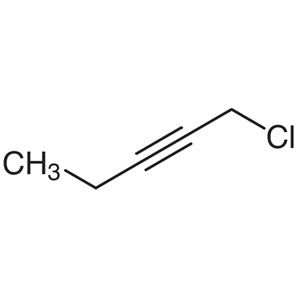
2-Pentynyl Chloride is a chemical compound widely used as a building block in the synthesis of complex organic molecules. Its molecular structure contains a halide group and a long carbon chain, making it a valuable reagent in carbon-carbon bond-forming reactions. In the laboratory, it serves as a key component for the preparation of heterocyclic compounds, esters, and other derivatives that require substitution or addition reactions. This compound plays a crucial role in organic chemistry research, particularly in the development of new materials and pharmaceuticals.
The chemical properties of 2-Pentynyl Chloride make it a preferred choice for synthetic chemists. It exhibits stability under certain conditions but is highly reactive towards strong bases or elevated temperatures. This reactivity allows it to participate in a wide range of chemical transformations, making it versatile for various synthetic pathways. Its ability to undergo nucleophilic substitution and addition reactions enhances its utility in the creation of complex molecular structures. These characteristics make it a reliable and effective reagent in both academic and industrial research settings.
In Indonesian laboratories, 2-Pentynyl Chloride is extensively used in pure and applied chemical research. It is a fundamental component in the synthesis of new compounds, drug development, and organic molecule modification. Its availability and reactivity make it a preferred choice for researchers aiming to explore chemical transformations and develop novel compounds. The compound’s role in these applications underscores its importance in the chemical research landscape in Indonesia.
Related TCI products
- TCI P1055 14752-61-5 1-Pentynyl Iodide
- TCI P0810 624-65-7 Propargyl Chloride
- TCI O0060 16507-61-2 Oleyl Chloride
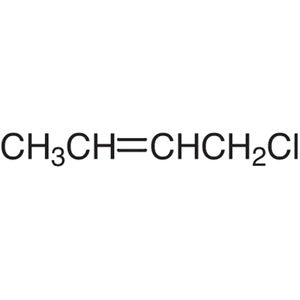
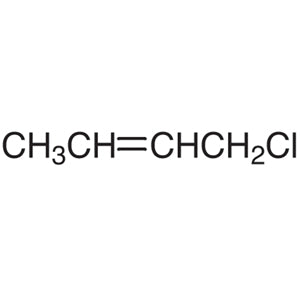
- TCI C1686 591-97-9 Crotyl Chloride (cis- and trans- mixture, contains 38% 3-Chloro-1-butene at maximum)
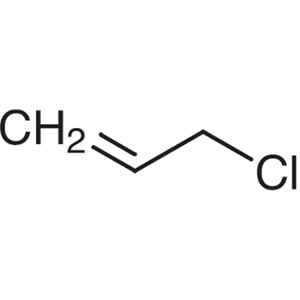
- TCI C0274 107-05-1 Allyl Chloride
- TCI C0145 591-97-9 Crotyl Chloride (cis- and trans- mixture)
- Organic synthesis of heterocyclic compounds due to its ability to form carbon-carbon bonds through substitution and addition reactions.
- Preparation of esters and other functionalized derivatives through nucleophilic attack on the halide group.
- Development of pharmaceutical compounds as a building block for complex molecular structures in drug synthesis.
- Research in material science for the creation of new polymers and organic materials through controlled chemical reactions.
- Modification of existing organic compounds to enhance their properties for industrial or medicinal applications.
| Brand | TCI |
|---|---|
| CAS number | 22592-15-0 |
| Molecular formula | — |
| Purity | — |
| Category | Chemistry > Building Blocks > Non-Heterocyclic Building Blocks |
| Pack sizes | Available in various quantities as per supplier specifications |
| Physical form | Liquid |
| Storage | Store in a cool, dry place away from light and incompatible materials |
2-Pentynyl Chloride should be stored in a cool, dry environment, away from direct sunlight and sources of heat. It is recommended to keep the compound in a sealed container made of materials compatible with its chemical nature, such as glass or high-density polyethylene. Due to its reactivity, it should be handled with care, using appropriate personal protective equipment like gloves and safety goggles. It is important to avoid exposure to strong bases or high temperatures, as these can trigger unwanted reactions. Proper ventilation should be maintained in the laboratory to ensure safe handling and minimize potential hazards.
—
Produk Terkait
-
1-PentynylIodide TCI P1055
Regular price Rp 4.743.900,00Regular price -
PropargylChloride TCI P0810
Regular price From Rp 875.700,00Regular price -
OleylChloride TCI O0060
Regular price Rp 1.749.300,00Regular price -
CrotylChloride(cis-andtrans-mixture,contains38%3-Chloro-1-buteneatmaximum) TCI C1686
Regular price From Rp 689.850,00Regular price -
AllylChloride TCI C0274
Regular price From Rp 477.750,00Regular price -
CrotylChloride(cis-andtrans-mixture) TCI C0145
Regular price From Rp 1.696.800,00Regular price -
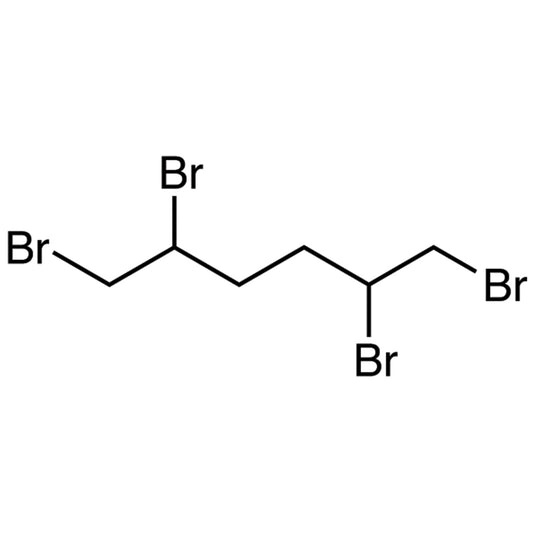
1,2,5,6-Tetrabromohexane(mixtureofdiastereoisomers) TCI T2983
Regular price From Rp 3.367.350,00Regular price -
1,1,1,3-Tetrachloropropane TCI T2426
Regular price Rp 1.856.400,00Regular price