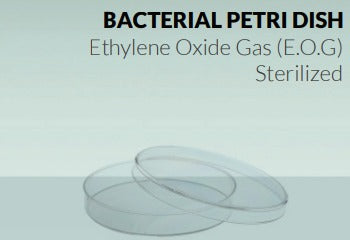
Collection: Petri Dish
Petri dish (cawan petri) is a flat, covered dish used to pour agar media, grow microorganisms, and observe and count colonies after incubation. This tool is routinely used in microbiology, pharmaceutical, food, and education laboratories.
Options in this collection:
-
Biologix sterile plastic petri dishes in sizes 60 × 15 mm, 90 × 15 mm, 90 × 17 mm, and 150 × 15 mm — ready to use, single-use, no need for re-sterilization.
-
Iwaki SH90 bacteriological glass petri dishes, 10 pcs per pack — can be washed and sterilized for repeated use.
Sterile plastic dishes are more practical for routine work and reduce the risk of cross-contamination; glass dishes are more economical for long-term use if the laboratory has an autoclave or sterilization oven. The 90 mm size is the most common for colony counting, while 150 mm provides a larger surface area for isolation.
For cell culture, TC-treated cell culture dishes are also available in the cell culture equipment category. Contact the AMI Scientific team for bulk pricing and stock availability.
Frequently Asked Questions
What is a petri dish used for?
As a container for agar media to grow microbes, count colonies, and hold samples for observation.
Plastic or glass petri dishes?
Sterile single-use plastic is more practical and free from cross-contamination; glass can be sterilized and used repeatedly.
What is the most common petri dish size?
90 mm in diameter. This collection also offers 60 mm and 150 mm.
Can plastic petri dishes be autoclaved?
Sterile plastic dishes are designed for single use and should not be re-autoclaved; use glass dishes if repeated sterilization is required.
What is the difference between a petri dish and a cell culture dish?
Cell culture dishes have a surface treatment (TC treated) so that cells can attach; regular petri dishes are used for microbial agar media.