Explore Small Molecule Semiconductor Building Blocks
Related TCI catalogs (PDF)


-
Anthraquinone TCI A0502
Vendor:TCIRegular price From Rp 477.750,00Regular priceRp 333.900,00Sale price From Rp 477.750,00 -
4-(N,N-Diphenylamino)benzaldehyde TCI D2172
Vendor:TCIRegular price From Rp 1.776.600,00Regular priceRp 1.257.900,00Sale price From Rp 1.776.600,00 -
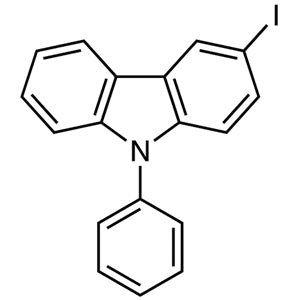
3-Iodo-9-phenylcarbazole TCI I0913
Vendor:TCIRegular price From Rp 1.008.000,00Regular priceRp 720.300,00Sale price From Rp 1.008.000,00 -
1-Vinylnaphthalene(stabilizedwithTBC) TCI V0040
Vendor:TCIRegular price Rp 4.743.900,00Regular priceRp 3.316.950,00Sale price Rp 4.743.900,00 -
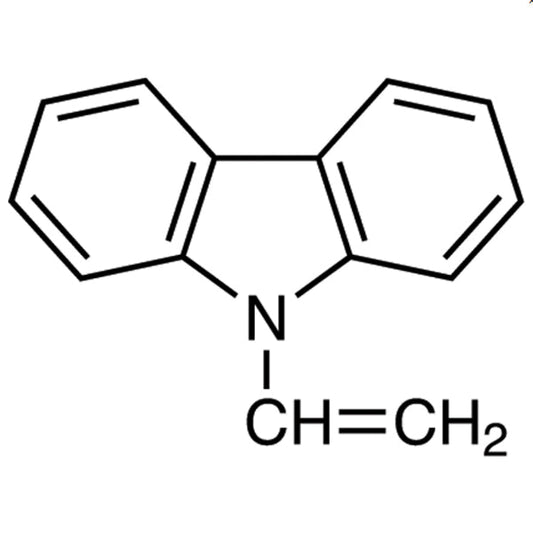
9-Vinylcarbazole TCI V0021
Vendor:TCIRegular price Rp 2.439.150,00Regular priceRp 1.720.950,00Sale price Rp 2.439.150,00 -
4',4''',4'''''-(1,3,5-Triazine-2,4,6-triyl)tris[([1,1'-biphenyl]-4-amine)] TCI T4341
Vendor:TCIRegular price From Rp 2.677.500,00Regular priceRp 1.887.900,00Sale price From Rp 2.677.500,00 -
2,5,8-Trichloro-1,3,4,6,7,9,9b-heptaazaphenalene TCI T4145
Vendor:TCIRegular price Rp 8.506.050,00Regular priceRp 5.964.000,00Sale price Rp 8.506.050,00 -
4-(1,2,2-Triphenylvinyl)benzaldehyde TCI T4136
Vendor:TCIRegular price Rp 3.790.500,00Regular priceRp 2.650.200,00Sale price Rp 3.790.500,00 -
4,4',4''-(1,3,5-Triazine-2,4,6-triyl)tribenzaldehyde TCI T4078
Vendor:TCIRegular price Rp 4.796.400,00Regular priceRp 3.369.450,00Sale price Rp 4.796.400,00 -
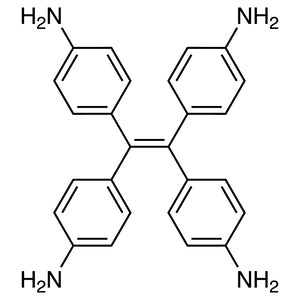
4,4',4'',4'''-(Ethene-1,1,2,2-tetrayl)tetraaniline TCI T4075
Vendor:TCIRegular price Rp 3.922.800,00Regular priceRp 2.758.350,00Sale price Rp 3.922.800,00 -
4-(1,2,2-Triphenylvinyl)phenol TCI T3895
Vendor:TCIRegular price Rp 6.386.100,00Regular priceRp 4.481.400,00Sale price Rp 6.386.100,00 -
1,3,6,8-Tetramethyl-9H-carbazole TCI T3882
Vendor:TCIRegular price From Rp 4.108.650,00Regular priceRp 2.888.550,00Sale price From Rp 4.108.650,00 -
2-([1,1':4',1''-Terphenyl]-4-yl)-4,4,5,5-tetramethyl-1,3,2-dioxaborolane TCI T3875
Vendor:TCIRegular price Rp 3.392.550,00Regular priceRp 2.387.700,00Sale price Rp 3.392.550,00 -
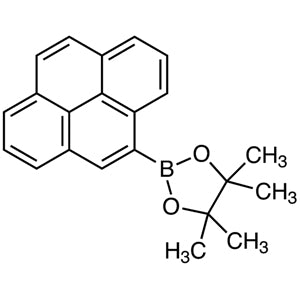
4-(4,4,5,5-Tetramethyl-1,3,2-dioxaborolan-2-yl)pyrene TCI T3857
Vendor:TCIRegular price Rp 4.452.000,00Regular priceRp 3.129.000,00Sale price Rp 4.452.000,00 -
10-(Triethylsilyl)benzo[lmn]thieno[2,3-f][3,8]phenanthroline-1,3,6,8(2H,7H)-tetraone TCI T3850
Vendor:TCIRegular price Rp 4.982.250,00Regular priceRp 3.499.650,00Sale price Rp 4.982.250,00 -
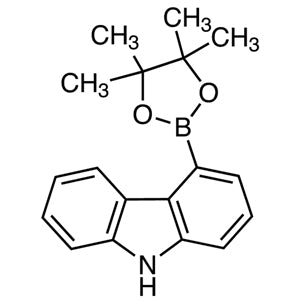
4-(4,4,5,5-Tetramethyl-1,3,2-dioxaborolan-2-yl)-9H-carbazole TCI T3747
Vendor:TCIRegular price Rp 5.246.850,00Regular priceRp 3.684.450,00Sale price Rp 5.246.850,00