

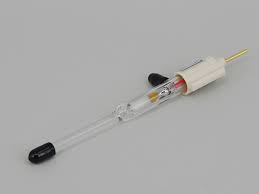
The CS902 Hg/HgO Reference Electrode from Corrtest is a mercury/mercury oxide reference electrode designed for electrochemical measurements in alkaline solutions. In a three-electrode system, the reference electrode provides a stable reference potential. This lets a potentiostat measure and control the potential of the working electrode accurately. The Hg/HgO electrode works through the equilibrium between mercury and mercury(II) oxide in a hydroxide solution, which makes it well suited to alkaline electrolytes. It gives laboratories a dependable potential reference for experiments in basic media.
Laboratories choose this electrode because common reference electrodes such as Ag/AgCl or the saturated calomel electrode are less suitable in concentrated alkaline solutions. Under those conditions, chloride ions can leak from the electrode and contaminate the electrolyte, and the electrode junction is more easily damaged. The Hg/HgO electrode uses a hydroxide-based filling solution that is chemically similar to the working electrolyte. This keeps the liquid junction potential low and reduces contamination. As a result, measurements are more stable and repeatable during long-term studies in alkaline media.
In Indonesia, this electrode is relevant for laboratories that study batteries, alkaline water electrolysis, fuel cells and corrosion. University research groups, government research institutes and industrial R&D laboratories that work with alkaline electrolytes can use it as the standard reference electrode in their three-electrode setups. Research on zinc-air batteries is one example where measurements take place in alkaline electrolytes and a reliable reference potential is needed for accurate and comparable results.
Related products
- CS310M Single channel models (ordinary benchtope type) (±2A,±10V)
- CS350M CORRRTEST SINGLE CHANNEL MODELS EIS / POTENTIOSTAT / GALVANOSTAT
- CS900 Saturated Calomel Electrode
- CS901 Ag/AgCl reference electrode "Ø4mm/Ø6mm 3.5M KCl refilling solution"
- CS903 Mercury/Mercurous sulfate electrode
- CS905 Non-aqueous Ag/Ag+ reference electrode
- Battery research: alkaline battery chemistries such as zinc-air systems need a reference electrode that stays stable in hydroxide electrolytes without adding chloride contamination.
- Alkaline water electrolysis: hydrogen and oxygen evolution studies in basic electrolytes need a stable, compatible reference potential so that electrode overpotentials can be measured accurately.
- Fuel cell studies: alkaline fuel cell research uses hydroxide media, where a matching Hg/HgO reference keeps the liquid junction potential low and the measurements consistent.
- Corrosion testing in alkaline environments: polarization and potential measurements of metals in basic solutions benefit from a reference electrode that does not leak chloride into the test solution.
- Long-term electrochemical monitoring: studies that run for extended periods in alkaline media need stable, repeatable reference potentials, which the hydroxide-based filling solution helps to provide.
| Brand | Corrtest |
|---|---|
| CAS number | Not applicable (instrument accessory) |
| Molecular formula | — |
| Purity | — |
| Category | Corrtest |
| Pack sizes | — |
| Physical form | Mercury/mercury oxide reference electrode with a hydroxide-based filling solution |
| Storage | Store according to the manufacturer's instructions. Keep the electrode clean, protected from damage and away from incompatible chemicals. |
- Product: CS902 Hg/HgO reference electrode
Store the CS902 Hg/HgO reference electrode in a clean, dry and stable place, away from direct sunlight, extreme temperatures and physical shock. Keep it in its original protective packaging or a suitable electrode holder when it is not in use. Follow the manufacturer's guidance on keeping the electrode tip and junction in good condition between measurements. Because the electrode contains mercury compounds, handle it carefully to avoid breakage, wear suitable personal protective equipment, and work in line with your laboratory's chemical safety procedures. If the electrode is damaged, or when it reaches the end of its service life, dispose of it as hazardous waste under local regulations. Before each measurement, check the filling solution and the junction for contamination or drying.
—
Produk Terkait
-
CS310M Single channel models (ordinary benchtope type) (±2A,±10V)
Regular price Rp 129.438.000,00Regular price -
CS350M CORRRTEST SINGLE CHANNEL MODELS EIS / POTENTIOSTAT / GALVANOSTAT
Regular price Rp 167.884.000,00Regular price -
CS900 Saturated Calomel Electrode
Regular price Rp 2.066.000,00Regular price -
CS901 Ag/AgCl reference electrode "Ø4mm/Ø6mm 3.5M KCl refilling solution"
Regular price Rp 2.149.000,00Regular price -
CS903 Mercury/Mercurous sulfate electrode
Regular price Rp 2.341.000,00Regular price -
CS905 Non-aqueous Ag/Ag+ reference electrode
Regular price Rp 2.149.000,00Regular price -
CS910 Platinum conductivity electrode
Regular price Rp 3.030.000,00Regular price -
CS911 Platinum plate electrode 99.95%,10x10x0.1mm
Regular price Rp 4.131.000,00Regular price


