

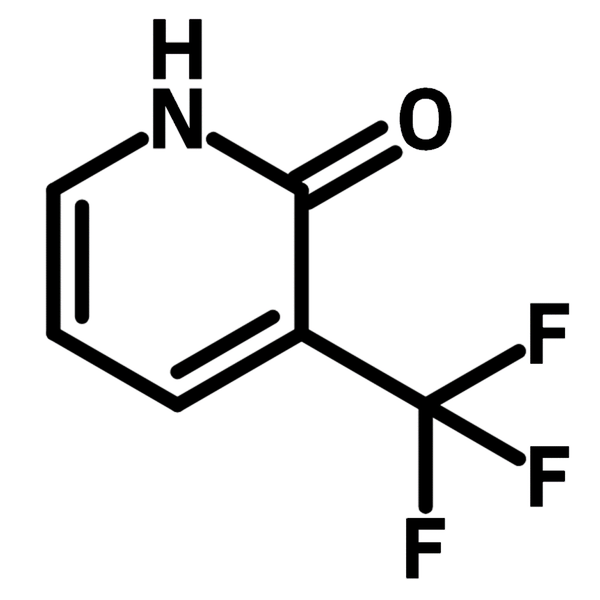
3-(Trifluoromethyl)-2-pyridone (CAS 22245-83-6), also called 2-hydroxy-3-(trifluoromethyl)pyridine, is a 2-hydroxypyridine carrying a trifluoromethyl group. It serves as a fluorinated heterocyclic building block and synthesis intermediate for ligands and bioactive compounds in drug discovery and catalysis. It is supplied as an off-white to pale purple powder with a purity of 97%.
In catalysis, the amide group of the 2-pyridone core coordinates to transition metals, giving stable five- or six-membered ring intermediates. This makes the compound a widely used ligand for directed C-H activation at the meta position. The trifluoromethyl group adjusts how strongly the ligand binds to the metal and restricts where reaction can occur, helping to improve regioselectivity.
The 2-pyridone motif also appears in many bioactive molecules, including Doravirine, a non-nucleoside reverse transcriptase inhibitor used in AIDS treatment, and imidazoline derivatives studied as neuropeptide Y Y5 receptor antagonists for diet-induced obesity.
- Ligand for transition-metal catalysed meta-selective C-H activation.
- Intermediate for synthesising bioactive ingredients in drug discovery.
- Fluorinated heterocyclic building block for general organic synthesis.
- Precursor for 2-pyridone derivatives explored as active pharmaceutical ingredients.
| Brand | Ossila |
|---|---|
| CAS number | 22245-83-6 |
| Molecular formula | C6H4F3NO |
| Purity | 97% |
| Category | — |
| Pack sizes | 10 g, 25 g, 50 g |
| Physical form | Off-white to pale purple powder |
| Storage | — |
- Product code: B1651
- Full Name: 2-Hydroxy-3-(trifluoromethyl)pyridine
- Synonyms: 3-(Trifluoromethyl)pyridin-2-ol
- Molecular Weight: 163.10 g/mol
- Melting Point: 150 °C – 155 °C
- Classification / Family: Fluorinated building blocks, Heterocyclic building blocks, Ligands, Catalytic reactions, APIs
—
—