

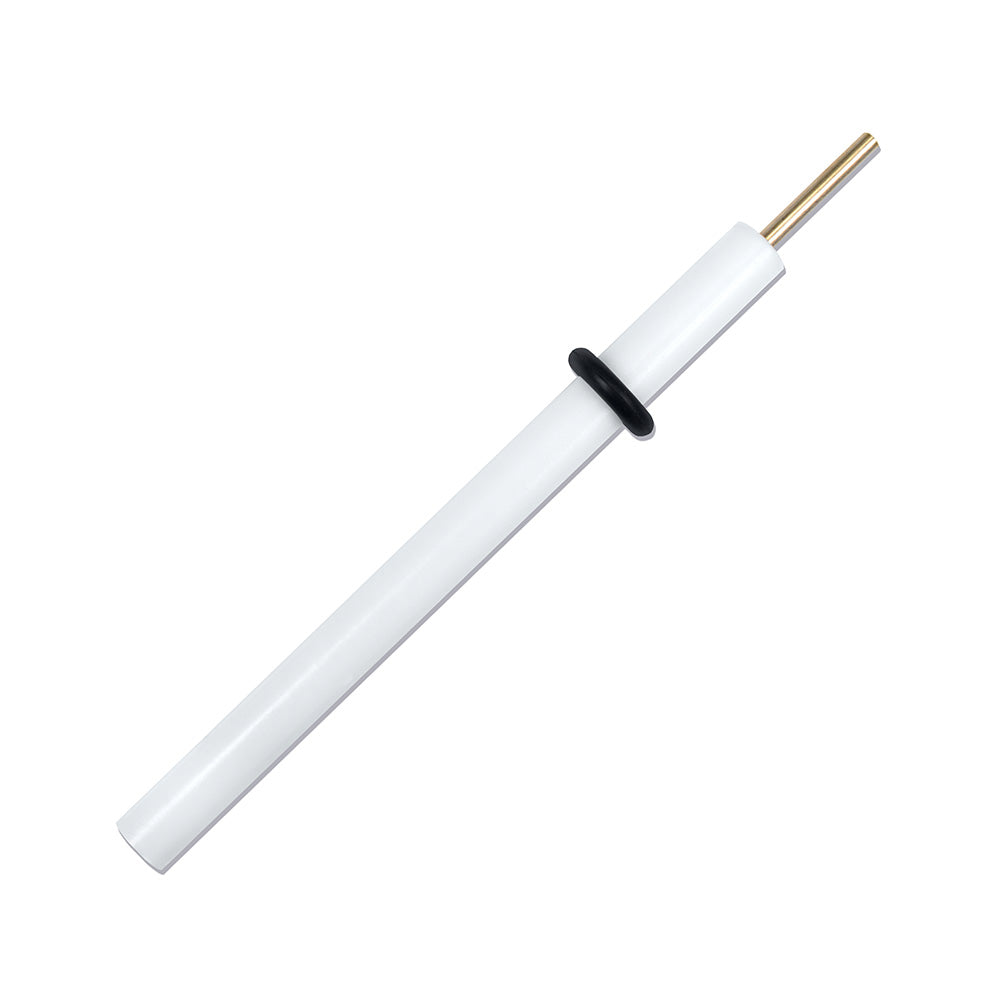
The Ossila C2013K1 is a graphite working electrode with a 2 mm disc diameter, designed for electrochemical studies such as cyclic voltammetry, linear sweep voltammetry and electrolysis. Its standard shape lets it sit in any typical electrochemistry cell, making it a practical choice for routine and long-term experiments.
Graphite is a carbon electrode material valued for its chemical stability, good electrical conductivity and high melting point, and it serves widely as either an anode or a cathode. Compared with glassy carbon, graphite is less chemically inert but offers higher conductivity at a lower cost. Relative to platinum or gold electrodes, it permits scans to reach more negative potentials while still providing a good anodic potential window.
A distinctive benefit of graphite is surface renewal: because its layered structure is slippery and flexible along the edge plane and peels along the basal plane, polishing exposes a fresh electrode surface. The same electrode is also offered with 3 mm and 4 mm discs.
- Cyclic voltammetry measurements in standard electrochemical cells.
- Linear sweep voltammetry studies.
- Bulk electrolysis experiments.
- Use as an anode or cathode in general electrochemical work.
- Scans requiring more negative potentials than platinum or gold electrodes allow.
| Brand | Ossila |
|---|---|
| CAS number | — |
| Molecular formula | — |
| Purity | — |
| Category | — |
| Pack sizes | — |
| Physical form | — |
| Storage | — |
- Product code: C2013K1
- Product code: C2013K1
- Electrode material: Graphite
- Disc diameter: 2 mm
- Other available diameters: 3 mm, 4 mm
- Shape: Standard shape, fits any cell
—
—