
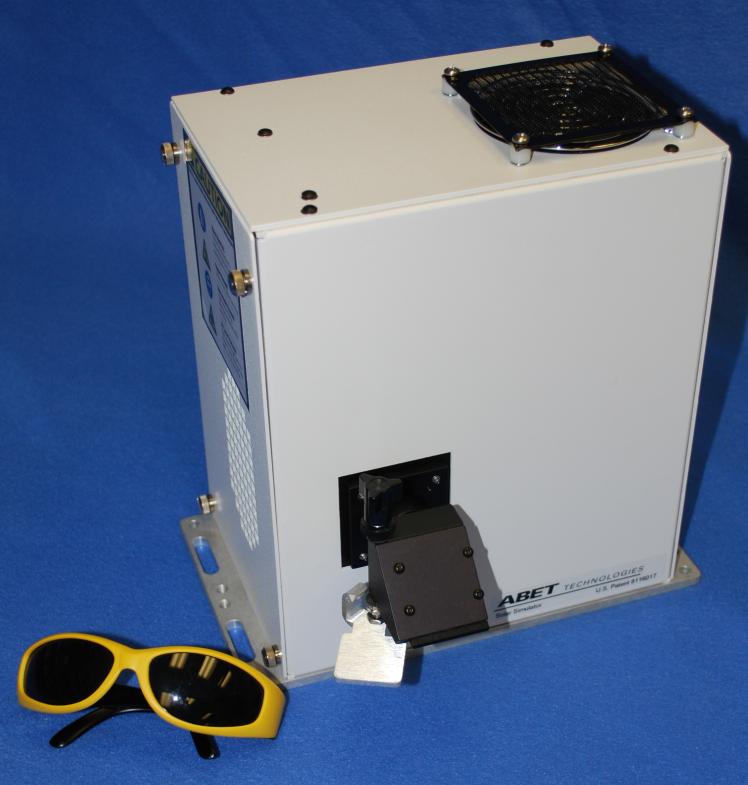
The ABET 10500 Low-Cost Solar Simulator from ABET Technologies is a laboratory light source built to reproduce the spectrum and intensity of sunlight indoors under controlled conditions. Researchers can use it to test devices and materials that depend on sunlight without being affected by weather, time of day, or seasonal changes. ABET positions the 10500 as a budget-conscious model, which makes it a practical entry point for laboratories starting research in photovoltaics, photocatalysis, or testing materials under light exposure.
Laboratories choose a solar simulator because it gives the same illumination conditions from one day to the next. This lets them compare measurements fairly across samples and experiments. Measurements taken under direct sunlight vary with cloud cover, the angle of the sun, and atmospheric conditions. A stable artificial light source removes these variables, so differences in results come from the samples rather than from changes outdoors. As a low-cost model, the ABET 10500 balances useful capability with careful use of a limited budget, which suits groups that need reliable illumination without moving to a higher-end system.
In Indonesian laboratories, an instrument like the ABET 10500 fits university research groups, government research institutes, and industrial R&D teams that are building new work in solar energy and light-driven processes. Outdoor conditions in a tropical climate change quickly with clouds and rain, so controlled indoor illumination is especially useful for keeping data consistent. Detailed technical specifications, including lamp type, illuminated area, spectral filters, and performance class, should be confirmed with our team for the configuration you need.
- Photovoltaic research: the simulator provides repeatable indoor illumination, so solar cells and modules can be measured and compared without interference from weather or the time of day.
- Photocatalysis studies: controlled light that resembles sunlight lets researchers run light-driven reactions under the same conditions every time and compare catalyst performance fairly.
- Material testing under light exposure: samples can be exposed to consistent illumination indoors, so changes in their properties come from the material and not from varying outdoor conditions.
- Comparative measurements between samples: the same illumination from day to day lets laboratories test many samples across separate sessions and still compare the results directly.
- Starting a new solar research program: as a lower-cost model, the ABET 10500 lets newly established groups begin light-dependent experiments while keeping equipment spending under control.
| Brand | ABET Technologies |
|---|---|
| CAS number | Not applicable (laboratory instrument) |
| Molecular formula | — |
| Purity | — |
| Category | ABET TECHNOLOGIES |
| Pack sizes | — |
| Physical form | laboratory light source instrument |
| Storage | — |
- Model: ABET 10500 Low-Cost Solar Simulator
- Configuration: lamp type, illuminated area, spectral filters, and performance class should be confirmed with our team
Keep the solar simulator in a clean, dry indoor laboratory area away from dust, moisture, and corrosive vapors. Place it on a stable surface with enough space around it for ventilation, because the light source produces heat during operation. When the unit is not in use, cover it or keep it in its original packaging to protect the optics. Do not look directly into the beam. Use appropriate eye protection and keep reflective objects out of the light path. Only trained personnel should operate the unit, and they should follow the manufacturer's manual for installation, warm-up, lamp replacement, and maintenance. Disconnect power before cleaning or servicing, and let the lamp housing cool completely before touching it.
—
