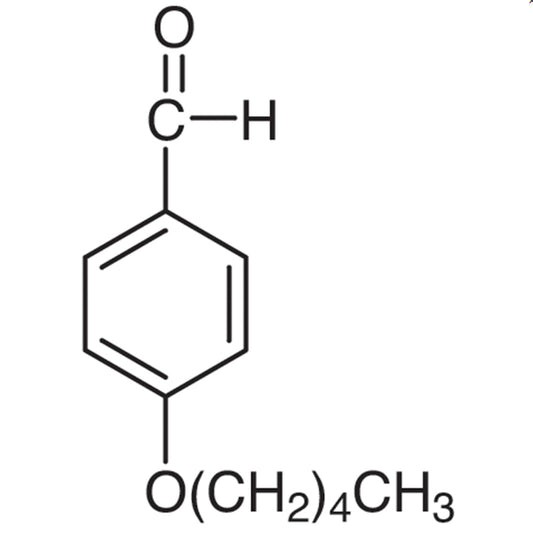
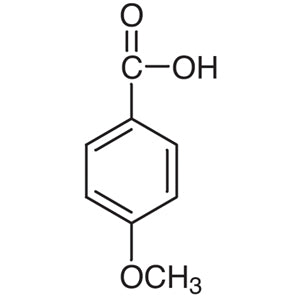
4-Amyloxybenzoic Acid is a chemical compound widely utilized in scientific research, particularly in the fields of materials science and liquid crystal technology. As a key building block in the development of advanced materials, it plays a crucial role in laboratories focused on creating substances with specific physical and chemical properties. This compound is essential for formulating materials that exhibit desired characteristics such as viscosity, thermal stability, and electromagnetic responsiveness. Its unique molecular structure enables it to be a versatile tool in the synthesis of functional materials.
The compound's molecular structure is complex, allowing it to form anisotropic structures and respond to environmental changes, making it ideal for precise control over material properties. These properties make it a preferred choice in laboratories aiming to develop materials with tailored behaviors. Its ability to interact with external stimuli, such as temperature or electric fields, further enhances its utility in advanced research applications. This adaptability supports its use in a wide range of scientific investigations.
In Indonesian laboratories, 4-Amyloxybenzoic Acid is commonly used in research related to the development of liquid crystal materials and composite substances. It is also frequently employed in studies involving the thermal and mechanical properties of materials, especially in projects focused on innovation and material performance. Its presence in these research areas highlights its importance in advancing scientific knowledge and technological applications in Indonesia.
- Liquid Crystal Material Development: This compound is ideal for creating liquid crystal materials due to its ability to form anisotropic structures and respond to external stimuli.
- Composite Material Synthesis: It is used in the formulation of composite materials where specific mechanical and thermal properties are required.
- Thermal Stability Research: Its inherent thermal stability makes it suitable for studies involving high-temperature environments and material performance.
- Electromagnetic Responsiveness Studies: The compound's responsiveness to electromagnetic fields supports research in materials that interact with such stimuli.
- Optical Material Innovation: It is employed in the development of optical materials that require precise control over light interaction and material behavior.
| Brand | TCI |
|---|---|
| CAS number | 15872-41-0 |
| Molecular formula | — |
| Purity | — |
| Category | Materials Science > Material Building Blocks > Liquid Crystal (LC) Building Blocks |
| Pack sizes | — |
| Physical form | — |
| Storage | Store in a cool, dry place away from direct sunlight and moisture |
This compound should be stored in a cool, dry environment, away from direct sunlight and moisture to maintain its chemical integrity. It is recommended to use airtight containers made of materials that are chemically inert to prevent contamination or degradation. Proper labeling of storage containers is essential for safe handling and identification. In laboratory settings, it is important to ensure that the compound is kept in a secure location, away from incompatible substances. Regular monitoring of storage conditions is advised to maintain the material's stability and effectiveness for research applications. General laboratory precautions include using appropriate personal protective equipment when handling the compound and ensuring proper ventilation in the workspace.
—
Produk Terkait
-
4-BenzyloxybenzoicAcid TCI B1665
Regular price From Rp 1.538.250,00Regular priceRp 1.090.950,00Sale price From Rp 1.538.250,00 -
4-Amyloxybenzaldehyde TCI A0707
Regular price From Rp 1.510.950,00Regular priceRp 1.056.300,00Sale price From Rp 1.510.950,00 -
4-n-OctyloxybenzoicAcid TCI O0117
Regular price Rp 2.041.200,00Regular priceRp 1.442.700,00Sale price Rp 2.041.200,00 -
3-Fluoro-4-n-octyloxybenzoicAcid TCI F0337
Regular price From Rp 5.141.850,00Regular priceRp 3.610.950,00Sale price From Rp 5.141.850,00 -
p-AnisicAcid TCI A0482
Regular price Rp 557.550,00Regular priceRp 405.300,00Sale price Rp 557.550,00 -
4-(trans-4-Butylcyclohexyl)benzoicAcid TCI B5318
Regular price Rp 1.298.850,00Regular priceRp 924.000,00Sale price Rp 1.298.850,00 -
1-Bromo-4-hexyloxybenzene TCI B3876
Regular price From Rp 1.590.750,00Regular priceRp 1.111.950,00Sale price From Rp 1.590.750,00