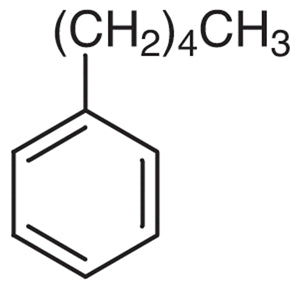
Tert-Amylbenzene is a chemical compound widely used in laboratory settings for various chemical reactions and organic synthesis processes. It serves as a fundamental building block in the creation of more complex organic molecules. Its aromatic structure provides a stable base for numerous chemical transformations, making it a versatile reagent in synthetic chemistry. In the laboratory, tert-Amylbenzene is essential for experiments that require a specific alkyl chain attached to a benzene ring. This compound is commonly used in research involving functional group modifications and molecular design.
The chemical properties of tert-Amylbenzene make it a preferred choice for laboratory applications. It exhibits chemical stability and does not react spontaneously under normal conditions, ensuring safety during handling and storage. Its high boiling point facilitates distillation and separation techniques, which are critical in purification processes. Additionally, its non-toxic and non-flammable nature enhances its usability in a controlled laboratory environment. These characteristics contribute to its reliability in both academic and industrial research settings.
In Indonesian laboratories, tert-Amylbenzene is frequently utilized in organic chemistry research and the synthesis of complex compounds. It is a key component in the development of new materials and pharmaceuticals. Its availability and reliability make it a staple in chemical laboratories across the country, supporting both educational and research activities. The compound’s role in advancing chemical knowledge and innovation is significant in the scientific community.
- Organic synthesis experiments benefit from tert-Amylbenzene due to its stable aromatic structure and ability to undergo substitution reactions.
- It is ideal for functional group modification in the creation of complex organic molecules, providing a reliable starting point for synthetic pathways.
- In distillation and separation processes, its high boiling point allows for efficient purification of chemical compounds during reaction workups.
- Tert-Amylbenzene supports research in pharmaceutical development by serving as a precursor in the synthesis of various drug-related compounds.
- It is commonly used in academic settings for teaching and demonstrating fundamental chemical reactions and molecular structures.
| Brand | TCI |
|---|---|
| CAS number | 2049-95-8 |
| Molecular formula | — |
| Purity | — |
| Category | Chemistry > Building Blocks > Non-Heterocyclic Building Blocks |
| Pack sizes | Available in various quantities as per supplier specifications |
| Physical form | Liquid |
| Storage | Store in a cool, dry place away from direct sunlight and incompatible materials |
Tert-Amylbenzene should be stored in a cool, dry environment to maintain its chemical stability. It is recommended to use airtight containers made of glass or inert materials to prevent contamination and evaporation. Due to its non-flammable nature, it does not require special fire suppression systems, but it should still be kept away from heat sources. Proper labeling and storage in designated chemical cabinets are essential for safety. Regular inspection of storage conditions ensures that the compound remains in optimal condition for laboratory use. Always follow standard safety protocols when handling and using this chemical in a laboratory setting.
—
Produk Terkait
-
Amylbenzene TCI A0449
Regular price From Rp 1.353.450,00Regular priceRp 946.050,00Sale price From Rp 1.353.450,00 -
Anthracene TCI A0495
Regular price From Rp 584.850,00Regular priceRp 408.450,00Sale price From Rp 584.850,00 -
Acenaphthylene TCI A0005
Regular price From Rp 769.650,00Regular priceRp 537.600,00Sale price From Rp 769.650,00 -
Acenaphthene TCI A0003
Regular price From Rp 769.650,00Regular priceRp 537.600,00Sale price From Rp 769.650,00 -
9-Vinylanthracene TCI V0130
Regular price From Rp 2.545.200,00Regular priceRp 1.779.750,00Sale price From Rp 2.545.200,00 -
Undecylbenzene TCI U0010
Regular price From Rp 1.140.300,00Regular priceRp 796.950,00Sale price From Rp 1.140.300,00 -
1,1,3-Trimethyl-3-phenylindane TCI T4097
Regular price From Rp 955.500,00Regular priceRp 667.800,00Sale price From Rp 955.500,00 -
Triphenylene(purifiedbysublimation) TCI T3267
Regular price From Rp 3.367.350,00Regular priceRp 2.354.100,00Sale price From Rp 3.367.350,00