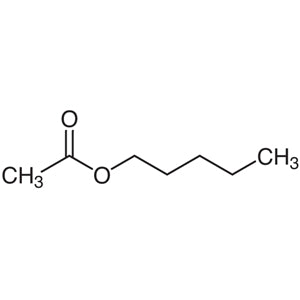
Oleyl Acetate is an organic compound widely used in various chemical reactions within laboratory settings. As a key building block in chemistry, it plays a vital role in the synthesis of complex molecules. Its simple molecular structure makes it highly versatile, enabling it to participate in a range of chemical transformations. This compound is commonly utilized in the preparation of esters, surfactants, and other chemical substances with broad applications in pharmaceuticals, cosmetics, and materials science. Its utility extends to testing the reactivity of specific compounds and serving as a reagent in esterification reactions.
Oleyl Acetate is favored for its chemical stability and resistance to degradation under normal conditions. It is a colorless liquid with a characteristic, non-offensive odor. Its high boiling point facilitates ease of heating and separation during laboratory procedures. The compound’s non-reactive nature and availability make it a popular choice for a wide array of chemical experiments. Its physical properties ensure compatibility with various laboratory techniques, making it a reliable and efficient reagent.
In Indonesian laboratories, Oleyl Acetate is extensively used in chemical research, particularly in the synthesis of organic compounds and the development of chemical products. Its role in both academic and industrial research underscores its importance in the scientific community. Researchers rely on its consistent performance and predictable behavior to achieve reliable results in their experiments.
TCI brochures (PDF)
- Lipids 2025-12-17 · p. 12
- Organic synthesis applications benefit from Oleyl Acetate's role as a versatile building block for creating complex molecules.
- Esterification reactions often use Oleyl Acetate as a key reagent due to its stability and reactivity in such processes.
- Surfactant development relies on Oleyl Acetate for its ability to form stable ester structures with various functional groups.
- Pharmaceutical research utilizes Oleyl Acetate to test the reactivity of compounds in drug synthesis pathways.
- Material science applications incorporate Oleyl Acetate for its contribution to the formulation of specialty chemical products.
| Brand | TCI |
|---|---|
| CAS number | 693-80-1 |
| Molecular formula | — |
| Purity | — |
| Category | Chemistry > Building Blocks > Non-Heterocyclic Building Blocks |
| Pack sizes | Available in standard laboratory quantities |
| Physical form | Colorless liquid |
| Storage | Store in a cool, dry place away from direct sunlight |
Oleyl Acetate should be stored in a cool, dry environment, away from direct sunlight and sources of heat. It is recommended to use airtight containers made of materials compatible with organic solvents to prevent evaporation and contamination. Due to its chemical stability, it does not require refrigeration, but maintaining a controlled temperature is advisable. In laboratory settings, it should be handled with appropriate safety measures, such as using gloves and ensuring proper ventilation. Avoid exposure to open flames or sparks to prevent any potential hazards. Proper labeling of containers is essential for safe handling and storage.
—
Produk Terkait
-
NonylAcetate TCI A0041
Regular price From Rp 505.050,00Regular priceRp 352.800,00Sale price From Rp 505.050,00 -
4-NitrophenylAcetate TCI A0040
Regular price From Rp 3.896.550,00Regular priceRp 2.724.750,00Sale price From Rp 3.896.550,00 -
IsobutylAcetate TCI A0034
Regular price From Rp 477.750,00Regular priceRp 333.900,00Sale price From Rp 477.750,00 -
AmylAcetate TCI A0021
Regular price From Rp 584.850,00Regular priceRp 408.450,00Sale price From Rp 584.850,00 -
HeptylAcetate TCI A0904
Regular price From Rp 477.750,00Regular priceRp 333.900,00Sale price From Rp 477.750,00 -
OleylAlcohol(HighPurity) TCI O0572
Regular price From Rp 4.347.000,00Regular priceRp 3.039.750,00Sale price From Rp 4.347.000,00 -
OleylAlcohol TCI O0058
Regular price From Rp 505.050,00Regular priceRp 352.800,00Sale price From Rp 505.050,00 -
ButylAcetate[forSpectrophotometry] TCI A0228
Regular price Rp 1.538.250,00Regular priceRp 1.075.200,00Sale price Rp 1.538.250,00