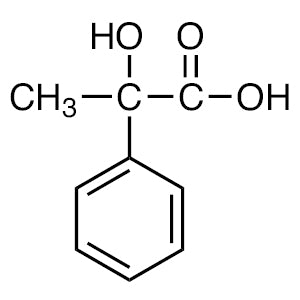
Atrolactic Acid (515-30-0), also known as TCI A1035, is a chemical compound widely used in laboratory settings for organic synthesis. It serves as a fundamental building block in the construction of complex molecular structures, particularly in reactions involving carbon chain elongation. This compound plays a critical role in various synthetic pathways, enabling chemists to create a wide range of organic compounds with specific functional groups. Its versatility makes it an essential component in both academic and industrial research environments.
Atrolactic Acid is valued for its chemical stability and reactivity, allowing it to interact effectively with a variety of reagents. Its ability to form bonds with functional groups such as hydroxyl, carboxylate, and amine makes it highly suitable for substitution, esterification, and reduction reactions. These properties ensure that it remains a preferred choice for chemists seeking reliable and efficient synthetic tools. The compound's predictable behavior under different reaction conditions further enhances its utility in laboratory applications.
In Indonesian laboratories, Atrolactic Acid is commonly used in chemical research, particularly in organic synthesis and analytical chemistry. It supports the development of new compounds, pharmaceuticals, and industrial chemicals. Its availability and consistent performance make it a reliable material for researchers aiming to advance their work in the field of chemistry. The compound's role in supporting innovation and scientific progress is well recognized in the Indonesian scientific community.
- Organic synthesis applications benefit from Atrolactic Acid's ability to form stable intermediates and participate in chain elongation reactions.
- It is ideal for esterification processes due to its reactivity with carboxylic acid derivatives and its compatibility with common reagents.
- Atrolactic Acid supports substitution reactions by enabling the replacement of functional groups in complex molecules with high efficiency.
- Its use in reduction reactions makes it valuable for the synthesis of alcohols and other reduced organic compounds.
- In analytical chemistry, it serves as a reference standard for qualitative and quantitative analysis of organic compounds.
| Brand | TCI |
|---|---|
| CAS number | 515-30-0 |
| Molecular formula | — |
| Purity | — |
| Category | Chemistry > Building Blocks > Non-Heterocyclic Building Blocks |
| Pack sizes | Available in various quantities as per supplier specifications |
| Physical form | Solid, typically in crystalline or powder form |
| Storage | Store in a cool, dry place away from moisture and direct sunlight |
Atrolactic Acid should be stored in a cool, dry environment to maintain its chemical stability and prevent degradation. It is recommended to keep the compound in airtight containers to minimize exposure to moisture and air, which can affect its reactivity. Proper labeling of storage containers is essential to ensure safe handling and prevent accidental use. In laboratory settings, it is important to handle the compound with appropriate personal protective equipment, such as gloves and safety goggles, to avoid direct contact. The compound should be stored away from incompatible substances to prevent unwanted chemical reactions. Regular monitoring of storage conditions ensures the material remains suitable for use in chemical synthesis and research applications.
—
Produk Terkait
-
TCI B5774 5,10-Bis(4,4,5,5-tetramethyl-1,3,2-dioxaborolan-2-yl)naphtho[1,2-c:5,6-c']bis([1,2,5]oxadiazole)
Regular price Rp 10.307.850,00Regular priceRp 7.224.000,00Sale price Rp 10.307.850,00 -
Dihydroiodide TCI B6569
Regular price From Rp 1.988.700,00Regular priceRp 1.405.950,00Sale price From Rp 1.988.700,00