


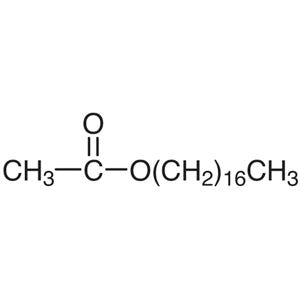
Heptadecyl Acetate is a chemical compound widely used in laboratory settings as a building block in organic synthesis. It serves as a versatile reagent that supports various chemical reactions and is commonly utilized in the development of complex molecular structures. Its role as a solvent or auxiliary material in specific chemical processes makes it an essential component in many experimental protocols. This compound is particularly valuable in research environments where stability and reliability are critical.
Heptadecyl Acetate is favored for its non-polar nature and high boiling point, which make it suitable for reactions requiring elevated temperatures. Its chemical stability ensures that it does not readily react with other substances, reducing the risk of unwanted side reactions. Additionally, its resistance to degradation allows for extended shelf life, making it a reliable choice for long-term storage and repeated use. These properties contribute to its popularity among laboratory professionals.
In Indonesian laboratories, Heptadecyl Acetate is frequently used in chemical research, especially in organic synthesis and analytical chemistry. Its availability in the local market supports academic and industrial research activities. It is also found in applications such as the production of chemical intermediates, solvents, and cosmetic ingredients. Its non-toxic and non-corrosive nature further enhances its safety profile in laboratory environments.
TCI brochures (PDF)
- Lipids 2025-12-17 · p. 12
- Organic synthesis where Heptadecyl Acetate acts as a building block for creating complex molecules due to its chemical stability and non-reactive nature.
- Solvent applications in reactions requiring high-temperature conditions because of its high boiling point and non-polar characteristics.
- Analytical chemistry experiments where its inertness ensures accurate and reproducible results without interfering with the reaction.
- Industrial research in chemical manufacturing where it is used as a raw material for producing specialty chemicals and cosmetic products.
- Laboratory testing for developing new formulations in the cosmetics industry due to its compatibility with various organic compounds.
| Brand | TCI |
|---|---|
| CAS number | 822-20-8 |
| Molecular formula | — |
| Purity | — |
| Category | Chemistry > Building Blocks > Non-Heterocyclic Building Blocks |
| Pack sizes | Available in standard laboratory quantities as per supplier specifications |
| Physical form | Liquid |
| Storage | Store in a cool, dry place away from direct sunlight and incompatible materials |
Heptadecyl Acetate should be stored in a cool, dry location away from direct sunlight and sources of heat. It is recommended to keep it in a sealed container to prevent evaporation and contamination. Due to its non-polar nature, it is best stored in glass or polyethylene containers that are resistant to chemical degradation. Laboratory personnel should handle the compound with care, using appropriate personal protective equipment such as gloves and safety goggles. Since it is non-toxic and non-corrosive, it poses minimal risk, but general laboratory safety protocols should still be followed to ensure a safe working environment.
—
Produk Terkait
-
ButylAcetate[forSpectrophotometry] TCI A0228
Regular price Rp 1.538.250,00Regular priceRp 1.075.200,00Sale price Rp 1.538.250,00 -
VinylAcetateMonomer(stabilizedwithHQ) TCI A0045
Regular price Rp 477.750,00Regular priceRp 333.900,00Sale price Rp 477.750,00 -
PropylAcetate TCI A0044
Regular price From Rp 477.750,00Regular priceRp 333.900,00Sale price From Rp 477.750,00 -
PhenylAcetate TCI A0043
Regular price Rp 452.550,00Regular priceRp 316.050,00Sale price Rp 452.550,00 -
n-OctylAcetate TCI A0042
Regular price From Rp 505.050,00Regular priceRp 352.800,00Sale price From Rp 505.050,00 -
NonylAcetate TCI A0041
Regular price From Rp 505.050,00Regular priceRp 352.800,00Sale price From Rp 505.050,00 -
4-NitrophenylAcetate TCI A0040
Regular price From Rp 3.896.550,00Regular priceRp 2.724.750,00Sale price From Rp 3.896.550,00 -
4-NitrobenzylAcetate TCI A0039
Regular price From Rp 1.298.850,00Regular priceRp 908.250,00Sale price From Rp 1.298.850,00


