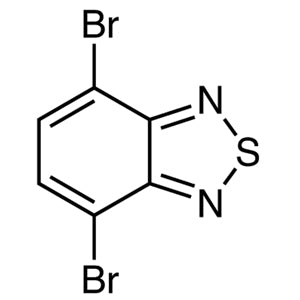
4-Amino-2,1,3-benzothiadiazole is a chemical compound widely used as a building block in the synthesis of heterocyclic compounds. Its unique molecular structure enables it to participate in various chemical reactions, making it a versatile reagent in laboratory settings. This compound is commonly employed in organic chemistry and pharmaceutical research due to its ability to form complex molecular frameworks. Its role in the laboratory extends to the development of bioactive molecules, where its structural versatility supports the creation of compounds with specific biological functions.
The compound’s stable chemical properties and controlled reactivity make it a preferred choice for researchers. It exhibits good solubility in organic solvents, facilitating efficient processing and purification steps. Its aromatic structure contributes to high reactivity under different reaction conditions, allowing for the synthesis of a wide range of derivatives. These characteristics ensure consistent performance, making it suitable for use in both small-scale and large-scale laboratory applications. Additionally, its stability under certain conditions helps minimize degradation risks during storage and handling.
In Indonesian laboratories, 4-Amino-2,1,3-benzothiadiazole is extensively used in scientific research related to organic chemistry and pharmacology. It is a common reagent in academic and industrial research settings, supporting studies on drug development and chemical synthesis. Its availability and reliability make it a valuable resource for researchers aiming to explore new chemical pathways and biological activities.
TCI brochures (PDF)
- Building Blocks for Organic Semiconductor 2026-03-24 · p. 24
Related TCI products
- TCI B0921 273-13-2 2,1,3-Benzothiadiazole
- TCI B6846 1203707-77-0 4,4'-(Benzo[c][1,2,5]thiadiazole-4,7-diyl)dianiline
- TCI B7011 22034-13-5 4-Bromobenzo[c][1,2,5]thiadiazole
- TCI D4985 76186-72-6 4,7-Dibromo-5,6-dinitro-2,1,3-benzothiadiazole
- TCI D4064 18392-81-9 5,6-Dibromo-2,1,3-benzothiadiazole
- TCI D3842 15155-41-6 4,7-Dibromo-2,1,3-benzothiadiazole
- Organic synthesis applications benefit from this compound's ability to form complex heterocyclic structures, supporting the development of bioactive molecules.
- Pharmaceutical research utilizes it to create derivatives with potential therapeutic properties, aiding in drug discovery and development.
- Pharmacological studies rely on its structural versatility to investigate molecular interactions and biological activities in various systems.
- Chemical research laboratories use it as a key reagent in the synthesis of novel compounds with specific functional groups and properties.
- Academic institutions incorporate it into teaching and research programs to demonstrate the principles of heterocyclic chemistry and synthetic pathways.
| Brand | TCI |
|---|---|
| CAS number | 767-64-6 |
| Molecular formula | — |
| Purity | — |
| Category | Chemistry > Building Blocks > Heterocyclic Building Blocks |
| Pack sizes | Available in various quantities as per standard laboratory supply options |
| Physical form | Solid |
| Storage | Store in a cool, dry place away from direct sunlight and moisture |
This compound should be stored in a cool, dry environment to maintain its stability and prevent degradation. It is recommended to use airtight containers to protect it from moisture and air exposure. Due to its chemical nature, it should be handled in a well-ventilated area to ensure safety. Avoid direct contact with skin and eyes, and use appropriate personal protective equipment when handling. It is important to keep the compound away from incompatible materials to prevent any potential chemical reactions. Proper storage conditions help preserve its chemical integrity and ensure its effectiveness in laboratory applications.
—
Produk Terkait
-
2,1,3-Benzothiadiazole TCI B0921
Regular price From Rp 1.192.800,00Regular priceRp 849.450,00Sale price From Rp 1.192.800,00 -
4,4'-(Benzo[c][1,2,5]thiadiazole-4,7-diyl)dianiline TCI B6846
Regular price From Rp 2.702.700,00Regular priceRp 1.905.750,00Sale price From Rp 2.702.700,00 -
4-Bromobenzo[c][1,2,5]thiadiazole TCI B7011
Regular price From Rp 2.199.750,00Regular priceRp 1.554.000,00Sale price From Rp 2.199.750,00 -
4,7-Dibromo-5,6-dinitro-2,1,3-benzothiadiazole TCI D4985
Regular price From Rp 1.961.400,00Regular priceRp 1.387.050,00Sale price From Rp 1.961.400,00 -
5,6-Dibromo-2,1,3-benzothiadiazole TCI D4064
Regular price Rp 7.844.550,00Regular priceRp 5.500.950,00Sale price Rp 7.844.550,00 -
4,7-Dibromo-2,1,3-benzothiadiazole TCI D3842
Regular price From Rp 1.140.300,00Regular priceRp 812.700,00Sale price From Rp 1.140.300,00 -
2-Amino-5-mercapto-1,3,4-thiadiazole TCI A0425
Regular price From Rp 822.150,00Regular priceRp 590.100,00Sale price From Rp 822.150,00 -
1,3,4-Thiadiazole-2,5-diamine TCI T3544
Regular price Rp 3.048.150,00Regular priceRp 2.147.250,00Sale price Rp 3.048.150,00