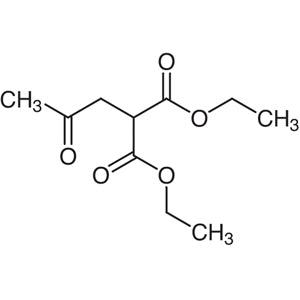
Diethyl Acetonylmalonate is a chemical compound widely used as a building block in the synthesis of complex organic compounds. It plays a crucial role in laboratory settings where researchers aim to develop new materials, pharmaceuticals, and bioactive substances. Its versatility makes it an essential component in various synthetic pathways, particularly those involving carbon-based structures and heterocyclic systems. This compound is frequently employed in academic and industrial research to explore chemical reactivity and functional group transformations.
The chemical properties of Diethyl Acetonylmalonate make it a preferred choice for synthetic chemists. It exhibits stability under controlled conditions, yet remains sensitive to high temperatures and oxidative environments. Its molecular structure allows for a wide range of chemical reactions, including condensation, substitution, and cyclization processes. These characteristics enable chemists to tailor its behavior for specific applications, enhancing its utility in both fundamental and applied research.
In Indonesian laboratories, Diethyl Acetonylmalonate is commonly used in research institutions and chemical industries. It is a key reagent in the development of new drugs, specialty chemicals, and materials with unique properties. Its availability in the local market supports ongoing scientific investigations and innovation, making it a valuable resource for researchers and professionals in the field.
Related TCI products
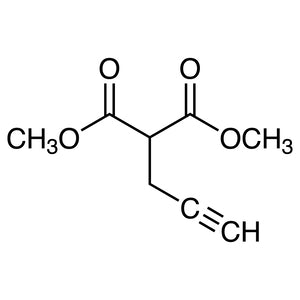
- TCI D6072 95124-07-5 Dimethyl 2-Propyn-1-ylmalonate
- TCI A0231 2049-80-1 Diethyl Allylmalonate
- TCI A0089 762-21-0 Diethyl Acetylenedicarboxylate
- TCI A0055 105-50-0 Diethyl 1,3-Acetonedicarboxylate
- TCI T1401 81172-89-6 Terephthalaldehyde Mono(diethyl Acetal)
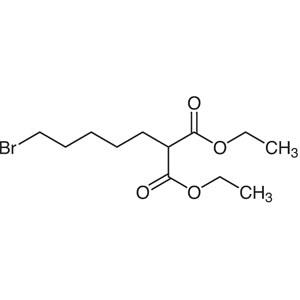
- TCI B2083 1906-95-2 Diethyl (5-Bromopentyl)malonate
- Organic synthesis research utilizes Diethyl Acetonylmalonate to construct complex molecular frameworks due to its reactivity and structural versatility.
- Pharmaceutical development benefits from this compound as it serves as a precursor in the synthesis of bioactive molecules and drug candidates.
- Industrial chemical production relies on Diethyl Acetonylmalonate for creating specialty chemicals with specific functional properties.
- Academic teaching laboratories use it to demonstrate organic reaction mechanisms and synthetic strategies to students.
- Biochemical research incorporates it in the preparation of compounds with potential therapeutic or biological activities.
| Brand | TCI |
|---|---|
| CAS number | 23193-18-2 |
| Molecular formula | — |
| Purity | — |
| Category | Chemistry > Building Blocks > Non-Heterocyclic Building Blocks |
| Pack sizes | Available in various quantities as per supplier specifications |
| Physical form | Liquid |
| Storage | Store in a cool, dark place away from heat and oxidizing agents |
Diethyl Acetonylmalonate should be stored in a cool, dark environment to maintain its chemical stability. It is recommended to keep it in a tightly sealed container to prevent exposure to air and moisture. Due to its sensitivity to high temperatures, it should be stored away from direct sunlight and heat sources. Appropriate storage conditions help preserve its reactivity and ensure safe handling in laboratory settings. Always use appropriate personal protective equipment when working with this compound to minimize potential exposure. Proper labeling and storage practices are essential to maintain a safe and efficient laboratory environment.
—
Produk Terkait
-
Dimethyl2-Propyn-1-ylmalonate TCI D6072
Regular price From Rp 1.115.100,00Regular price -
DiethylAllylmalonate TCI A0231
Regular price From Rp 2.068.500,00Regular price -
DiethylAcetylenedicarboxylate TCI A0089
Regular price From Rp 2.837.100,00Regular price -
Diethyl1,3-Acetonedicarboxylate TCI A0055
Regular price From Rp 1.140.300,00Regular price -
TerephthalaldehydeMono(diethylAcetal) TCI T1401
Regular price Rp 3.578.400,00Regular price -
Diethyl(5-Bromopentyl)malonate TCI B2083
Regular price From Rp 2.254.350,00Regular price -
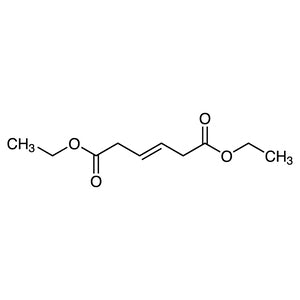
Diethyltrans-3-Hexenedioate TCI B1592
Regular price Rp 5.062.050,00Regular price -
Diethyl2,2-Bis(hydroxymethyl)malonate TCI B1492
Regular price From Rp 3.021.900,00Regular price