


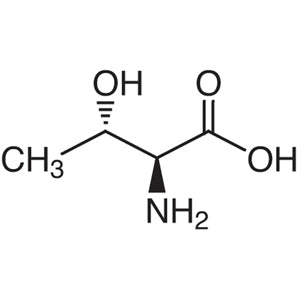
L-Allothreonine is a chemical compound widely used in various chemical and biochemical experiments. As one of the essential amino acids, it plays a crucial role in protein synthesis and the study of biological metabolism. This compound is particularly relevant in peptide chemistry, making it a valuable tool for researchers involved in peptide development or organic molecule modification. Its unique chemical structure, featuring both amino and carboxyl groups, allows for diverse chemical reactions, making it a versatile reagent in laboratory settings.
L-Allothreonine is preferred due to its stability under certain conditions and its ability to participate in a wide range of chemical reactions. Its chemical properties make it suitable for applications requiring precise control and reproducibility. However, it is sensitive to moisture and air exposure, which necessitates careful handling and storage. These characteristics make it ideal for use in controlled laboratory environments where accuracy and consistency are paramount.
In Indonesian laboratories, L-Allothreonine is commonly used in biochemical, pharmacological, and environmental research. It is an essential component of experiments that investigate molecular interactions or the development of new compounds. Its availability in the local market ensures that researchers can access this material without the need for international imports, supporting local scientific activities and innovation.
TCI brochures (PDF)
- Amino Acids and Peptide Synthesis Reagents 2025-08-14 · p. 7
- Peptide Synthesis: L-Allothreonine is used in the synthesis of peptides due to its amino and carboxyl groups, allowing for the formation of peptide bonds in controlled environments.
- Biochemical Research: It is employed in studies related to protein structure and function, aiding in the understanding of metabolic pathways and enzyme activity.
- Pharmacological Studies: L-Allothreonine is used to investigate its potential effects on biological systems, contributing to drug development and therapeutic research.
- Environmental Analysis: It is incorporated into experiments that study the behavior of organic compounds in environmental matrices, such as soil and water.
- Molecular Interactions: Its unique chemical structure makes it suitable for studying molecular interactions, including hydrogen bonding and other intermolecular forces.
| Brand | TCI |
|---|---|
| CAS number | 28954-12-3 |
| Molecular formula | — |
| Purity | — |
| Category | Chemistry > Chemical Biology > Peptide Chemistry |
| Pack sizes | Available in various quantities as per standard laboratory supply |
| Physical form | Crystalline powder |
| Storage | Store in a cool, dry place away from moisture and air exposure |
L-Allothreonine should be stored in a cool, dry environment to maintain its chemical integrity and prevent degradation. It is recommended to keep it in airtight containers to minimize exposure to moisture and air, which can affect its stability. Due to its sensitivity, it should be handled with care, using appropriate personal protective equipment such as gloves and safety goggles. It is important to ensure that storage conditions are consistent and free from contaminants. Regular monitoring of storage conditions is advised to maintain the quality and usability of the compound in laboratory applications.
—
Product Categories
Produk Terkait
-
DL-Allothreonine(containsThreonine) TCI A0214
Regular price From Rp 928.200,00Regular priceRp 664.650,00Sale price From Rp 928.200,00 -
D-Allothreonine TCI A1518
Regular price From Rp 1.961.400,00Regular priceRp 1.387.050,00Sale price From Rp 1.961.400,00 -
4-AminobutyricAcid TCI A0282
Regular price From Rp 505.050,00Regular priceRp 352.800,00Sale price From Rp 505.050,00 -
DL-Homoserine TCI A0319
Regular price From Rp 2.439.150,00Regular priceRp 1.720.950,00Sale price From Rp 2.439.150,00 -
DL-2-Amino-n-octanoicAcid TCI A0382
Regular price From Rp 2.332.050,00Regular priceRp 1.646.400,00Sale price From Rp 2.332.050,00 -
L-Isoserine TCI I0828
Regular price From Rp 1.351.350,00Regular priceRp 960.750,00Sale price From Rp 1.351.350,00 -
beta-Alanine TCI A0180
Regular price From Rp 477.750,00Regular priceRp 333.900,00Sale price From Rp 477.750,00 -
(+/-)-4-ThiazolidinecarboxylicAcid TCI T4355
Regular price Rp 2.411.850,00Regular priceRp 1.702.050,00Sale price Rp 2.411.850,00


