2-Amino-3-bromo-5-nitrobenzonitrile is a complex organic compound widely used in laboratory settings for the synthesis of various chemical structures. This compound serves as a key building block in organic chemistry, offering versatility in chemical reactions due to its multiple functional groups. Its presence in Indonesian laboratories highlights its importance in research and development, particularly in the fields of pharmaceutical and industrial chemistry. The compound is often employed as a starting material for the creation of more complex molecules, making it an essential reagent for chemists and researchers.
The reactivity of 2-Amino-3-bromo-5-nitrobenzonitrile stems from its functional groups, including the amino, bromo, nitro, and nitrile groups. These groups enable a wide range of chemical transformations, such as nucleophilic substitution and electrophilic reactions. The compound's ability to participate in multiple reaction pathways makes it a preferred choice for synthetic chemists. Its chemical structure allows for flexibility in designing new compounds with specific biological or industrial applications, contributing to its popularity in both academic and industrial research.
In Indonesian laboratories, 2-Amino-3-bromo-5-nitrobenzonitrile is commonly used in organic synthesis and pharmaceutical research. Its role in creating complex molecules with specific properties makes it a valuable tool for scientists working on drug development and chemical innovation. The compound's reactivity and structural versatility ensure its continued use in various research projects, supporting advancements in chemical science and technology.
Related TCI products
- Organic synthesis: This compound is widely used for constructing complex organic molecules due to its multiple reactive functional groups.
- Pharmaceutical research: It serves as a key intermediate in the development of new drugs with specific biological activities.
- Industrial chemistry: Its reactivity makes it suitable for the production of specialty chemicals and intermediates.
- Analytical chemistry: It is used as a standard for spectroscopic and chromatographic analysis due to its distinct chemical properties.
- Material science: It is employed in the synthesis of functional materials with specific chemical and physical properties.
| Brand | TCI |
|---|---|
| CAS number | 17601-94-4 |
| Molecular formula | — |
| Purity | — |
| Category | Chemistry > Building Blocks > Non-Heterocyclic Building Blocks |
| Pack sizes | Available in various quantities as per supplier specifications |
| Physical form | Solid |
| Storage | Store in a cool, dry place away from light and incompatible materials |
This compound should be stored in a cool, dry environment, away from direct sunlight and sources of heat. It is recommended to use airtight containers to prevent moisture absorption and contamination. Due to its reactivity, it should be handled with care, using appropriate personal protective equipment such as gloves and safety goggles. Avoid exposure to incompatible substances like strong oxidizers or acids. Proper ventilation is essential when working with this material to ensure safe handling in the laboratory. Always follow standard chemical safety protocols to minimize risks associated with its use.
—
Produk Terkait
-
4-Bromo-3-nitrobenzonitrile TCI B4708
Regular price From Rp 823.200,00Regular price -
4-Amino-3-nitrobenzonitrile TCI A2447
Regular price From Rp 4.373.250,00Regular price -
2-Amino-5-nitrobenzonitrile TCI A1314
Regular price From Rp 1.696.800,00Regular price -
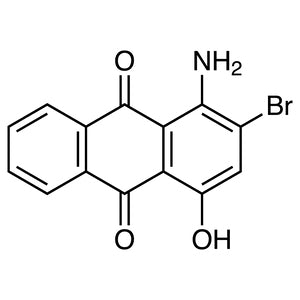
1-Amino-2-bromo-4-hydroxyanthracene-9,10-dione TCI A1082
Regular price Rp 795.900,00Regular price -
4-Nitrobenzonitrile TCI N0172
Regular price From Rp 1.565.550,00Regular price -
3-Nitrobenzonitrile TCI N0170
Regular price Rp 1.538.250,00Regular price -
2-Methyl-4-nitrobenzonitrile TCI M2965
Regular price From Rp 743.400,00Regular price -
2-Methoxy-4-nitrobenzonitrile TCI M2585
Regular price From Rp 477.750,00Regular price