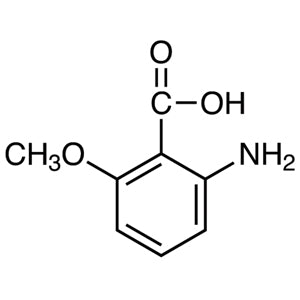
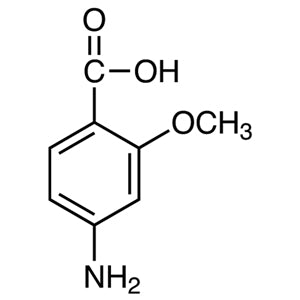
3-Amino-4-methoxybenzoic Acid is a versatile chemical compound widely utilized in laboratory settings for its unique reactivity and functional group diversity. This compound plays a crucial role in chemical and biochemical experiments, particularly in the synthesis of complex molecules. Its presence in peptide chemistry and biokimia research makes it an essential tool for scientists aiming to develop new compounds with specific biological activities. The compound's ability to interact with various functional groups makes it a valuable asset in molecular modification and synthesis processes.
The compound's chemical properties, including its amino and methoxy groups, contribute to its reactivity and specificity in chemical reactions. These functional groups allow it to participate in a wide range of synthetic pathways, making it a preferred choice for researchers. Its stability under certain conditions further enhances its usability in laboratory applications. The compound's compatibility with other functional groups, such as carboxylates and amines, ensures its effectiveness in various chemical transformations and molecular modifications.
In Indonesian laboratories, 3-Amino-4-methoxybenzoic Acid is commonly used in biochemical, pharmacological, and organic synthesis research. It is highly sought after by researchers due to its broad applications across multiple scientific disciplines. Its role in building molecules with specific biological activities makes it a key component in both academic and industrial research settings in Indonesia.
Related TCI products
- Biochemical research utilizes this compound for synthesizing molecules with targeted biological activities due to its reactive functional groups.
- Organic synthesis applications benefit from its ability to interact with various functional groups, enabling the creation of complex molecular structures.
- Peptide chemistry studies rely on its amino group for the formation of peptide bonds, essential in protein and peptide synthesis.
- Pharmacological research employs this compound to develop new drugs by modifying its structure to enhance therapeutic properties.
- Biokimia experiments use it as a building block for creating compounds with specific biochemical functions and interactions.
| Brand | TCI |
|---|---|
| CAS number | 2840-26-8 |
| Molecular formula | — |
| Purity | — |
| Category | Chemistry > Chemical Biology > Peptide Chemistry |
| Pack sizes | Available in standard laboratory quantities |
| Physical form | Solid powder |
| Storage | Store in a cool, dry place away from direct sunlight |
This compound should be stored in a cool, dry environment to maintain its chemical stability. It is recommended to keep it in a tightly sealed container to prevent moisture absorption and contamination. Due to its reactivity, it should be handled with appropriate laboratory safety measures, including the use of gloves and safety goggles. Storage away from incompatible substances is essential to ensure safety. Proper ventilation should be maintained in the workspace to minimize exposure to any potential fumes. Regular monitoring of storage conditions ensures the compound remains in optimal condition for use in laboratory experiments.
—
Product Categories
Produk Terkait
-
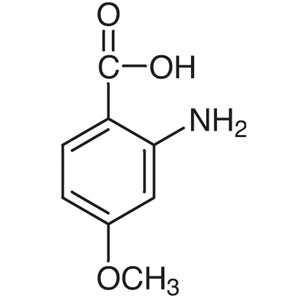
2-Amino-4-methoxybenzoicAcid TCI A2319
Regular price From Rp 1.670.550,00Regular priceRp 1.183.350,00Sale price From Rp 1.670.550,00 -
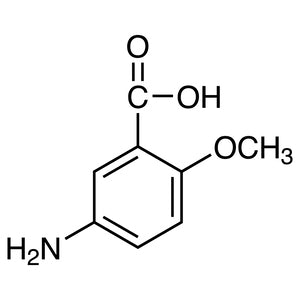
5-Amino-2-methoxybenzoicAcid TCI A2184
Regular price Rp 1.167.600,00Regular priceRp 831.600,00Sale price Rp 1.167.600,00 -
4-Amino-3-methoxybenzoicAcid TCI A2029
Regular price From Rp 2.757.300,00Regular priceRp 1.943.550,00Sale price From Rp 2.757.300,00 -
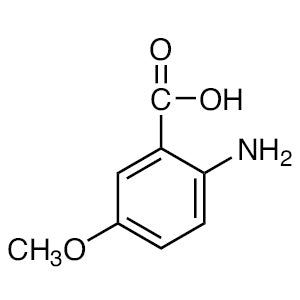
2-Amino-5-methoxybenzoicAcid TCI A1767
Regular price From Rp 2.199.750,00Regular priceRp 1.554.000,00Sale price From Rp 2.199.750,00 -
2-Amino-3-methoxybenzoicAcid TCI A1378
Regular price From Rp 2.544.150,00Regular priceRp 1.794.450,00Sale price From Rp 2.544.150,00 -
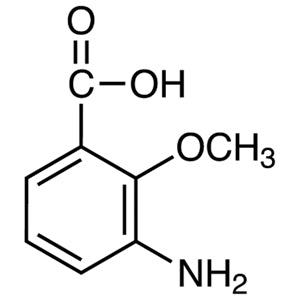
3-Amino-2-methoxybenzoicAcid TCI A2938
Regular price From Rp 1.618.050,00Regular priceRp 1.146.600,00Sale price From Rp 1.618.050,00 -
2-Amino-6-methoxybenzoicAcid TCI A2847
Regular price From Rp 2.994.600,00Regular priceRp 2.109.450,00Sale price From Rp 2.994.600,00 -
4-Amino-2-methoxybenzoicAcid TCI A2840
Regular price From Rp 557.550,00Regular priceRp 405.300,00Sale price From Rp 557.550,00