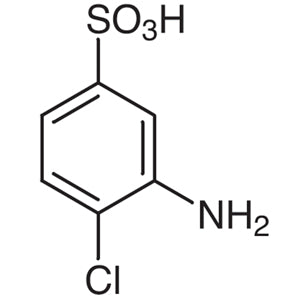
2-Chloroaniline-5-sulfonic Acid is a versatile organic compound widely used in laboratory settings for its reactivity and functional group diversity. This compound serves as a key building block in the synthesis of complex organic molecules, particularly in pharmaceutical and materials science research. Its unique structure, featuring both an amino group and a sulfonic acid group, allows it to participate in a variety of chemical reactions, making it an essential reagent for chemists working on functional group transformations. Due to its ability to act as both an electron donor and a nucleophile, it is frequently employed in substitution and coupling reactions.
The compound's reactivity stems from its molecular structure, which includes a chloro group and a sulfonic acid group. These functional groups provide multiple sites for chemical modification, enabling the compound to be used in a wide range of synthetic pathways. Its stability under various reaction conditions, such as acidic or basic environments, further enhances its utility in laboratory applications. The presence of the sulfonic acid group also contributes to its solubility in polar solvents, making it easier to handle and incorporate into reaction mixtures.
In Indonesian laboratories, 2-Chloroaniline-5-sulfonic Acid is commonly used in both academic and industrial research. It is a staple in pharmaceutical laboratories where it is used to develop new drug compounds and in materials science labs for the synthesis of advanced polymers and dyes. Its availability and reliability make it a preferred choice for researchers aiming to create complex chemical structures with high precision.
Related TCI products
- TCI A0279 6258-06-6 1-Amino-4-bromoanthraquinone-2-sulfonic Acid Sodium Salt
- TCI A0287 88-53-9 5-Amino-2-chlorotoluene-4-sulfonic Acid
- TCI A0328 88-44-8 p-Toluidine-2-sulfonic Acid
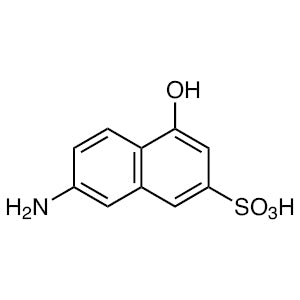
- TCI A0370 87-02-5 6-Amino-1-naphthol-3-sulfonic Acid
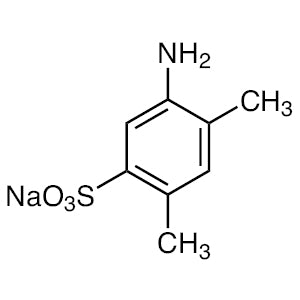
- TCI X0030 64501-84-4 2,4-Dimethylaniline-5-sulfonic Acid Sodium Salt
- TCI A0329 133-78-8 m-Toluidine-4-sulfonic Acid
- Pharmaceutical Research: This compound is used in drug development due to its ability to participate in substitution and coupling reactions, which are essential for creating complex molecular structures.
- Materials Science: It is frequently employed in the synthesis of advanced polymers and dyes because of its functional groups that can be modified to achieve desired material properties.
- Organic Synthesis: Its reactivity and versatility make it a valuable reagent in the synthesis of various organic compounds, especially those requiring functional group transformations.
- Analytical Chemistry: It is used as a standard or reagent in analytical procedures due to its stability and predictable chemical behavior.
- Environmental Studies: It is utilized in studies involving the degradation of organic pollutants due to its reactivity and ability to undergo various chemical transformations.
| Brand | TCI |
|---|---|
| CAS number | 98-36-2 |
| Molecular formula | — |
| Purity | — |
| Category | Chemistry > Building Blocks > Non-Heterocyclic Building Blocks |
| Pack sizes | Available in various quantities as per supplier specifications |
| Physical form | Solid powder |
| Storage | Store in a cool, dry place away from direct sunlight |
This compound should be stored in a cool, dry environment to maintain its chemical integrity. It is recommended to use airtight containers to prevent moisture absorption, which can affect its stability. Due to its reactivity, it should be handled in a well-ventilated area to minimize exposure. Laboratory personnel should wear appropriate personal protective equipment, such as gloves and safety goggles, when handling this material. It is important to keep it away from incompatible substances like strong oxidizers. Proper labeling of storage containers is essential to ensure safe handling and prevent accidental exposure.
—
Produk Terkait
-
1-Amino-4-bromoanthraquinone-2-sulfonicAcidSodiumSalt TCI A0279
Regular price From Rp 769.650,00Regular price -
5-Amino-2-chlorotoluene-4-sulfonicAcid TCI A0287
Regular price From Rp 637.350,00Regular price -
p-Toluidine-2-sulfonicAcid TCI A0328
Regular price From Rp 477.750,00Regular price -
6-Amino-1-naphthol-3-sulfonicAcid TCI A0370
Regular price From Rp 505.050,00Regular price -
2,4-Dimethylaniline-5-sulfonicAcidSodiumSalt TCI X0030
Regular price Rp 4.268.250,00Regular price -
m-Toluidine-4-sulfonicAcid TCI A0329
Regular price Rp 1.431.150,00Regular price -
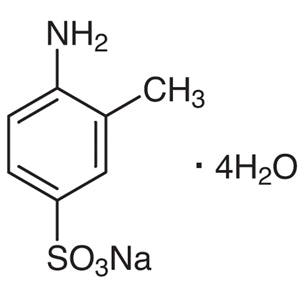
o-Toluidine-4-sulfonicAcidSodiumSaltTetrahydrate TCI T0304
Regular price From Rp 505.050,00Regular price -
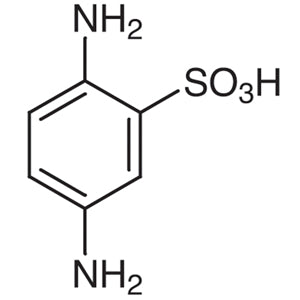
1,4-Phenylenediamine-2-sulfonicAcid TCI P1691
Regular price From Rp 769.650,00Regular price