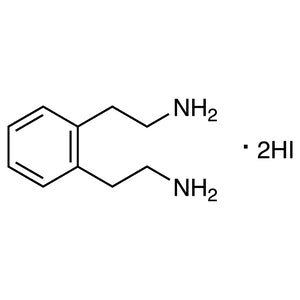
Anthranil, with the chemical name 2-Aminobenzoic acid, is a versatile chemical compound widely used in various laboratory reactions. It is a key building block in organic chemistry, particularly in the synthesis of heterocyclic compounds. Its molecular structure consists of a benzene ring with an amino group and a carboxylic acid group, which contributes to its high reactivity. This makes it an essential material for researchers working on complex chemical syntheses. In the laboratory, Anthranil is often used as a starting material for the development of pharmaceuticals, pesticides, and industrial chemicals. Its ability to form stable intermediates in multiple reaction pathways enhances its utility in synthetic chemistry.
Anthranil is preferred due to its chemical stability under controlled conditions and its reactivity in substitution and condensation reactions. It exhibits good solubility in organic solvents such as ethylamine and acetone, which facilitates its use in purification and isolation processes. Additionally, it is capable of participating in important reactions like the Diels-Alder reaction and condensation reactions, making it a valuable reagent in organic synthesis. Its functional groups allow for a wide range of chemical modifications, which is why it is highly sought after in chemical research.
In Indonesian laboratories, Anthranil is extensively used in academic and industrial research settings. It is commonly found in pharmaceutical development, chemical synthesis, and analytical chemistry. Its availability and chemical properties make it a go-to compound for scientists working on diverse projects. The compound’s role in creating complex molecules is crucial for advancing research in various scientific fields.
- Synthesis of Heterocyclic Compounds: Anthranil serves as a foundational building block for creating complex ring structures, which are essential in pharmaceutical and agrochemical development.
- Pharmaceutical Research: Its reactivity and functional groups make it ideal for the synthesis of drug molecules, particularly those involving aromatic amino acids.
- Organic Chemistry Experiments: Anthranil is frequently used in laboratory settings for teaching and research, especially in reactions like condensation and Diels-Alder.
- Industrial Chemical Production: Its versatility allows it to be used in the manufacturing of various industrial chemicals, including dyes and polymers.
- Analytical Chemistry Applications: Anthranil is used in chromatographic and spectroscopic analysis due to its distinct chemical properties and solubility characteristics.
| Brand | TCI |
|---|---|
| CAS number | 271-58-9 |
| Molecular formula | — |
| Purity | — |
| Category | Chemistry > Building Blocks > Heterocyclic Building Blocks |
| Pack sizes | Available in standard laboratory quantities |
| Physical form | Solid crystalline powder |
| Storage | Store in a cool, dry place away from direct sunlight |
Anthranil should be stored in a cool, dry environment to maintain its chemical integrity. It is recommended to keep it in airtight containers to prevent moisture absorption. Due to its reactivity, it should be handled in a well-ventilated area, and appropriate personal protective equipment should be worn. Avoid exposure to strong oxidizing agents to prevent unwanted chemical reactions. Proper labeling of containers is essential for safe handling and storage. Regular inspection of storage conditions ensures the compound remains stable and usable for laboratory applications.
—
Produk Terkait
-
TCI B5774 5,10-Bis(4,4,5,5-tetramethyl-1,3,2-dioxaborolan-2-yl)naphtho[1,2-c:5,6-c']bis([1,2,5]oxadiazole)
Regular price Rp 10.307.850,00Regular priceRp 7.224.000,00Sale price Rp 10.307.850,00 -
Dihydroiodide TCI B6569
Regular price From Rp 1.988.700,00Regular priceRp 1.405.950,00Sale price From Rp 1.988.700,00