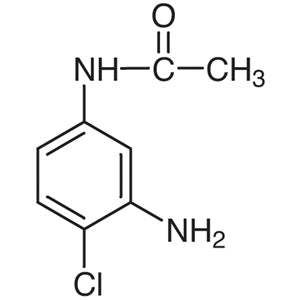
2'-Aminoacetanilide is a chemical compound widely used as a foundational building block in organic synthesis. It plays a crucial role in laboratories where researchers aim to create complex organic molecules. Its simple molecular structure supports a range of chemical reactions, making it a versatile reagent for various synthetic pathways. This compound is particularly valuable in the development of heterocyclic compounds and functionalized amines, which are essential in pharmaceutical and industrial applications. Due to its stability and controlled reactivity, it is a reliable choice for chemists seeking to manipulate molecular structures with precision.
The compound's chemical properties, including its ability to react with acids, bases, and alkali metals, make it a preferred choice in synthetic chemistry. Its stability under a variety of conditions allows for consistent results in laboratory experiments. The controlled reactivity of 2'-Aminoacetanilide ensures that it can be used in multiple reaction types, such as substitution, reduction, and coupling reactions. These characteristics make it an essential component in the toolkit of any organic chemist working in both academic and industrial settings.
In Indonesian laboratories, 2'-Aminoacetanilide is commonly used in research focused on organic chemistry, especially in the synthesis of complex molecules that require specific structural components. Its relevance extends to both academic and industrial research, supporting the development of new compounds and materials. The compound's widespread use highlights its importance in advancing chemical research in Indonesia.
- Organic synthesis of heterocyclic compounds due to its functional amine group and aromatic ring structure.
- Pharmaceutical research for the development of new drugs and medicinal compounds through structural modification.
- Industrial chemical production where controlled reactivity and stability are essential for large-scale synthesis.
- Academic research in chemistry departments focusing on molecular structure manipulation and functional group transformations.
- Development of functionalized amines for use in polymer science and material engineering applications.
| Brand | TCI |
|---|---|
| CAS number | 34801-09-7 |
| Molecular formula | — |
| Purity | — |
| Category | Chemistry > Building Blocks > Non-Heterocyclic Building Blocks |
| Pack sizes | Available in various quantities as per standard laboratory supply formats |
| Physical form | Solid |
| Storage | Store in a cool, dry place away from direct sunlight and moisture |
2'-Aminoacetanilide should be stored in a cool, dry environment to maintain its chemical stability. It is recommended to keep it in a sealed container to prevent exposure to moisture and air. The compound is generally non-hazardous under normal laboratory conditions but should be handled with care to avoid direct contact with skin or inhalation of dust. It is suitable for storage in glass or plastic containers that are resistant to chemical reactions. Always ensure that the storage area is well-ventilated and free from potential contaminants. Proper handling and storage practices help preserve the integrity of the compound and ensure safe usage in laboratory settings.
—
Produk Terkait
-
4'-Aminoacetanilide TCI A0106
Regular price From Rp 822.150,00Regular priceRp 590.100,00Sale price From Rp 822.150,00 -
3'-Aminoacetanilide TCI A1533
Regular price Rp 505.050,00Regular priceRp 368.550,00Sale price Rp 505.050,00 -
2-Cyanoacetanilide TCI C2894
Regular price From Rp 1.298.850,00Regular priceRp 924.000,00Sale price From Rp 1.298.850,00 -
2'-Bromoacetanilide TCI B3139
Regular price Rp 1.272.600,00Regular priceRp 905.100,00Sale price Rp 1.272.600,00 -
4'-Bromoacetanilide TCI B0534
Regular price From Rp 1.167.600,00Regular priceRp 831.600,00Sale price From Rp 1.167.600,00 -
3'-Amino-4'-chloroacetanilide TCI A1559
Regular price From Rp 557.550,00Regular priceRp 405.300,00Sale price From Rp 557.550,00 -
4'-Nitroacetanilide TCI N0108
Regular price From Rp 1.961.400,00Regular priceRp 1.387.050,00Sale price From Rp 1.961.400,00 -
3'-Nitroacetanilide TCI N0106
Regular price Rp 2.013.900,00Regular priceRp 1.423.800,00Sale price Rp 2.013.900,00