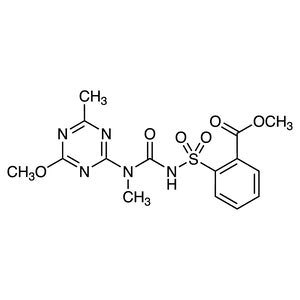
Amitraz, with the CAS number 33089-61-1, is a chemical compound widely utilized in life science research, particularly in cell biology and nutrition studies. As a derivative of an amine, it exhibits active properties that make it suitable for testing biological effects on organisms. This compound plays a crucial role in laboratory settings where researchers aim to understand physiological and behavioral responses of living organisms to specific stimuli. Its versatility and chemical stability make it an essential tool for various scientific investigations.
One of the key features that make Amitraz a preferred choice is its chemical stability and solubility in organic solvents. These properties facilitate the preparation of solutions for experimental use, ensuring consistency and reliability in research outcomes. Additionally, Amitraz has a relatively high reactivity, allowing it to participate effectively in chemical reactions that require precise concentrations. This reactivity, combined with its stability, ensures that it remains a reliable and efficient reagent in laboratory applications.
In Indonesian laboratories, Amitraz is commonly used in scientific research, especially in cell biology and nutrition studies. It is frequently found in university research laboratories and research institutions focused on life sciences. Its role in evaluating the impact of nutrition on cellular metabolism and function makes it an essential component in nutritional research. Its availability and performance make it a favored choice among researchers in Indonesia.
TCI brochures (PDF)
- Agrochemical Ingredients for Research and Experimental Use 2026-01-08 · p. 5
- Plant Research Reagents 2026-02-24 · p. 12
- Reagents for Biological Research 2025-03-11 · p. 56
- Nutritional Research – Amitraz is used to evaluate the impact of nutrients on cellular metabolism and function, aiding in the understanding of dietary effects on biological systems.
- Cell Biology Studies – It supports investigations into cellular responses and physiological changes, making it valuable for studying biological processes at the cellular level.
- Behavioral and Physiological Testing – Amitraz is employed to observe how organisms respond to specific stimuli, providing insights into behavioral and physiological mechanisms.
- Chemical Reaction Experiments – Its high reactivity allows it to be used in reactions requiring precise concentrations, enhancing the accuracy of chemical experiments.
- Toxicological Studies – It is utilized to assess the effects of chemical exposure on living organisms, contributing to the field of toxicology and safety research.
| Brand | TCI |
|---|---|
| CAS number | 33089-61-1 |
| Molecular formula | — |
| Purity | — |
| Category | Life Science > Cell Biology > Nutrition Research |
| Pack sizes | Available in various quantities as per supplier specifications |
| Physical form | Solid or liquid, depending on formulation |
| Storage | Store in a cool, dry place away from direct sunlight |
Amitraz should be stored in a cool, dry environment, away from direct sunlight and sources of heat. It is recommended to use airtight containers to prevent exposure to moisture and contaminants. Due to its chemical nature, it should be handled with appropriate personal protective equipment, including gloves and safety goggles, to ensure laboratory safety. Proper ventilation is essential when working with this compound to minimize inhalation risks. Storage conditions should be maintained to preserve its chemical stability and ensure safe handling in laboratory settings. Always follow standard laboratory safety protocols when working with reactive chemicals like Amitraz.
—
Produk Terkait
-
Isoproturon TCI I0843
Regular price From Rp 1.351.350,00Regular priceRp 960.750,00Sale price From Rp 1.351.350,00 -
AzelaicAcid TCI A0561
Regular price From Rp 557.550,00Regular priceRp 405.300,00Sale price From Rp 557.550,00 -
AbieticAcid TCI A0001
Regular price From Rp 1.563.450,00Regular priceRp 1.108.800,00Sale price From Rp 1.563.450,00 -
Sulfentrazone TCI U0110
Regular price From Rp 2.464.350,00Regular priceRp 1.738.800,00Sale price From Rp 2.464.350,00 -
Triflumuron TCI T4364
Regular price From Rp 1.272.600,00Regular priceRp 905.100,00Sale price From Rp 1.272.600,00 -
Tralopyril TCI T4109
Regular price From Rp 2.782.500,00Regular priceRp 1.961.400,00Sale price From Rp 2.782.500,00 -
Tribenuron-methyl TCI T4085
Regular price From Rp 2.411.850,00Regular priceRp 1.702.050,00Sale price From Rp 2.411.850,00