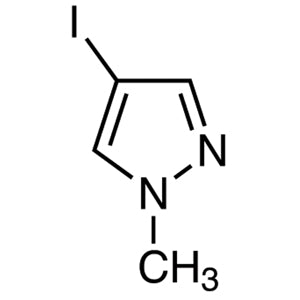
5-Amino-4-bromo-3-methyl-1-phenylpyrazole is a chemical compound that plays a vital role in laboratory settings, particularly in organic chemistry research. As a heterocyclic building block, it serves as a foundational element for the synthesis of more complex molecules. Its unique structure and reactivity make it an essential tool for chemists working on the development of new compounds with potential applications in various scientific fields. This compound is widely used in academic and industrial laboratories for its ability to participate in a range of chemical reactions, contributing to the advancement of chemical research and innovation.
The compound's properties, including its heterocyclic structure and the presence of bromo and amino groups, make it a preferred choice for synthetic chemists. These functional groups enhance its reactivity, allowing it to undergo substitution reactions and other transformations that are critical in the design of new molecules. Its versatility in forming bonds with different functional groups also makes it a valuable reagent in the synthesis of pharmaceuticals and other specialized compounds. The combination of its chemical stability and reactivity ensures that it remains a reliable and effective material in laboratory applications.
In Indonesian laboratories, 5-Amino-4-bromo-3-methyl-1-phenylpyrazole is commonly used in organic chemistry research, especially in the development of new compounds with potential pharmaceutical or industrial applications. Its availability and consistent quality make it a popular choice among researchers. The compound is frequently employed in studies aimed at creating novel molecules that may lead to new drugs or materials. Its role in supporting scientific innovation is well recognized in the Indonesian scientific community.
Related TCI products
- Organic synthesis research benefits from this compound due to its reactivity and ability to form complex molecular structures.
- Pharmaceutical development utilizes this compound for the synthesis of new drug candidates with targeted biological activities.
- Heterocyclic compound studies rely on this material to explore the properties and behavior of nitrogen-containing ring systems.
- Industrial chemical research incorporates this compound for the creation of specialized materials and chemical intermediates.
- Academic laboratories use this compound as a key reagent in teaching and experimental research to demonstrate synthetic methodologies.
| Brand | TCI |
|---|---|
| CAS number | 69464-98-8 |
| Molecular formula | — |
| Purity | — |
| Category | Chemistry > Building Blocks > Heterocyclic Building Blocks |
| Pack sizes | Available in various quantities as per supplier specifications |
| Physical form | Solid, crystalline powder |
| Storage | Store in a cool, dry place away from light and moisture |
This compound should be stored in a cool, dry environment, away from direct light and moisture to maintain its chemical integrity. It is recommended to use airtight containers to prevent exposure to air and humidity, which could affect its stability. In laboratory settings, proper personal protective equipment, including gloves and safety goggles, should be worn when handling the compound to ensure safety. Due to its reactivity, it should be stored separately from incompatible substances to avoid potential chemical interactions. Regular inspection of storage conditions is advised to ensure optimal preservation of the material.
—
Produk Terkait
-
4-Bromo-3-phenylpyrazole TCI B5181
Regular price From Rp 795.900,00Regular priceRp 572.250,00Sale price From Rp 795.900,00 -
4-Iodo-3,5-dimethylpyrazole TCI I0771
Regular price From Rp 822.150,00Regular priceRp 590.100,00Sale price From Rp 822.150,00 -
4-Iodo-1-methylpyrazole-5-carboxylicAcid TCI I0786
Regular price From Rp 3.021.900,00Regular priceRp 2.128.350,00Sale price From Rp 3.021.900,00 -
4-Iodo-1-methylpyrazole TCI I0829
Regular price From Rp 1.060.500,00Regular priceRp 757.050,00Sale price From Rp 1.060.500,00 -
4-Bromo-1-ethylpyrazole TCI B5100
Regular price From Rp 689.850,00Regular priceRp 497.700,00Sale price From Rp 689.850,00 -
4-Bromo-1,3,5-trimethylpyrazole TCI B4744
Regular price From Rp 742.350,00Regular priceRp 534.450,00Sale price From Rp 742.350,00 -
4-Bromo-1-methylpyrazole TCI B4060
Regular price From Rp 742.350,00Regular priceRp 534.450,00Sale price From Rp 742.350,00 -
4-Bromo-3-methylpyrazole TCI B3522
Regular price From Rp 1.458.450,00Regular priceRp 1.035.300,00Sale price From Rp 1.458.450,00